Seville stood up for Luka Modrić. Why Spain loves him, the Zadar hotel where his family lived as refugees, and the villa he is planning near Dubrovnik.
Checked: 1 October 2026
Croatia lost 4-1 in Seville on 29 September 2026, with a header by Dion Drena Beljo from an Ivan Perišić cross as the only Croatian goal, but one of the moments people talked about afterwards belonged to a Croatian. In the 81st minute Luka Modrić, 41 years old and still the captain, came on for Petar Sučić, and the crowd at the Ramón Sánchez-Pizjuán stood up to applaud him. It was a Spain home game, the hosts were on their way to a 40th match unbeaten, and the stands still rose for a player from the other side. After the match Modrić posted a photo on Instagram with three words: Muchas gracias España.
The applause was not politeness. Modrić spent 13 seasons at Real Madrid, from 2012 to 2025, won the Champions League six times there and left as the most decorated player in the club's history. In 2018 he won the Ballon d'Or, the first player other than Lionel Messi or Cristiano Ronaldo to take it since 2007, after leading Croatia to the World Cup final in Moscow, where he was named the best player of the tournament. For many Spanish fans he is part of their own football history, even in Seville, a city whose two clubs are rivals of Real Madrid.
Still playing at 41
Modrić now plays for AC Milan, which he joined in July 2025; in July 2026 he extended his contract until June 2027. He has more than 200 caps for Croatia, more than any other player in the country's history, and four days before Seville he scored in the 2-1 win against Czechia in Prague. He is still the captain of the national team.
| Club | Years |
|---|---|
| Dinamo Zagreb, with loans to Zrinjski Mostar and Inter Zaprešić | 2003-2008 |
| Tottenham Hotspur | 2008-2012 |
| Real Madrid | 2012-2025 |
| AC Milan | since 2025 |
Zadar, where it started
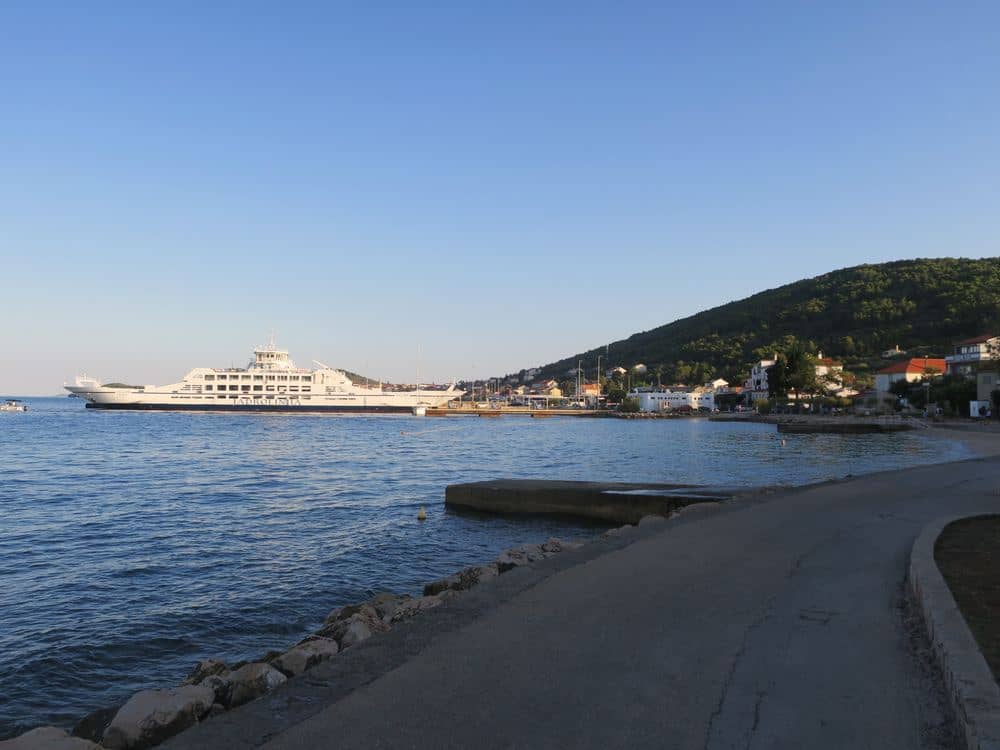
Modrić was born in Zadar on 9 September 1985 and grew up in Modrići, a hamlet of Zaton Obrovački in the foothills of Velebit, north-east of the city. In December 1991, during the Croatian War of Independence, his grandfather Luka was killed by Serb rebels near the family house, and the family fled to Zadar. They lived as refugees for years, first at Hotel Kolovare and later at Hotel Iž, while the boy played football wherever he could and joined the youth teams of NK Zadar. From there he went to Dinamo Zagreb, then via Tottenham Hotspur to Madrid. In a city better known for basketball, the home of KK Zadar, he became the most famous footballer Zadar has produced.
That story is one reason why Croatians see him as more than a great player. A refugee child from a city hotel became the best footballer in the world, and he never stopped speaking about where he comes from.
Modrić's Zadar for visitors
The places of his childhood are part of ordinary Zadar. Hotel Kolovare is still a hotel today, above the Kolovare beach, about a 15-minute walk along the seafront from the Land Gate of the old town. NK Zadar, the club where he learned the game, plays at Stadion Stanovi, about three kilometres east of the centre. Combine both with the old town: our guide to what to see in Zadar and the Zadar city page cover the rest.
Modrić still spends his summers on the Croatian coast. Croatian media regularly report on family holidays in the Zadar area and on trips by yacht along the Adriatic with family and friends.
The villa near Dubrovnik and the Tri Sestrice project
His newest link to the coast lies further south. About 27 kilometres north-west of Dubrovnik, near Slano, the Split entrepreneur Vicenco Blagaić is developing Tri Sestrice, which he describes as one of the largest investments on the Mediterranean. Modrić is not the developer: he is planning his own villa there, designed by the Spanish studio ARK Architects, and he visited the site in August 2026. He told Croatian media that he had always liked the studio's work and knew he wanted them when the time came to design his villa in Croatia.
The plans are large. On about 300 hectares the developer wants nine hotels, around 500 branded residences, villas, a golf course on 210 hectares, a marina with 220 berths and an airfield for business aircraft. In August 2026 he put the value at more than two billion euros, up from 920 million euros in earlier plans. The first phase, with three hotels, two mooring areas, two beach clubs, 30 villas and 160 residences, is estimated at about 350 million euros. Construction of the first buildings is due to start in 2027, and the first phase is planned to open in 2029. By August 2026 four of the 5.5 kilometres of the access road were asphalted.
For travellers there is nothing to see there yet apart from roadworks. Slano itself is a quiet harbour village on the coast road, about half an hour's drive north-west of Dubrovnik; our guide to what to see in Dubrovnik starts from the old town.
Where to see him next
Croatia play England on Saturday 3 October at Rujevica in Rijeka behind closed doors, a UEFA sanction, so the match is for television only: our guide explains who gets in and where to watch. Three days later, on Tuesday 6 October, Croatia host Spain at Poljud in Split. The match is sold out, and our Croatia v Spain guide covers returned tickets and the best places to watch in town.
Watch
Zadar on video
A short official city film to help you picture the place before you go.
Meet. Feel. Explore. Zadar
Frequently asked questions
- Why did Spanish fans applaud Luka Modrić in Seville?
- Because of his 13 seasons at Real Madrid, six Champions League titles and the 2018 Ballon d'Or. When he came on in the 81st minute of Spain's 4-1 win on 29 September 2026, the crowd at the Sánchez-Pizjuán gave him a standing ovation, and he thanked them on Instagram with Muchas gracias España.
- Where is Luka Modrić from?
- He was born in Zadar in 1985 and grew up in the hamlet of Modrići near Zaton Obrovački. During the war his family lived as refugees in Zadar, at Hotel Kolovare and later Hotel Iž, and he started playing football at NK Zadar.
- Is Luka Modrić building a resort near Dubrovnik?
- No. Tri Sestrice near Slano, about 27 kilometres north-west of Dubrovnik, is developed by the Split entrepreneur Vicenco Blagaić. Modrić is planning his own villa there, designed by ARK Architects. The first phase is planned to open in 2029.
Official sources
Share this guide
Questions about your trip?