Buje, the hill town above Umag in the north-west of Istria, has celebrated its grape harvest since 1906, and the 120th Dani grožđa run from Friday 18 to Sunday 20 September 2026: sports, children's games, exhibitions, a wine walk through the old town, an oldtimer meeting, three nights of concerts and, on Sunday, the allegorical parade, a kroštata pastry made of 2026 grapes and the grand tombola with a first prize of 13,000 euros. What is confirmed, who plays, and how to get up the hill.
Checked: 20 September 2026
The town of Buje, Buie in Italian and bilingual to this day, published the frame of the 120th Dani grožđa on 11 September: three days from 18 to 20 September 2026 with sports competitions, activities for children, traditional games, exhibitions, a wine walk, an oldtimer gathering, gastronomy, the allegorical parade, the grand tombola and a full music programme. The town marks the anniversary with a fingerprint motif for '120 years of people, work, tradition and a shared trace'. The detailed timetable is on the programme posters; the town's site says the times will be announced shortly, so check buje.hr before you set off.
Who plays
- Friday 18 September: Malvazija Band, the young singers of the association Mali veliki mikrofon, Miach and MisterG Dee Jay.
- Saturday 19 September: Zemljotres, Rewin3 Wasco and Lidija Bačić, the evening the square is fullest.
- Sunday 20 September: Alfa Time Band and Klapa Rišpet close the festival.
Sunday, the day to come
Sunday carries the three things Buje is known for. The allegorical parade, in which the villages and associations of the Buje area build floats around the harvest, the vine and whatever the year has brought, rolls through the town; the kroštata, a traditional pastry, is baked with exactly 2026 grape berries for the anniversary; and the grand tombola draws a first prize of 13,000 euros, the reason half of the peninsula buys a ticket. Between them the wine walk leads through the old town's lanes from tasting to tasting, the malvazija and teran of the Buje hills poured by the people who make them, and the oldtimer meeting fills the square below the town with cars older than most of the drivers.
Getting to Buje
Buje sits on a hill 12 km inland from Umag and about 10 km from the Slovenian border crossings at Plovanija and Kaštel, on the road from the coast towards Motovun. From the Istrian motorway A9 take the Buje exit. The old town on the hilltop is small and closed to cars during the festival; park at the edge of town and walk up. From Umag, Novigrad and Poreč the drive is 15 to 35 minutes, which makes the festival the easiest evening out for anyone still on the coast in the third week of September. Entry to the festival is not listed; wine, food and tombola tickets are paid at the stalls.
Where to stay
Buje itself has only a handful of rooms and apartments in and around the old town, and they go first for the festival weekend, so book early if you want to walk home from the concerts. Most visitors sleep on the coast: Umag and Novigrad have the hotels, the campsites and most of the private apartments, and in the third week of September prices sit below August levels and the resorts are quieter. The third option is the countryside. Farm stays and winery rooms around Momjan, Brtonigla and Grožnjan give you a terrace over the vines, breakfast from the farm and a drive of 10 to 20 minutes to Buje, though you will need a car and a driver who stays off the malvazija.
| Base | Distance from Buje | What it offers |
|---|---|---|
| Buje old town | 0 km | A few apartments, walk to everything |
| Umag | 12 km | Hotels, campsites, most apartments |
| Novigrad | 15 km | Small harbour town, hotels and apartments |
| Brtonigla | 8 km | Wine village, farm stays, cellars |
| Momjan | 7 km | Winery rooms, castle ruin, muscat |
| Grožnjan | 12 km | Artists' hill town, small guesthouses |
Arriving from abroad
Buje is one of the closest Croatian festivals to Italy and Slovenia. Trieste is under 50 km away by road through Koper and the Plovanija crossing, and since Croatia joined the Schengen area in 2023 there are no passport checks at Plovanija or Kaštel, so the drive takes about an hour. The nearest airports are Pula, about 85 km south on the A9, Trieste, about 80 km, and Ljubljana, around 150 km. From all three a hire car is the practical choice: Buje has a bus station below the old town with regional coaches from Umag, but evening services are few and the concerts end late. Croatia uses the euro, and Italian is spoken in every shop, which helps anyone arriving from the Italian side.
What to drink and eat
Buje is a wine town first. Malvazija istarska is the white to start with, dry, pale and slightly bitter at the end, poured young and cold. Teran is the red, dark and sharp, the wine for pršut and cheese. From Momjan, 7 km up the road, comes muškat momjanski, a sweet muscat served with pastry. On the stalls the food follows the harvest: grapes and fresh must, walnuts and last year's olive oil, since the new pressing only starts in October. The white truffle season in the Motovun forest also begins in October, so anything with truffle in September uses the summer black. Bring cash, because the smaller stalls do not always take cards, and expect to eat standing up.
- Malvazija istarska: the dry white of the peninsula, drunk young and cold, the wine most stalls pour first.
- Teran: dark, tannic red from the red soil of the Bujština, best with pršut, sheep's cheese and bread.
- Muškat momjanski: sweet muscat from the village of Momjan, served in small glasses with the kroštata.
- Kroštata: a shortcrust tart, topped at this festival with grapes, sold by the slice on the square.
- Fritule: small fried dough balls dusted with sugar, the standard sweet at every Istrian fair.
- Istarski pršut: dry-cured ham from the interior, cut thin at the stall, sold vacuum-packed to take home.
Practical notes
The old town is steep and cobbled, and the lanes are worn smooth, so wear flat shoes with grip. Evenings on the hill cool quickly after 20:00, with daytime highs around 23 degrees, so pack a light jacket. Buy your tombola ticket early in the weekend to avoid the Sunday queue, and keep it until the draw has finished. The blood alcohol limit in Croatia is 0.5 per mille for drivers aged 24 and over and zero for younger drivers, and police check the roads down from the hill towns on festival nights, so settle who drives before the wine walk. On Sunday arrive before the parade, park where the stewards send you, and allow time for the walk up.
Buje in short
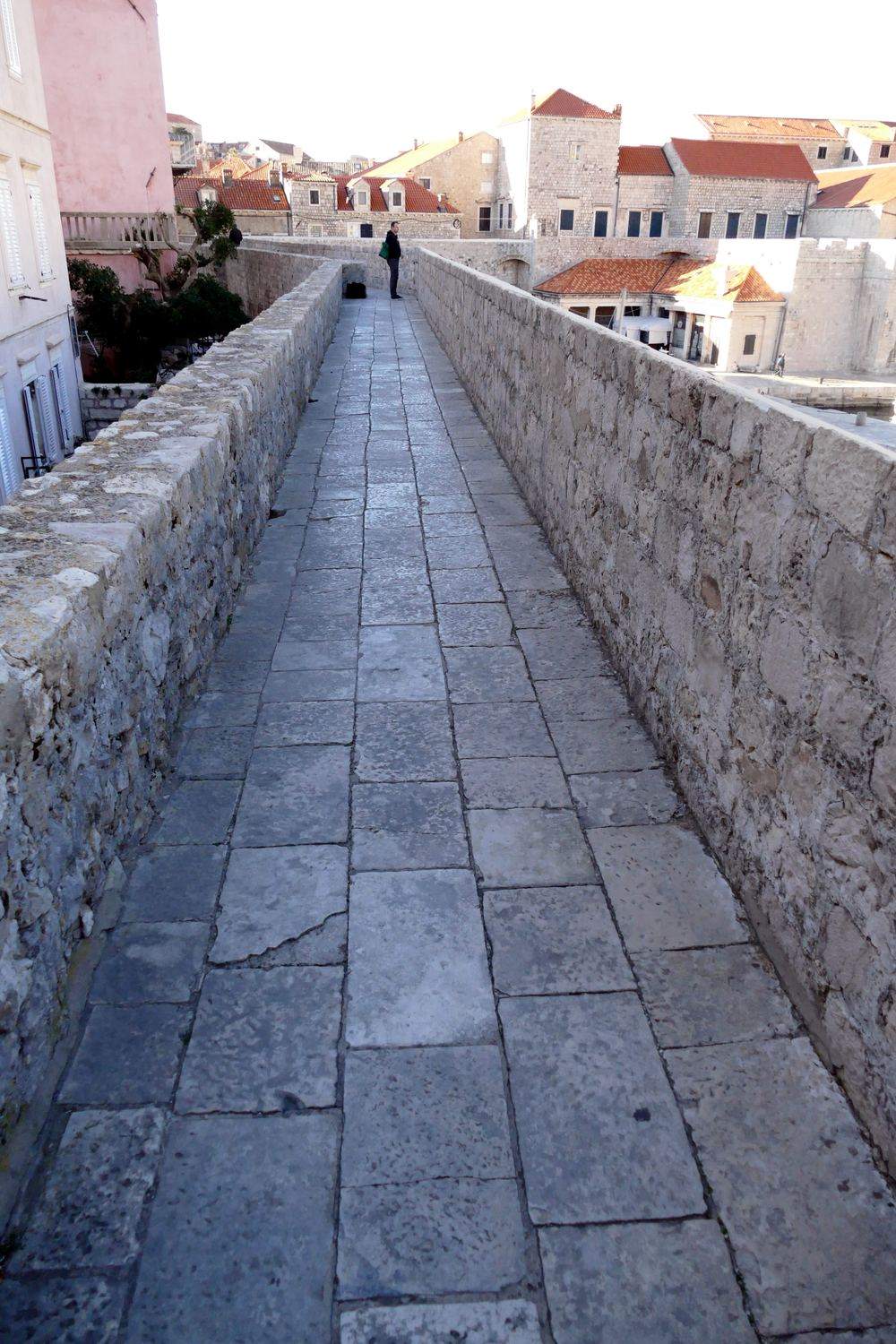
Buje stands on a hill about 220 m above the coastal plain, and from the top of the old town you see Umag, the Gulf of Trieste and, on a clear day, the Alps. That view gave it the old name of the sentinel of Istria. Venice held the town from 1412 until 1797 and left the loggia, the stone houses and the coats of arms on the walls. The parish church of St Servulus, an 18th century building on the site of a Roman temple, and its free-standing bell tower mark the highest point, and a small ethnographic museum below it shows the tools of farm and vineyard life. The surrounding hills, the Bujština, produce the malvazija, teran and olive oil that sell across Croatia.
What else to see nearby
The hills around Buje hold the best of north-west Istria within half an hour. Grožnjan, 12 km south-east, is a walled hill town that the municipality handed to artists after 1965, and its lanes are lined with studios and galleries that open in the afternoon. Momjan, 7 km north, has the ruin of a 13th century castle on a spur above a gorge and the wineries that make the muscat. Brtonigla, 8 km south, is a wine village with a limestone cave, Mramornica, open to visitors. On the coast, the lighthouse at Savudrija, about 20 km away, was lit in 1818 and is the oldest working lighthouse on the Adriatic. The Parenzana, the narrow-gauge railway from Trieste to Poreč that ran between 1902 and 1935, stopped at Buje, and its trackbed is now a cycling route through the tunnels to Grožnjan and on to Motovun.
Frequently asked questions
- When are the Dani grožđa in Buje in 2026?
- From Friday 18 to Sunday 20 September 2026, the 120th edition. The allegorical parade, the kroštata of 2026 grapes and the grand tombola are on Sunday.
- Who performs at Dani grožđa 2026?
- Friday Malvazija Band, Mali veliki mikrofon, Miach and MisterG Dee Jay; Saturday Zemljotres, Rewin3 Wasco and Lidija Bačić; Sunday Alfa Time Band and Klapa Rišpet.
- How do I get to Buje?
- Buje is 12 km inland from Umag and has its own exit on the A9 motorway; from Umag, Novigrad or Poreč the drive takes 15 to 35 minutes. The hilltop old town is closed to cars during the festival, so park at the edge and walk up.
Official sources
Make Croatia Atlas a preferred source
One click and Google shows you our stories more often in Top Stories and in AI answers. It changes your own results only.