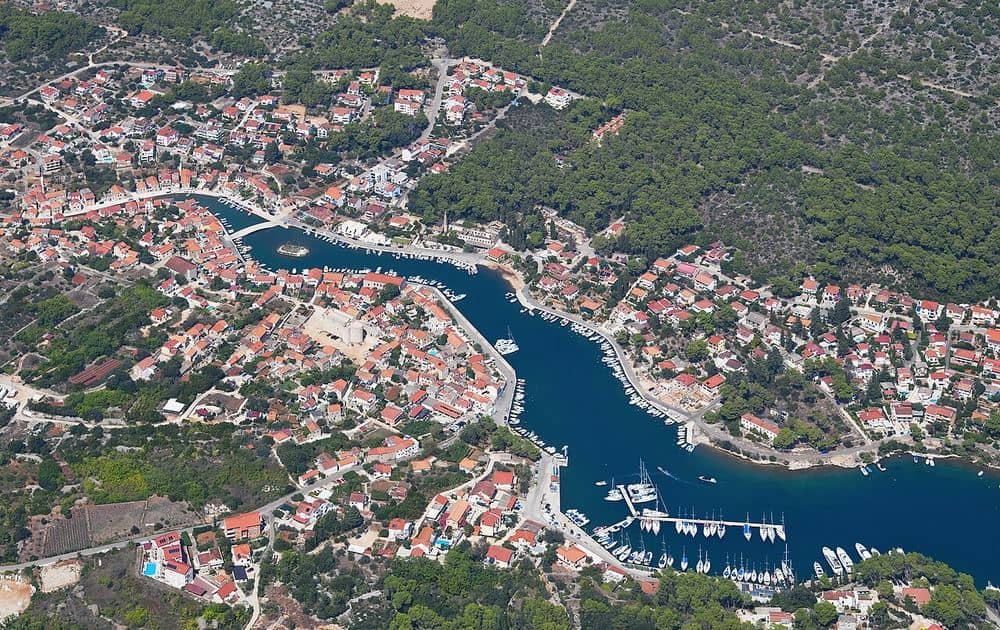
Hvar is more than nightlife. Use this guide for a slower island day with Fortica, Stari Grad Plain, lavender country and sea time that does not feel forced.
Checked: 18 October 2026, 19:11
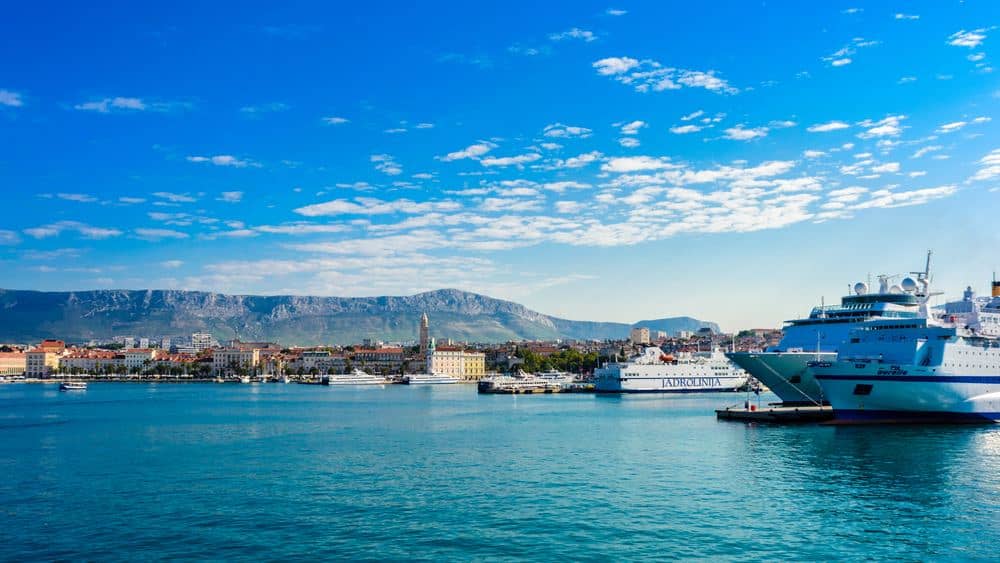
Hvar has a reputation for boats, cocktails and late nights, but the island is far better when you give it daylight. The old harbor is beautiful early, Fortica explains the shape of the town, and the inland roads open a quieter Hvar of stone villages, fields and sea views. The aim is not to avoid Hvar Town completely. It is to use it as a base, then leave before the day turns into a terrace crawl.
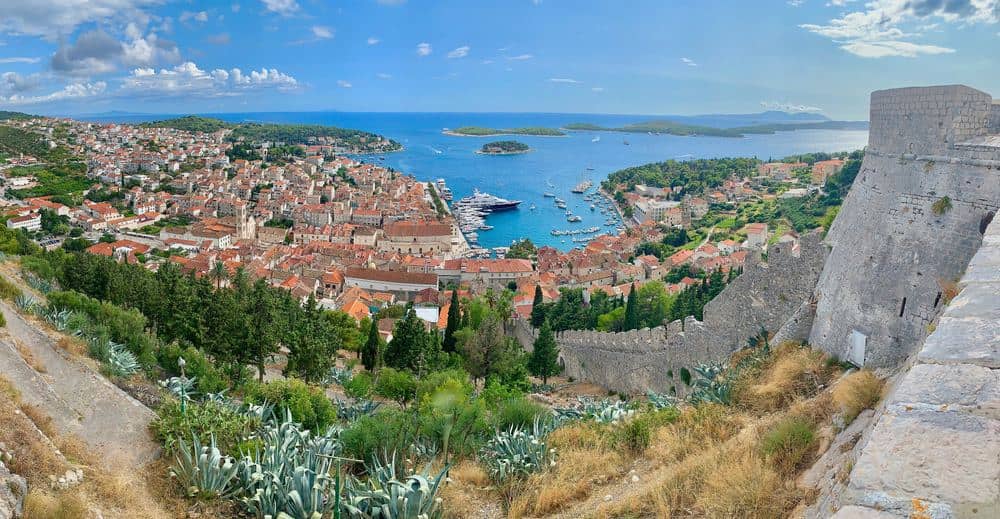
Morning above the harbor
Walk up to Fortica before the stones heat up. The climb is short but exposed, and the reward is the whole harbor laid out below: red roofs, Pakleni Islands and the line between town glamour and island geography. Come down slowly through the lanes instead of racing back to the waterfront. This is where Hvar still feels like a real place.
Leave town for the island story
- Stari Grad Plain for ancient field patterns, olive groves and a completely different pace.
- Velo Grablje and lavender country if you want the island to smell like summer, not sunscreen.
- Pokonji Dol for an easy swim when you do not want to turn the day into logistics.
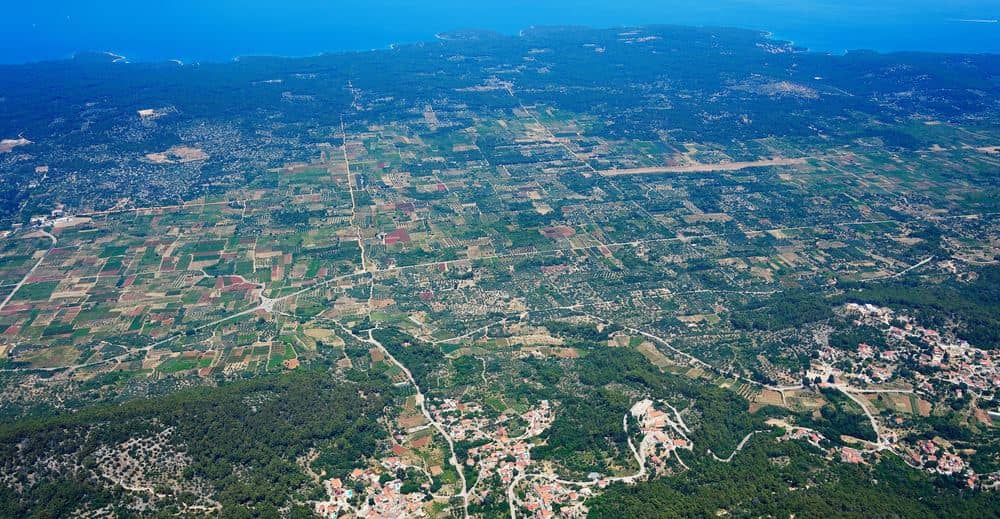
“The quieter Hvar starts ten minutes after you stop following the waterfront.”
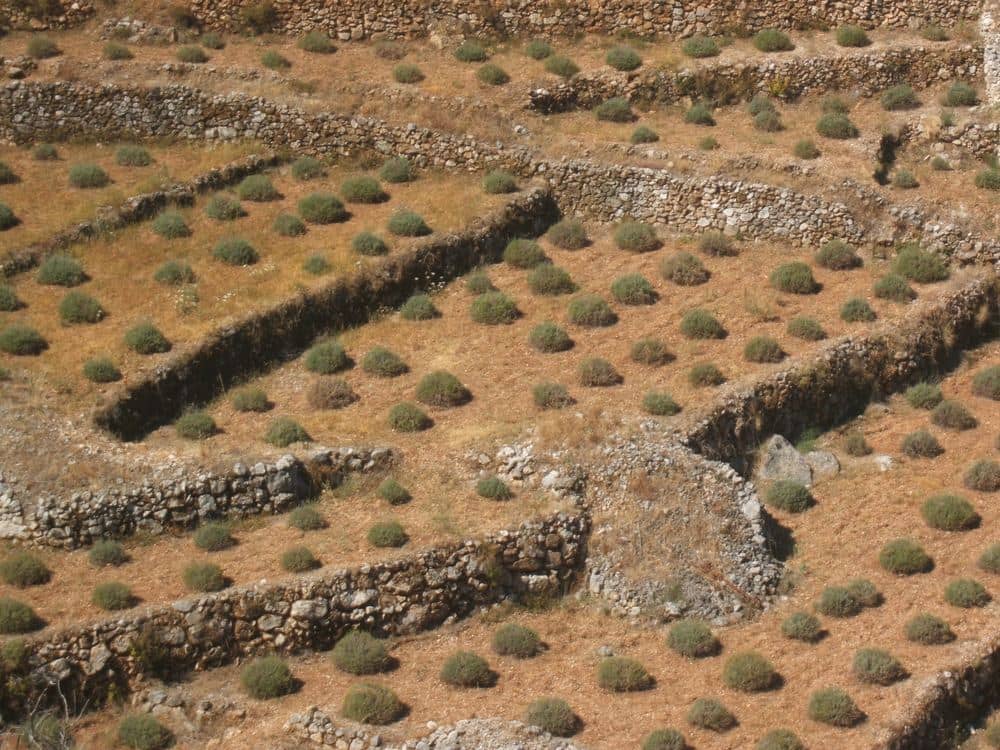
How to keep Hvar calm
- Stay one step ahead of boat schedules. Harbor crowds rise and fall quickly around arrivals.
- Choose one inland stop, not three. The island feels slower when you are not racing between villages.
- Swim before dinner, then return to town after the day-trip pressure drops.
- If nightlife is not your goal, sleep outside the loudest harbor lanes or choose Stari Grad as a base.
The best Hvar days have contrast: one high view, one old settlement, one stretch of field or coastline and one swim that does not require performance. If your plan includes those four parts, you can enjoy the famous harbor without letting it define the whole island.
Getting to the island
Hvar has 3 entry points and the one you choose shapes your first hour. Passenger catamarans from Split land on the Riva in Hvar town in about 60 minutes, 100 m from the main square. Car ferries from Split land in Stari Grad on the north coast in about 2 hours, and the island bus meets most sailings for the 25-minute run over the ridge to Hvar town. If you are driving up from Dubrovnik or along the Makarska coast, the ferry from Drvenik to Sućuraj at the eastern tip takes about 20 minutes, the shortest car ferry crossing on the Adriatic. From Sućuraj a narrow road runs 77 km along the spine of the island to Hvar town and takes 2 hours, so treat it as part of the day and stop in Jelsa. Book the Sućuraj ferry ahead in summer, the queues can be long.
| From | Lands at | Crossing | Use it if |
|---|---|---|---|
| Split, catamaran | Hvar town Riva | about 60 minutes | you have no car and stay in Hvar town |
| Split, car ferry | Stari Grad port | about 2 hours | you have a car or stay on the north coast |
| Split, catamaran | Jelsa | summer only | you stay in Jelsa or Vrboska |
| Drvenik, car ferry | Sućuraj | about 20 minutes | you drive from Dubrovnik or Makarska |
| Split airport | Split port | airport shuttle, then a short walk | you fly in the same day |
Getting around once you land
The island bus links Hvar town, Stari Grad, Jelsa and Vrboska and runs to the ferry timetable, with fewer departures outside summer, so check the day's times at the stop before you rely on it for the way back. Taxi boats from the Hvar waterfront serve the Pakleni Islands and the coves east of town every half hour in season, with crossings of 5 to 20 minutes, and the last boat back leaves earlier than most people expect, so ask when you board. A car is the only practical way to the south coast: Zavala, Ivan Dolac and Sveta Nedjelja lie beyond the Pitve to Zavala tunnel, a single-lane unlit cut about 1.5 km long where you wait for oncoming traffic to clear before entering. The old core of Hvar town is pedestrian and parking near it is scarce. Bicycles suit the flat gravel tracks of Stari Grad Plain, the island roads climb hard.
Quieter swims within reach of town
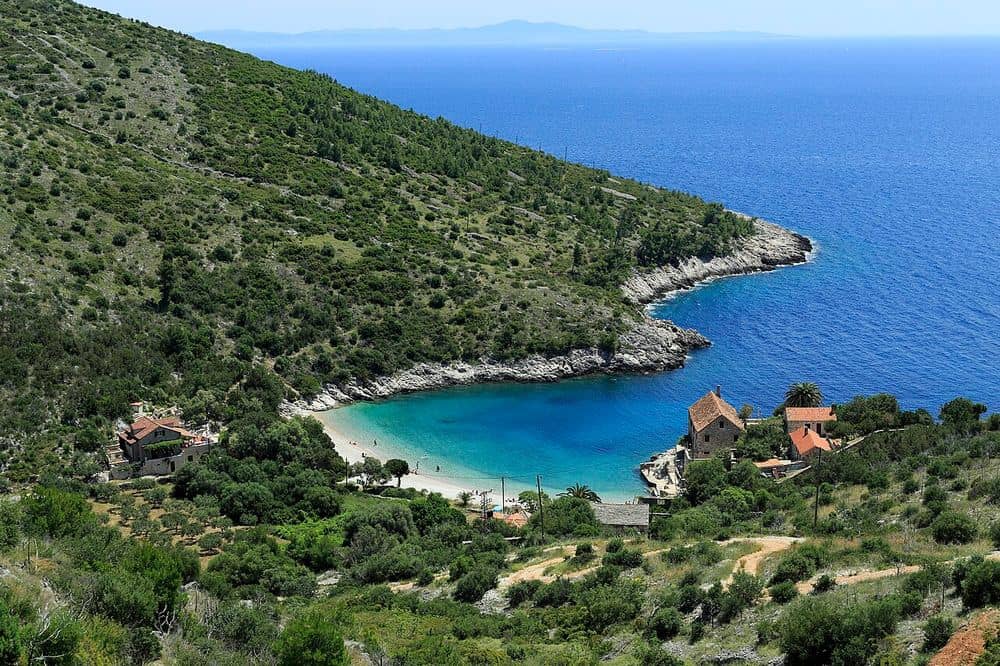
Bonj, 10 minutes west of the square along the sea, has a row of stone arcades built after 1920 when the first hotels arrived, with shade under them, loungers for a fee on the hotel section and a free stretch beside it. Mekićevica lies behind the headland east of the harbour, 10 minutes by taxi boat, with deep water a few metres out and a tavern that grills for guests brought in by boat. Jerolim, the first Pakleni islet, is under 1 km from the harbour, with separate naturist and clothed stretches, deep clear water and one bar. For the south coast, Dubovica sits 8 km east of town on the old Stari Grad road, a steep 10-minute path down from a small car park to a pebble beach with a 19th-century stone house and dry-stone terraces behind it.
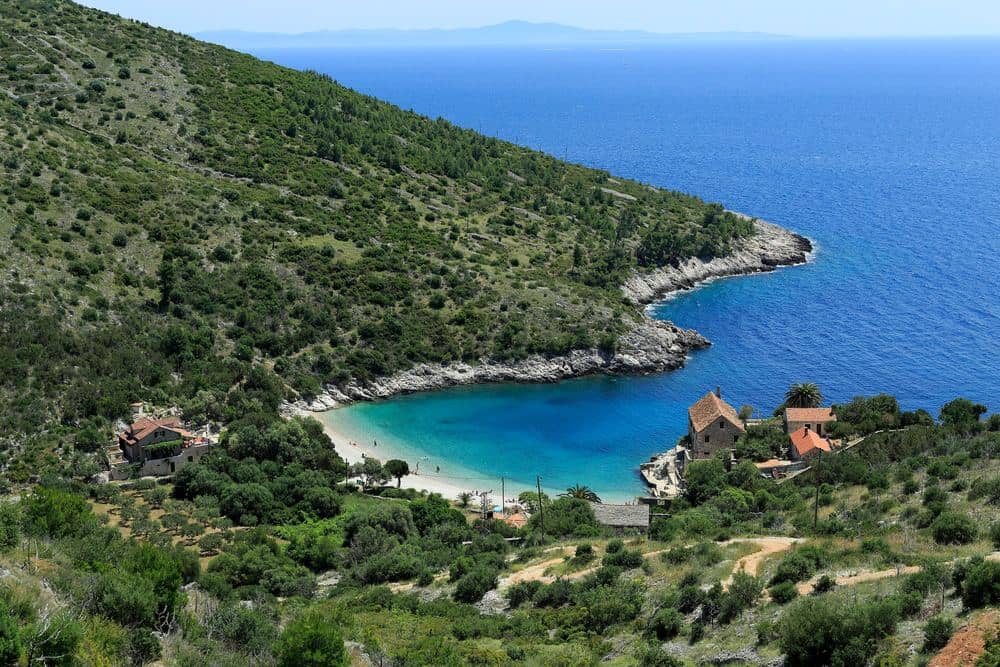
| Beach | Getting there | Shade and facilities |
|---|---|---|
| Pokonji Dol | 20 minutes on the shore path from the Franciscan monastery | pine shade, 2 beach bars, showers |
| Mekićevica | taxi boat 10 minutes, or 3 km of gravel track | a few pines, one grill tavern |
| Jerolim | taxi boat 10 minutes | pine wood, one bar, naturist stretch |
| Dubovica | 8 km by car, then a steep 10-minute path | almost none, no showers |
| Zaraće | car to the village, then a track ending in 200 m of steps | small tavern in season, nothing else |
| Lučišća | gravel track and footpath through vineyards | none, weak phone signal |
The south coast beyond the tunnel
Between Zavala and Sveta Nedjelja the slopes drop toward the sea at close to 45 degrees in dry-stone terraces of plavac mali, the red grape behind Hvar's best-known wines, and the harvest is done by hand because machines cannot reach the rows. Zavala has a narrow pebble beach facing Korčula, several taverns and sun until late in the afternoon. Ivan Dolac is the wine district itself, with a few pebble coves and a small jetty below the terraces, reached by a narrow road without a barrier. Sveta Nedjelja sits under a vertical cliff, with a 15th-century hermit monastery in a cave about 100 m above the houses, half an hour up a steep path, and a winery and several taverns in the village. From here the shortest route up Sveti Nikola, the island's highest point at 626 m, takes about 90 minutes through maquis with almost no shade, so carry water.
Markets and eating on the island
The markets open early and close around noon. In Hvar town the produce stalls stand in the shaded passage along the northern edge of the main square: figs and grapes in late summer, sage and rosemary honey, olive oil, dried lavender and home-made liqueurs, with the best choice before 09:00 and prices a little above the mainland because part of the goods comes over by ferry. The fish market is a small covered building at the western end of the harbour, selling whatever the night's nets brought, with a thinner offer on Tuesdays and Sundays because the boats stay in. Stari Grad has the better vegetables, since the plain lies behind the town, and its konobas cost about half of what the harbour lanes in Hvar town charge. Jelsa's market under the plane trees adds carobs, almonds and, in late autumn, mandarins from the Neretva valley, with a bakery and cafes beside it for breakfast before the beach.
When to go, month by month
May and early June bring warm days, sea warm enough to swim by afternoon, full markets and empty roads, and the plain is at its greenest. Mid-June to mid-July is lavender time, with the Velo Grablje festival in June and the smell of distilling in the villages. July and August bring the boats, the heat and the crowds: taxi boats to the Pakleni Islands are packed, Dubovica's car park is full before noon and afternoon catamarans back to Split sell out days ahead. September suits the slower island best, with warm sea, the grape harvest on the south slopes and thinning crowds. On 28 September the ferries switch to the off-season timetable and in 2026 the Jadrolinija catamaran stopped on 11 October, while Krilo keeps a reduced service through the winter. October still works for the plain and for walking. From November to April most beach bars, taxi boats and many taverns close, and a strong bora cancels the catamarans first.
Common mistakes
- Booking the catamaran to Hvar town when your apartment is in Stari Grad or Jelsa, the two ports are 20 km apart.
- Treating the Sućuraj road as a quick transfer, the 77 km to Hvar town take 2 hours of bends.
- Walking Stari Grad Plain at midday, it has almost no water and no shade, so go early with a full bottle.
- Driving into the Pitve to Zavala tunnel while a car is coming the other way, it takes one vehicle at a time.
- Arriving at the markets after noon, by then the stalls are packed away and the best produce went before 09:00.
- Swimming on the south coast in a strong southerly, the open sea throws waves into Zaraće, Zavala and Lučišća.
Choose the right Hvar base
Hvar feels completely different depending on where you sleep. Hvar Town is best for ferries, taxi boats, restaurants and the Fortica view. Stari Grad is calmer, older and better placed for the plain, inland roads and a less performative evening. Jelsa and Vrboska suit travelers who want harbor walks and quieter nights. The island is small on a map, but your base decides whether the day feels like logistics or discovery.
A calm Hvar day plan
- Morning: Hvar Town harbor, St Stephen's Square and Fortica before the climb becomes hot.
- Late morning: cross toward Stari Grad Plain or Stari Grad town for heritage without the harbor performance.
- Afternoon: pick one swim, not five. Hvar is more relaxing when the beach is a pause, not a checklist.
- Evening: return before the harbor peaks, or stay inland for a slower dinner.
Why Stari Grad Plain matters
Stari Grad Plain changes the island from postcard to landscape. Its field pattern goes back to Greek colonization and still reads as a working agricultural grid of vines, olives, stone lines and paths. You do not need to over-plan it. The point is to leave the waterfront long enough to see why Hvar was valuable before it was fashionable.
Use the app to avoid the party default
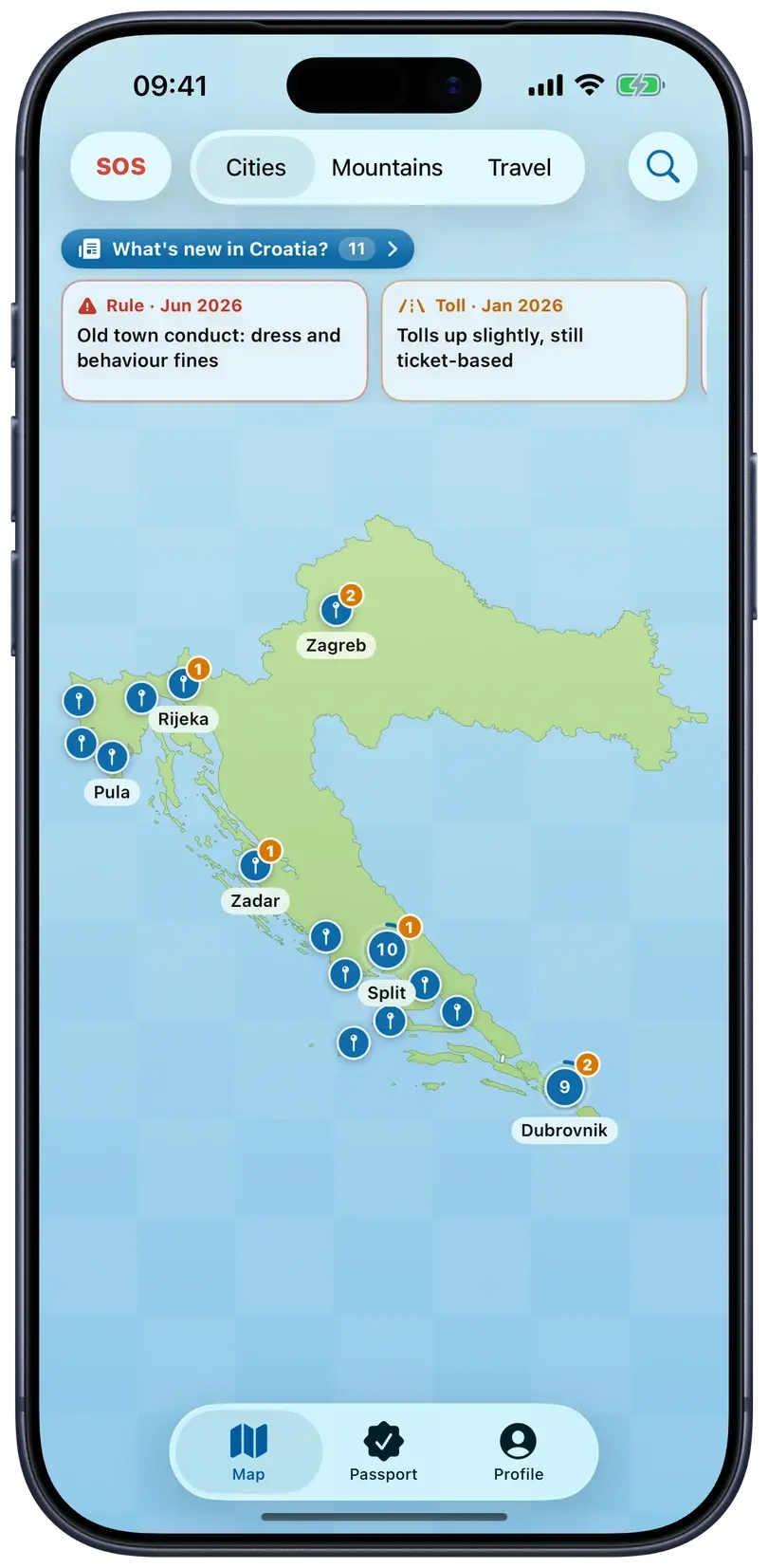
Save Fortica, Stari Grad Plain, one village stop and one swim as a single Hvar quest. That gives the day a shape outside the usual harbor loop. If the sea is rough or boats are full, you still have inland discoveries. If the town gets too loud, you already know where the slower island begins.
Transport reality check
The calm version of Hvar depends on transport choices. Ferry times, taxi boats, summer parking and island buses decide how ambitious the day can be. If you sleep in Hvar Town, the Pakleni Islands are easy but the inland villages require more planning. If you sleep around Stari Grad or Jelsa, the quieter island is closer, but the famous harbor needs a deliberate trip. Choose the base that matches the Hvar you actually want.
- Without a car: build the day around one town, one boat option and one swim reachable without stress.
- With a car or scooter: choose fewer stops and let the inland roads, lavender views and stone villages do the work.
- For families: avoid late harbor peaks and plan the swim before dinner, not after the island gets louder.
Frequently asked questions
- Do I need a car on Hvar?
- For Hvar town, Stari Grad, the plain and the Pakleni Islands, no: the island bus and the taxi boats cover them. For the south coast beyond the Pitve to Zavala tunnel, and for Dubovica and Zaraće, a car saves long walks in the heat. Cars arrive by the Stari Grad or Sućuraj ferries, never at Hvar town.
- Which town is the quietest base?
- Stari Grad is nearest the car ferry, has the plain behind it and a calm bay that faces west in the evening. Jelsa has a plane tree park, a spring and a summer catamaran to Split and Bol. Vrboska is the smallest, a channel village with stone bridges and a fortified church, 9 km from Jelsa, walked round in an hour.
- What can I see in Hvar town during the midday heat?
- The Benedictine monastery shows agave lace, a technique on the UNESCO intangible heritage list since 2009 that exists nowhere else, and takes 15 minutes. The Franciscan monastery, 10 minutes along the sea, holds a Last Supper almost 8 m wide and a cypress more than 3 centuries old. The Arsenal theatre from 1612 takes 20 minutes, and the loggia by the clock tower is a covered place to sit.
- Can I reach the Pakleni Islands without a tour?
- Yes. Taxi boats leave the Hvar waterfront every half hour in season, with tickets at the quay: 5 minutes to Galešnik, about 10 to Jerolim and about 20 to Palmižana. Half a day covers Palmižana, including the 15-minute walk over the hill to the south-facing pebble beach. Bring shoes for the forest paths, everything beyond the taverns is pine and rock.
- What if wind cancels my catamaran back to Split?
- In a strong bora the catamarans are cancelled first. The car ferry from Stari Grad usually keeps running in weather that stops them, so take the island bus 25 minutes to Stari Grad port and cross as a foot passenger, there is always space. If you have a flight from Split, keep the last island day flexible and check the forecast the evening before.
- Where can I eat away from the harbour?
- Away from the harbour lanes prices drop quickly. Two settings are worth a detour: the single tavern in the roofless village of Malo Grablje, run by a descendant of the villagers, the last of whom left in 1968, reached by 2 km of gravel off the main road or 40 minutes on foot from Milna, and the restaurants around the botanical garden at Palmižana, 20 minutes by taxi boat.
Official sources
Share this guide
Questions about your trip?