Ta strona nie jest jeszcze dostępna po polsku. Czytasz wersję angielską.
One UNESCO basilica, a Roman street grid still in daily use, and three towers from the old walls. Poreč rewards an hour more than most people give it.
Sprawdzono: 18 października 2026, 04:10
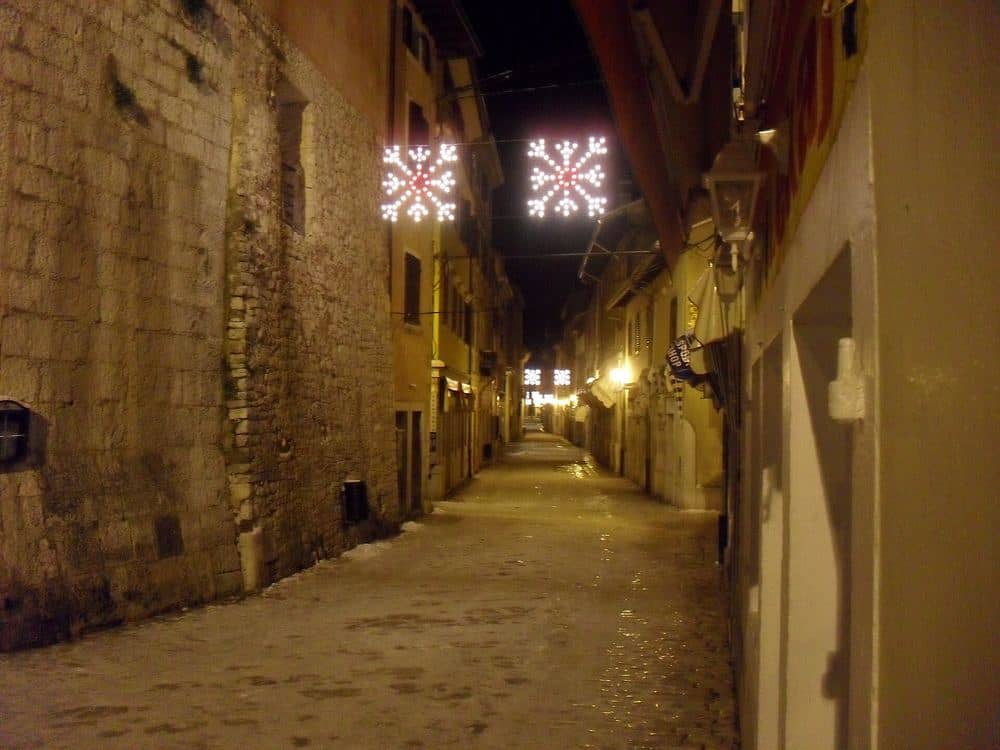
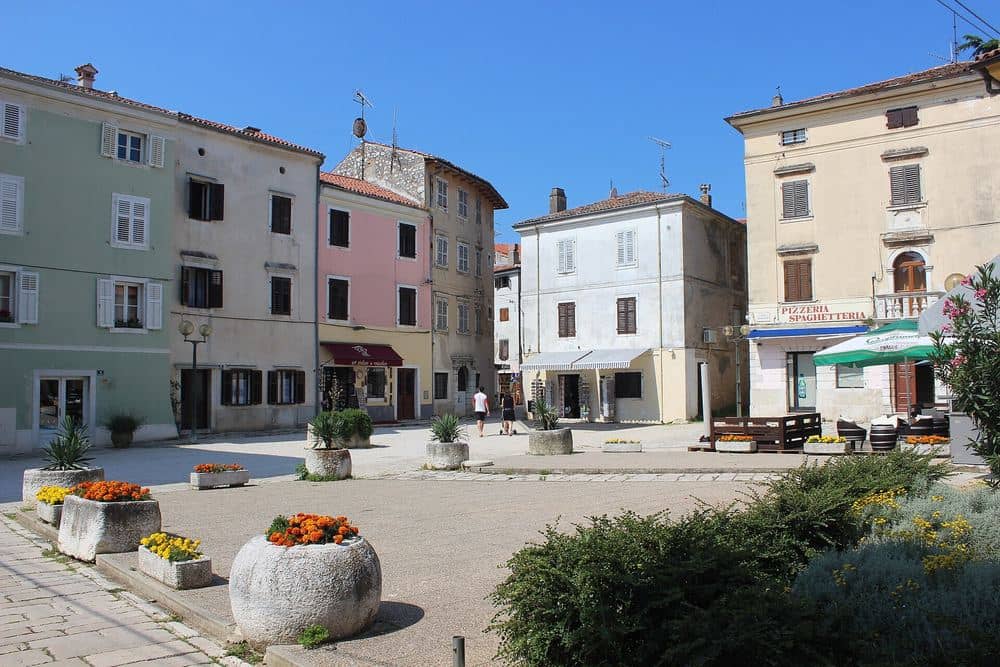
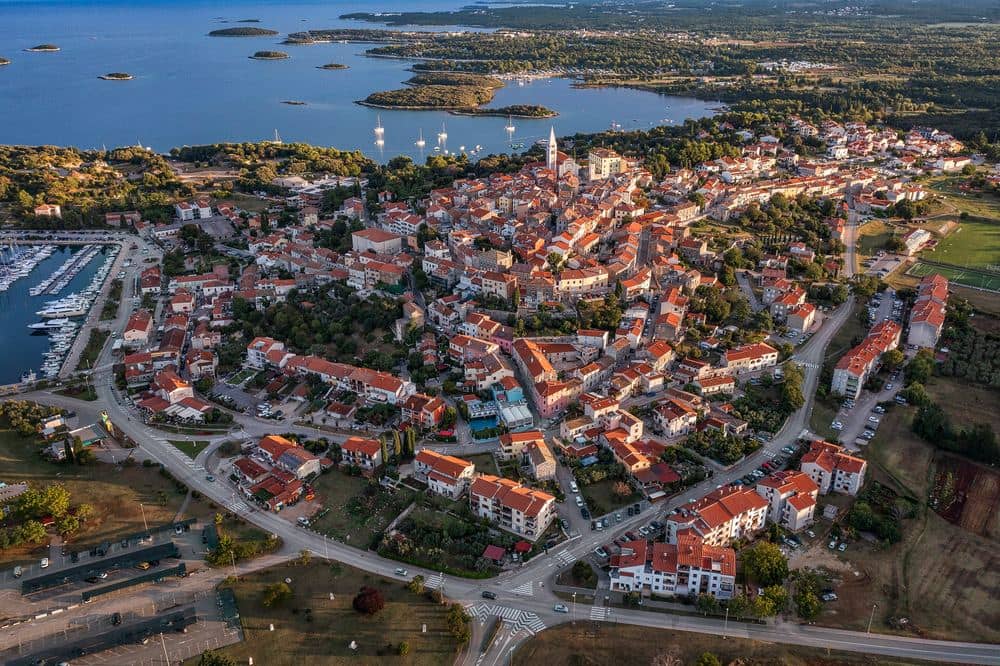
Poreč has one thing everybody comes for and several that people walk past. The Euphrasian Basilica is on the UNESCO World Heritage list for its sixth-century mosaics, and it deserves the attention. But the old town around it is a Roman grid that never got redrawn: the Decumanus still runs the length of the peninsula, Marafor Square still sits where the Roman forum was, and once you notice the pattern you can read the whole centre in twenty minutes.
The basilica is a complex, not a church
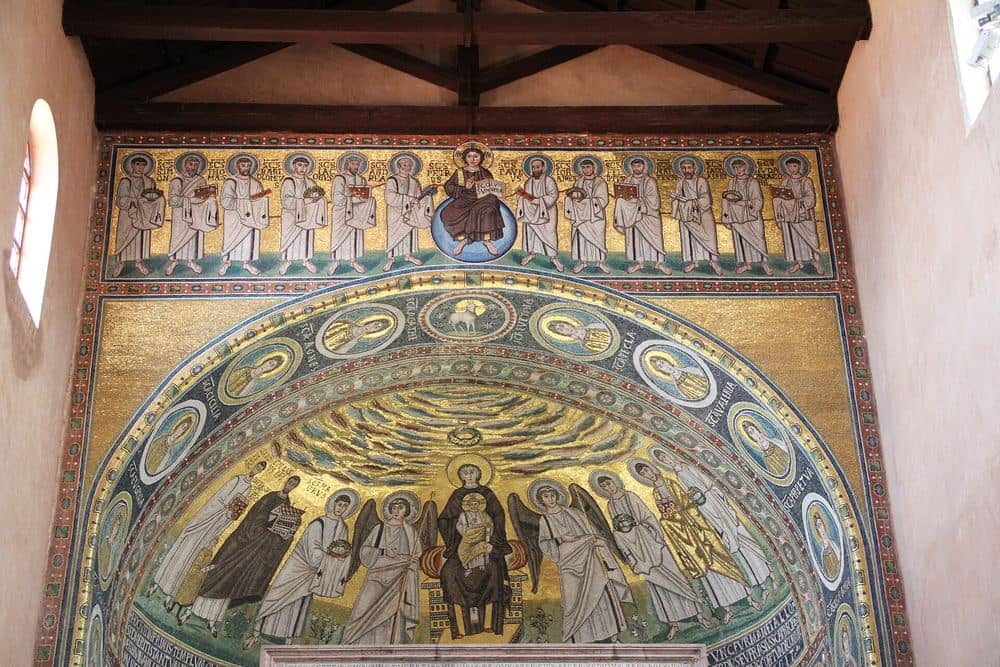
This is the part most visitors get wrong. The Euphrasian Basilica is not a single building but an early Christian ensemble: the church with its apse mosaics, the atrium, the baptistery and the bishop's palace. Buying the ticket and looking only at the nave means missing more than half of it. The mosaics are the reason for the UNESCO listing, but the layout is what makes the site unusual, because so few complexes of this age survived with their parts still standing together.
Walk the Roman grid, then the walls
- Decumanus: the main Roman axis, still the busiest street in the old town.
- Marafor Square and the Romanesque House: the old forum and one of the few surviving Romanesque houses.
- Round, Pentagonal and Northern Tower: three surviving defensive towers, each on a different side of the old walls.
When the old town is full
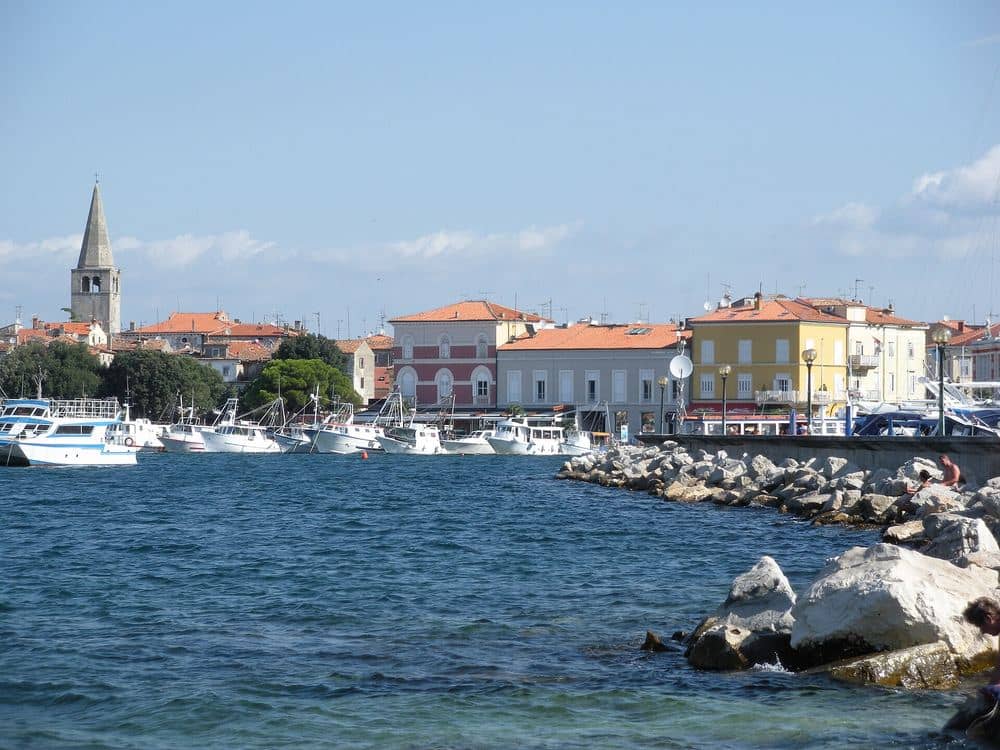
Poreč is a package-holiday town as much as a historic one, and in July the peninsula fills up early. The escape routes are short: Sveti Nikola island lies directly opposite the harbour and changes the temperature of the day completely, and Baredine Cave inland is the standard rainy-day or too-hot-day option. Vrsar, a few kilometres down the coast, has an old town that feels like Poreč did before the hotels.
- Sveti Nikola island: boats run from the harbour, and the far side is quieter than the near one.
- Baredine Cave: inland, cool year round, the reliable option when the coast is too hot.
- The Riva: the waterfront promenade, best in the hour before sunset.
“Poreč is a Roman town that kept its street plan and let everything else be rebuilt around it.”
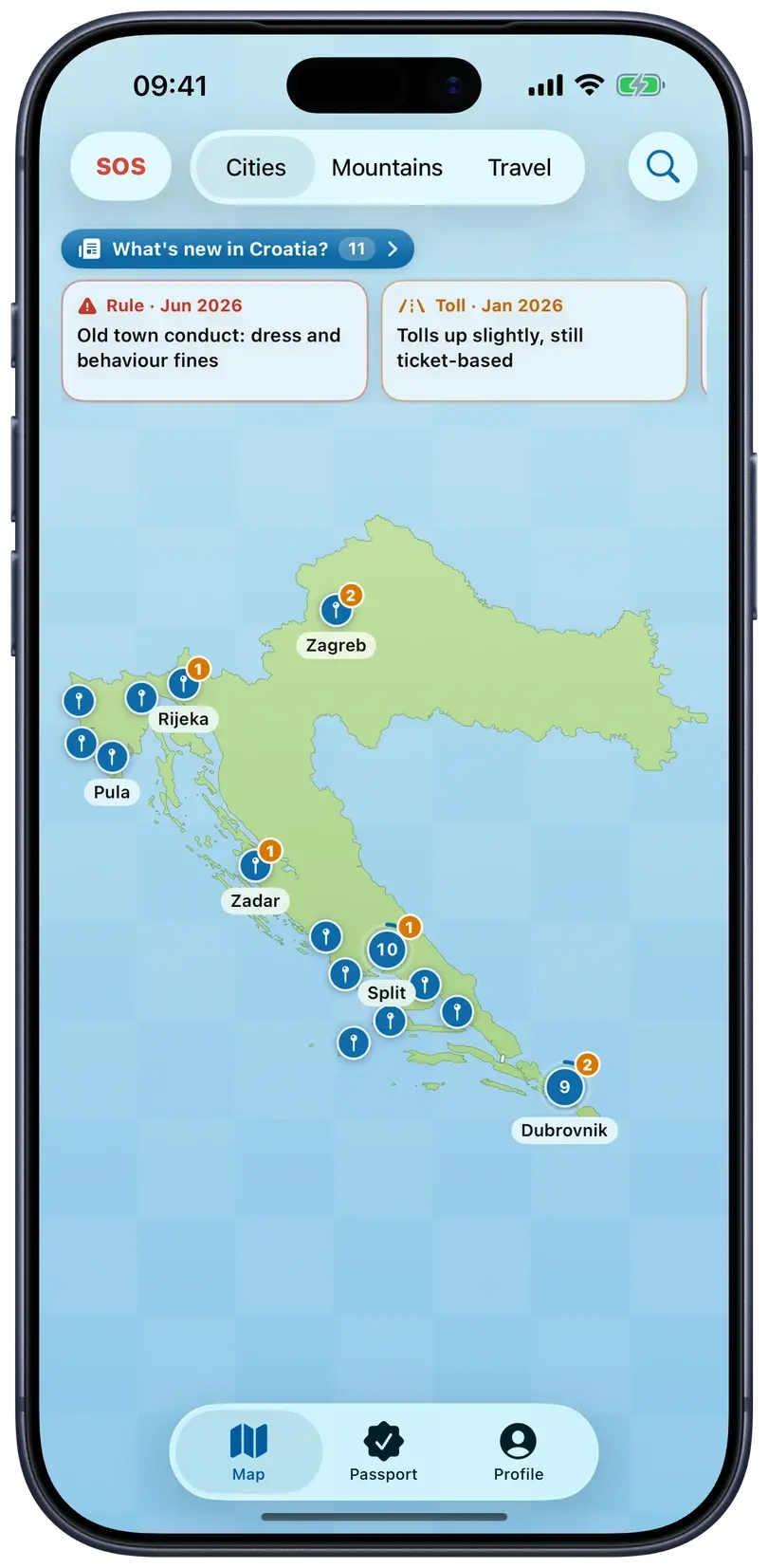
Practically: the basilica is the one thing worth timing your day around, and early is better than late. The old town is small enough that you do not need a plan, but the towers are easy to miss because they sit at the edges rather than on the main street. The route through the centre, towers included, is mapped in the CroVenture app.
Getting to Poreč
Poreč has no railway and no airport of its own. The nearest airport is Pula, about 60 km south, roughly 1 hour by car on the Istrian motorway and the coast road. Trieste airport in Italy is about 100 km away and often has the cheaper flights from the UK. The bus station sits at the edge of the centre, a few minutes on foot from the old town, with services to Pula, Rovinj, Rijeka and Zagreb and cross-border buses to Trieste. In summer a fast catamaran links Poreč with Venice and lands at the harbour beside the Riva. By car you leave the motorway at the Baderna junction and follow the road about 10 km down to the coast.
| From | Route | Distance |
|---|---|---|
| Pula airport | A9 motorway, exit Baderna, then the coast road | about 60 km |
| Trieste airport | via Koper and the Istrian motorway | about 100 km |
| Rijeka | Učka tunnel and the A9 | about 90 km |
| Zagreb | A6 to Rijeka, then the Istrian motorway | about 250 km |
| Venice | seasonal catamaran, summer only | about 120 km by sea |
Getting around and parking
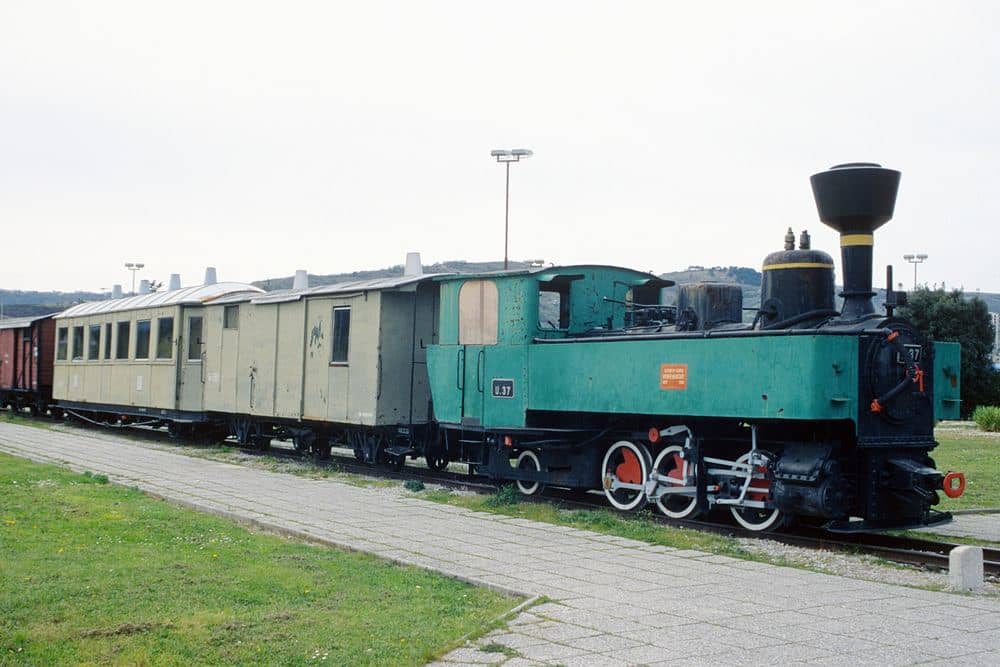
The old town is closed to cars and takes 10 minutes to cross on foot, so the only transport question is the car. Car parks ring the peninsula, the largest by the harbour and along the road inland past the bus station, and in July and August they fill by late morning: arrive before 09:00 or accept a walk. Outside the centre a paved promenade follows the shore both ways, north past Pical and Špadići, south past the city beach to Plava Laguna and Zelena Laguna, and a bike beats a car on it in season. A tourist road train runs the southern stretch in summer. The Parenzana trail starts at the edge of town on the bed of the old railway to Trieste, flat and easy for the first kilometres.
Beaches: rock, concrete and pines
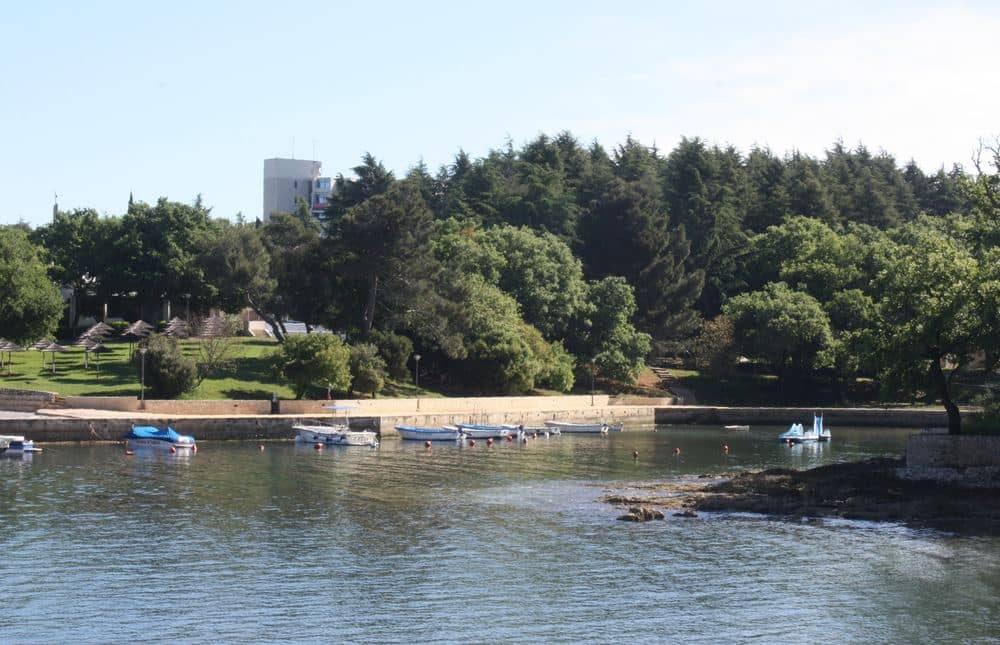
There is no sand in Poreč. Every bathing place is rock or concrete platform with ladders, sometimes with belts of shingle, and water shoes help on all of them. The city beach begins directly behind the southern walls and is the one you use for an hour before dinner. Brulo, a little further south, has pines down to the water and is the shaded choice on a hot afternoon. Every beach in Croatia is public, including the hotel beaches at Plava Laguna and Zelena Laguna, and you pay only for loungers and umbrellas.
- City beach: south, directly behind the walls, the nearest swim from the old town.
- Brulo: south towards the hotel zone, pinewood to the waterline, shade all day.
- Pical: north, about 20 minutes on the promenade, platforms, fine shingle and benches in the pines.
- Špadići: north past Pical, in the campsite belt developed after 1960, good for families.
- Materada and Saladinka: a few kilometres north where the tourist zone thins, deep clear water at once.
- Zelena Laguna: 5 km south, Blue Flag, loungers, sports and a separate naturist section at the campsite.
Markets and self-catering
Restaurants line the Riva and the Decumanus. The food shopping happens early. The fish market works beside the town market near the harbour and opens early in the morning, with sole, hake, red mullet and scorpionfish from the northern Adriatic. The green market runs from early morning to early afternoon: tomatoes, chard and potatoes from the red earth, grapes in August, figs and pomegranates in September, and stalls with olive oil, honey and truffle products. For everything else the Konzum east of the old core, on the road inland, is the main supermarket and has its own bakery. For wine, Malvazija is the Istrian white and Teran the red, both grown in the hinterland you see from the bell tower.
Day trips inland and up the coast
With a car the hinterland opens up. Motovun, the walled hill town 277 m above the Mirna valley, is about 45 minutes' drive through vineyards and is the standard inland day, with truffles on every menu. Višnjan, on the way, has an observatory that found more than 1000 asteroids after 1990 and takes visitors by arrangement, so check its page before you drive up. Up the coast, Novigrad lies about 20 km north on a small peninsula, with medieval walls, a parish church with an 11th century crypt and a waterfront calmer than the Riva. Tar, on a rise between the two, was built back from the sea because of pirates, and the Roman villa at Loron below it is an unpaved open-air site with the kilns that fired amphorae for Istrian oil.
When to go
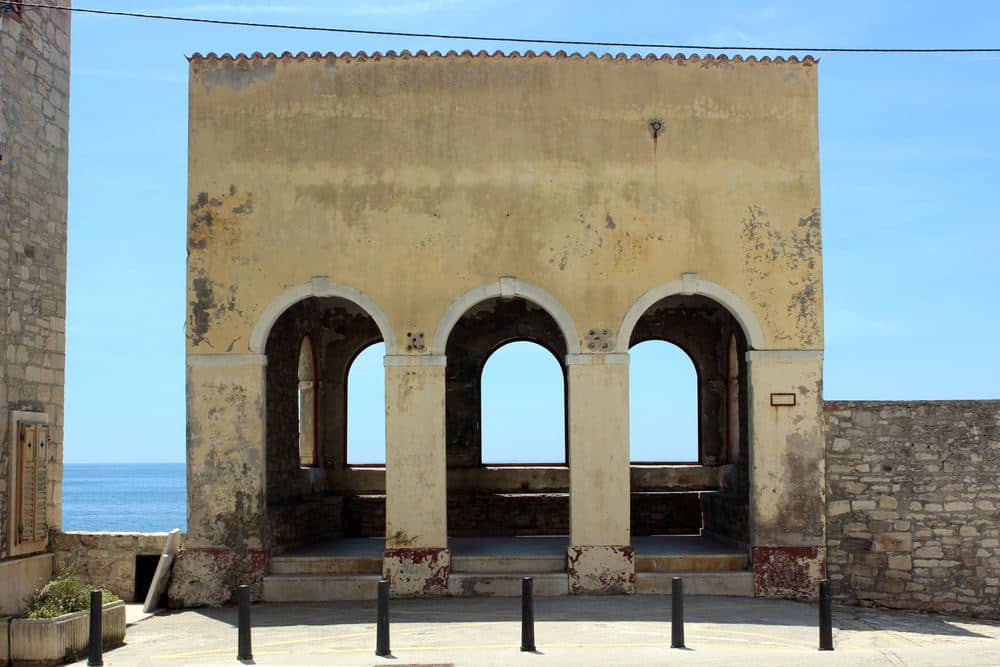
April and May suit the old town itself: the basilica is open, the cafes on the Riva have their tables out and the car parks are empty. June has warm sea and manageable crowds. July and August are the package season, when the peninsula fills by mid-morning and the beaches south of town are at their busiest, and everything stays open late. September is the month to pick if you can, with warm sea and cooler evenings. October still gives swimming on calm days. From November to March Poreč is a quiet working town, many restaurants close and the basilica keeps shorter winter hours, so check before you fix a time.
Where to stay
The choice is between the peninsula and the resort belts. In the old town you sleep among the Roman streets and walk to everything, and you accept that the Riva bars run late and the car stays outside the walls. South of the centre, Plava Laguna and Zelena Laguna are planned resorts built between 1955 and 1970, with tall pines, hotels, apartments and developed beaches, and they suit families who want loungers, sports and the road train into town. North of the centre, the belt from Pical to Materada is campsites and apartment settlements, quieter and cheaper, with the promenade as the way in. Lanterna, 15 km north, is one of the largest camping zones on the Adriatic and only makes sense with a car.
The places, one by one
| Place | What it is | Time needed |
|---|---|---|
| Pentagonal Tower | Venetian gate tower of 1447, now a bar with a terrace | 20 minutes |
| Decumanus Shops | Small shops in the old houses on the main street | 30 minutes |
| Poreč Heritage Museum | Oldest museum in Istria, in a Baroque palace | 1 hour |
| House of Two Saints | Medieval house with saint reliefs on the facade | 10 minutes |
| Istrian Assembly Hall | Former church, provincial parliament from 1861 to 1918 | 20 minutes |
| Round Tower | Tower of 1475 with a cafe terrace over the roofs | 30 minutes |
| Poreč Marina | Sheltered harbour for about 200 boats | 30 minutes |
| Oliva Beach | Rock and platform beach west of the core | 1 to 2 hours |
| Aquacolors Poreč | Largest water park in Istria | a full day |
| Dinopark Funtana | Dinosaur models on a forest path | 1 to 2 hours |
| Funtana Harbour | Small fishing village with freshwater springs | 1 to 2 hours |
| Vrsar Old Town | Hill town of the bishops of Poreč | half a day |
| Traktor Story | Collection of old tractors beside Baredine Cave | 1 hour |
| Rt Zub Lighthouse | 19th century lighthouse on the Lanterna peninsula | 2 hours |
Pentagonal Tower
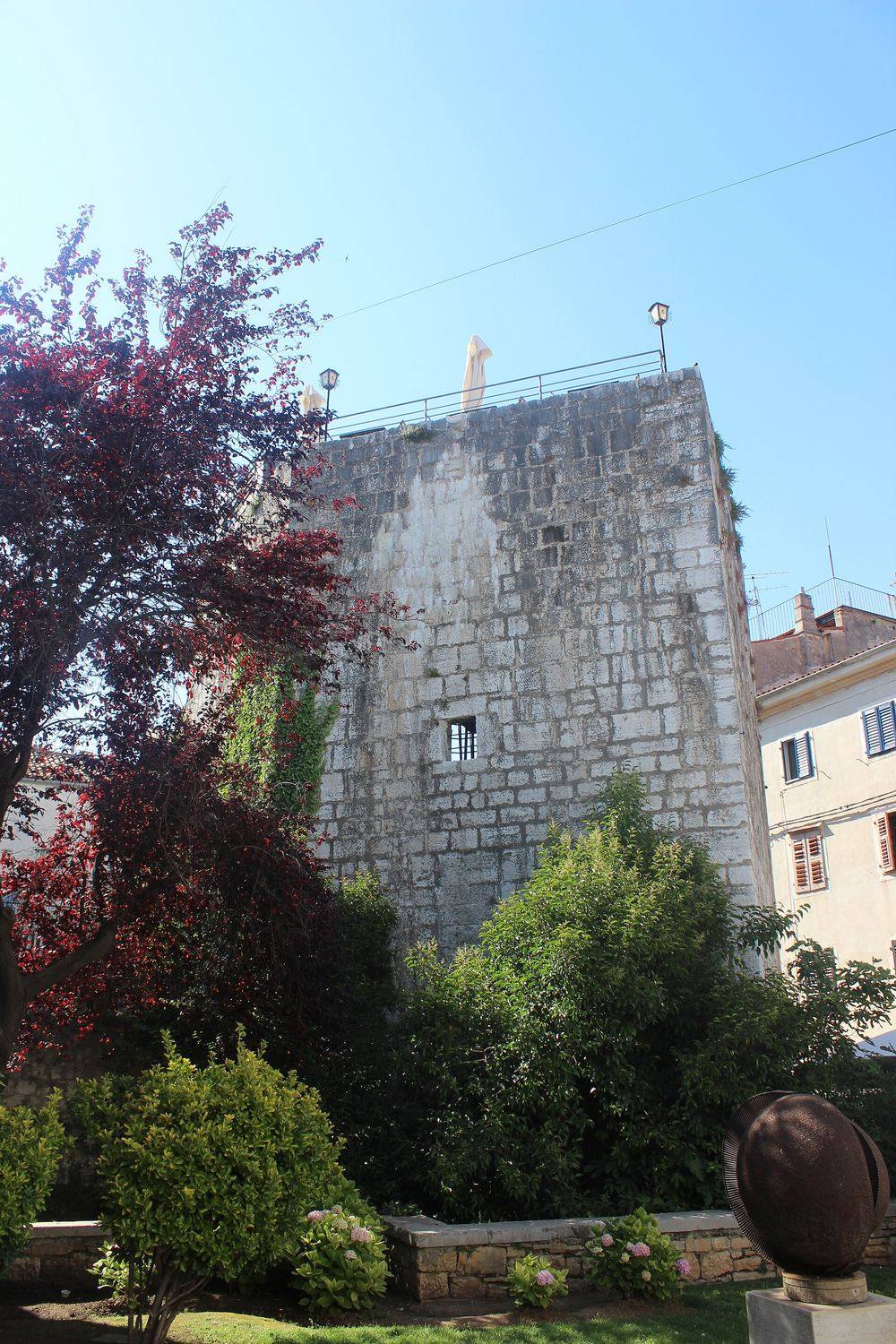
The Pentagonal Tower stands at the eastern entrance to the old core, where the Decumanus begins, and you pass through its ground floor to enter the town. Venice raised it in 1447 after Poreč accepted Venetian rule. The five-sided plan with a point facing outward was built for the age of cannon: a ball glanced off the sloping faces instead of piercing them, and the defenders gained a view along the walls. Above the passage a Venetian lion is carved. The tower now holds a hospitality space, so you see the interior as a guest, and the upper terrace looks over the roofs of the old core. From outside it can be viewed at any time. The terrace is best towards evening.
Decumanus Shops
Small shops fill the ground floors of the old houses along the Decumanus: jewellery, ceramics, textiles, books, olive oil, truffles and souvenirs. The spaces are narrow and tall because they were cut into buildings from the Romanesque to the Baroque period, and many window displays are a single window with a shelf. Provenance is the thing to check. Some shops sell goods from family holdings in the hinterland and the work of local craftspeople, others sell imported souvenirs. If you buy oil or truffles, ask for the producer and the year. If you buy ceramics or jewellery, ask who made it. The street is a few hundred metres long, so you cover the whole offer in half an hour. In summer the shops stay open late.
Poreč Heritage Museum
The Heritage Museum of the Poreč Region was founded in 1884 and is the oldest museum in Istria. It occupies the Baroque Sinčić palace on the Decumanus, an 18th century building whose courtyard and staircase are part of the display. The collection covers the whole region in chronological order: inscriptions and stone fragments from Roman Parentium, medieval objects, church vessels, weapons, furniture, portraits of Poreč families and ethnographic material from the villages inland. The museum also keeps documentation on the Istrian Assembly, which sat in Poreč in the second half of the 19th century. Allow an hour for the visit. The ticket is cheap, the museum opens all year and hours are extended in season.
House of Two Saints
The House of Two Saints stands in a row of old buildings a few steps from the Decumanus and takes its name from two stone reliefs of saints set into the facade. Istrian towns placed such figures on houses for several reasons: as protection for the household, as the sign of a confraternity the family belonged to, or as a vow after surviving illness. Plague passed through these towns in waves, and patron saints were part of everyday life. The building is medieval with later alterations, and its narrow facade and tall windows are typical of the whole street. The house is in private use, so you view it from outside. Fit it into a walk through the core rather than making a separate trip.
Istrian Assembly Hall
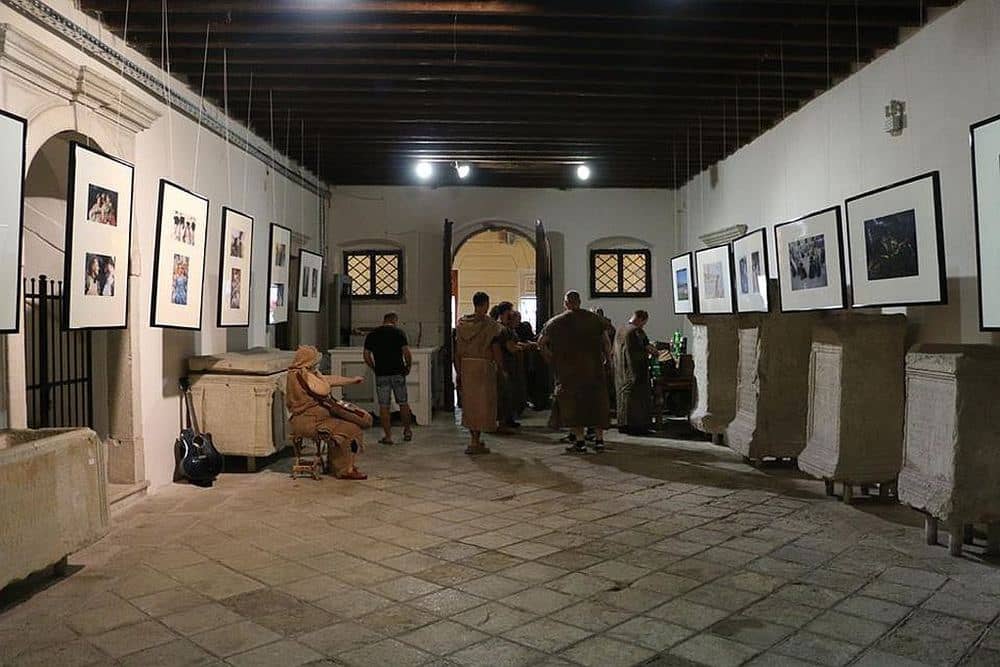
The Hall of the Istrian Assembly is a former Franciscan church of the 13th century. It received a Baroque interior in the 18th century and was rebuilt in the middle of the 19th century as a parliamentary chamber. From 1861 to 1918 the Istrian Assembly sat here, the provincial parliament of Istria within Austria-Hungary, where Croatian, Slovene and Italian deputies argued over language, schools and administration. Poreč was chosen as the seat because it was well connected and neutral enough. Today the hall is a concert and exhibition space with good acoustics, and the ceiling and gallery survive from the assembly era. It opens according to the programme, so check the schedule if you want to see the interior.
Round Tower
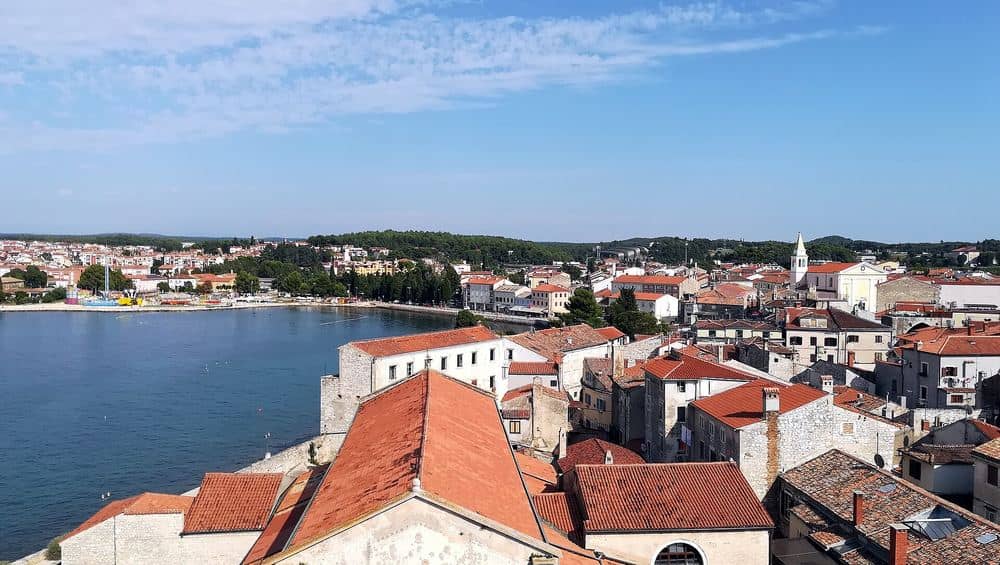
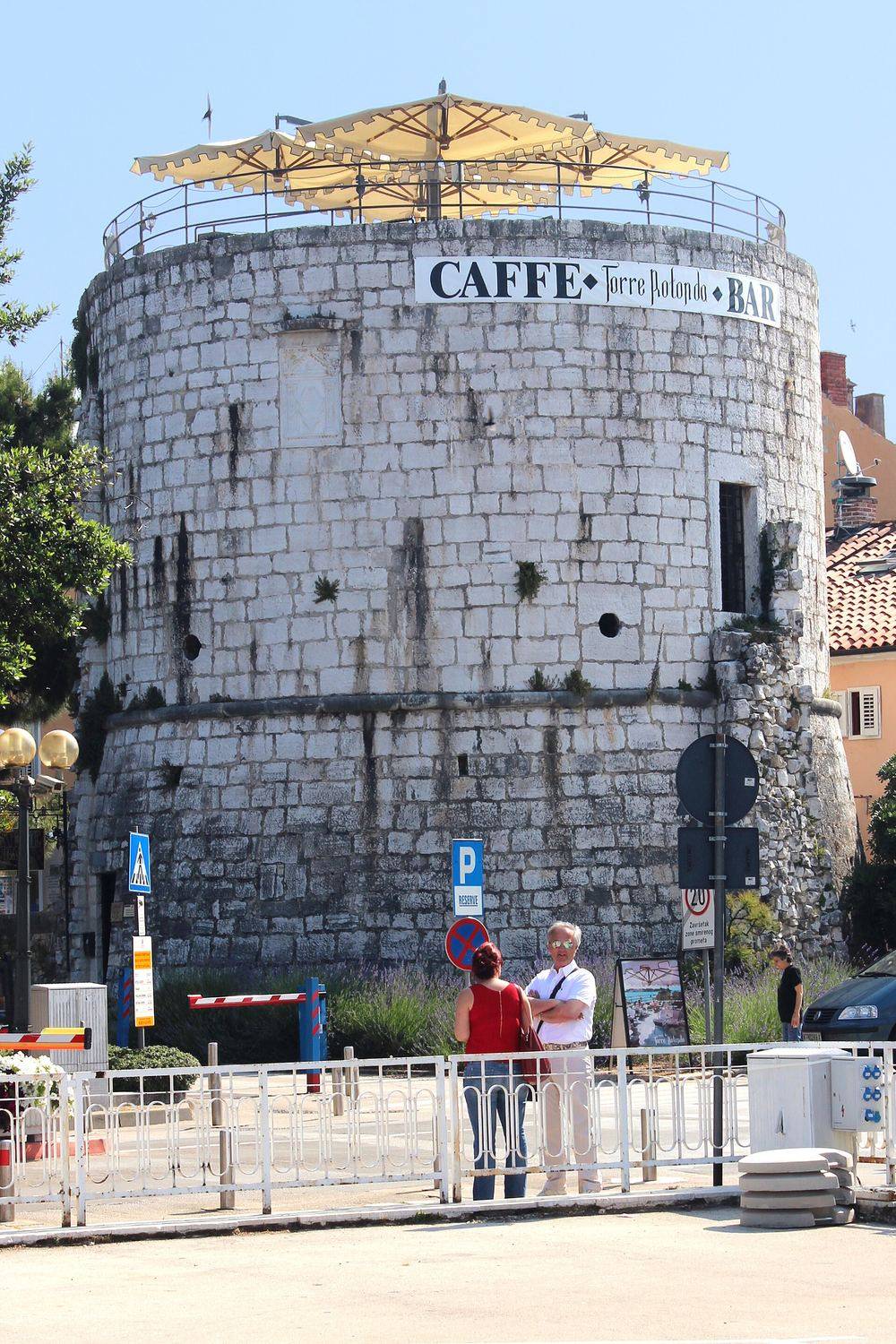
The Round Tower was raised in 1475 on the southern side of the walls, part of the same Venetian programme as the Pentagonal Tower. Square medieval towers were vulnerable to cannon, so the Venetians built circular and sloping forms that let a ball glance off. The walls are thick and the top carries a crown from which the shore was watched. Today the tower holds a cafe. From its terrace you look over the roofs of the old core, the bell tower of the basilica, the harbour and Sveti Nikola island. Entry is free with an order. The climb is by a narrow internal staircase and does not suit anyone with limited mobility. Come an hour before sunset.
Poreč Marina
The marina sits in the bay south of the old core, a 10-minute walk from the centre, and takes about 200 vessels on permanent berths and visitor places. Sveti Nikola island closes the bay from the west, so the water inside stays calm even when it blows outside. That shelter is why the Romans founded a port here 2000 years ago. The marina works all year with water, electricity, fuel and service. From Poreč boats sail towards Rovinj, the Lim channel and the Brijuni islands, and in good weather as far as Venice, about 100 nautical miles across the sea. If you have no boat, walk the piers towards evening, when the fleet returns.
Oliva Beach
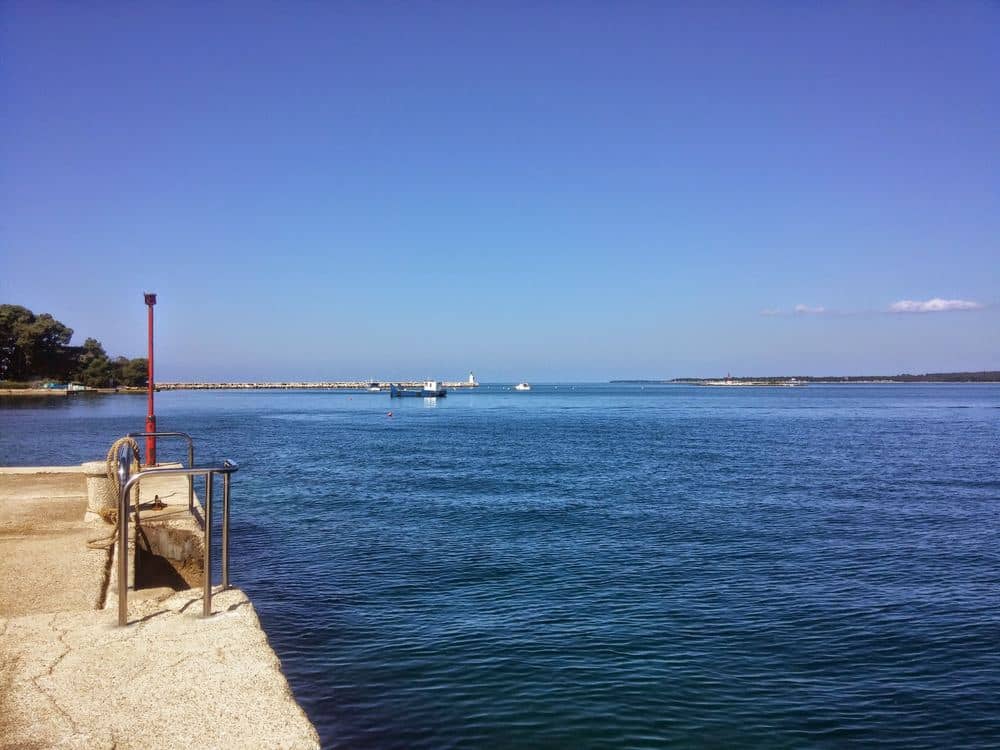
Oliva Beach lies west of the old core, about 10 minutes on foot from the waterfront, and does the job without pretension: concrete platforms, ladders into the sea, a few belts of shingle and pines behind that hold shade for part of the day. The shore faces west and is open, so the sea is clear, and the depth grows moderately, which makes entry manageable for weaker swimmers. In season there is a shower and a bar, and promenades continue towards Brulo and further south. Its advantage is the nearness of the centre: after a swim you reach the cafes and the basilica in 10 minutes. The crowd grows in the afternoon. In the morning the sea is calmest and clearest.
Aquacolors Poreč
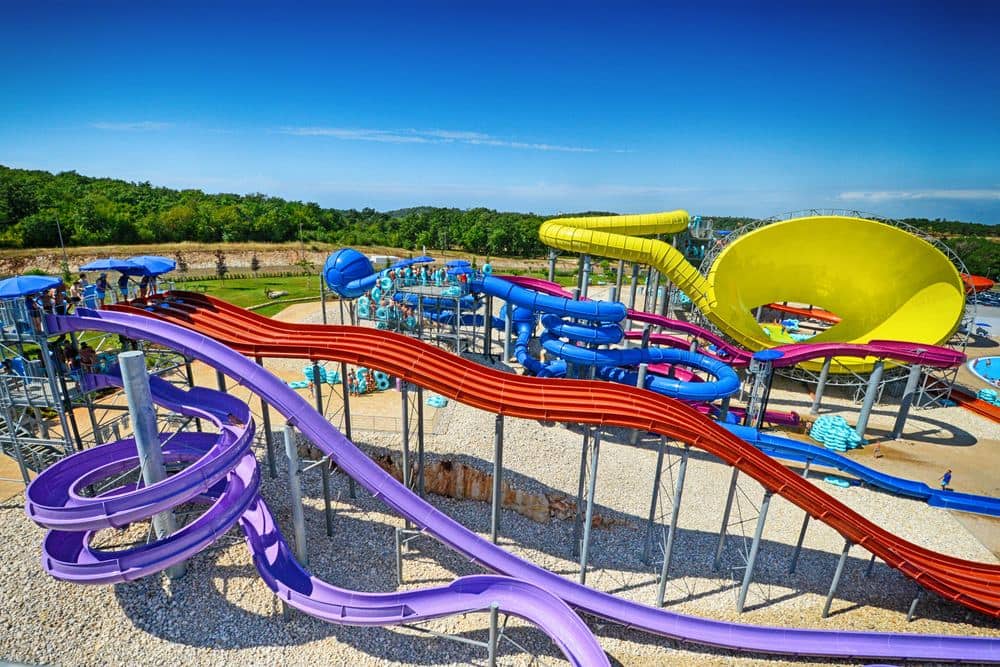
Aquacolors is a water park south of Poreč, about 10 minutes by car, opened in 2014 and the largest of its kind in Istria. Over about 100,000 square metres it has some 20 slides of varying difficulty, from gentle family runs to steep ones counted among the more demanding in this part of Europe, plus pools, a wave pool, a lazy river and a separate area for the youngest with shallow water and small slides. Loungers, catering, lockers and shade are provided, which matters because you spend a whole day here. Tickets are sold for the full day or the afternoon. In July and August arrive at opening, before queues at the bigger slides build. The park works from May to September.
Dinopark Funtana
The Dinopark near Funtana is a theme park in the pinewood south of Poreč, about 15 minutes by car. Life-sized dinosaur models stand along a path through the forest, arranged roughly by the periods in which they lived, with boards giving basic facts about each species, so the walk reads as a simple introduction to the development of life on Earth. Along the path are playgrounds, a little train, a sandpit for digging fossils and smaller amusements. The forest shades the whole route, an advantage in summer over open parks. Allow 1 to 2 hours depending on the age of the children. The park works from spring to autumn.
Funtana Harbour
Funtana is a small place on the coast between Poreč and Vrsar, 7 km from Poreč by the coast road, with a cycle path along the sea. It takes its name from springs of drinking water that surface right by the shore. Fresh water is rare on this stone coast, and the springs are why a settlement grew here. The harbour is small, with local fishing boats and a few berths for guests, and along it run the waterfront, taverns and a bathing place with concrete platforms. Above the harbour stand the Baroque church of St Bernard and the summer house of the family that governed the place in the 17th century. Funtana is smaller and quieter than the neighbouring settlements and suits anyone who wants coast without large hotel zones.
Vrsar Old Town
Vrsar is a small town on a hill by the sea, 15 km south of Poreč, built in concentric rings around the summit where the castle and the parish church stand. For centuries it belonged to the bishops of Poreč, who kept a summer residence in the fortified castle. Below it run narrow streets, stone houses and a town gate. At the edge of the settlement stands the Romanesque church of St Mary of the Sea from the 12th century, one of the oldest in Istria. Giacomo Casanova put in here in the middle of the 18th century and mentions the town in his writings. The climb to the top takes about 10 minutes, and the view reaches the islets off the coast. To the south the Lim channel opens.
Traktor Story
Traktor Story is a private collection of agricultural machines in the hinterland, beside Baredine Cave, born from a simple idea: to save the tractors that worked the Istrian fields through the 20th century before they went for scrap. The collection holds models from various periods and countries, some in running order, alongside ploughs, seed drills and the tools used on the red Istrian earth. The story is wider than the machines. It shows how within a single generation the village moved from oxen to engine and what that change did. Combine the visit with the cave next door. In summer tractor rides through the vineyards are organised. It works seasonally, mainly from spring to autumn.
Rt Zub Lighthouse
The lighthouse on Cape Zub stands at the outermost point of the Lanterna peninsula, north of Poreč, raised in the second half of the 19th century when the Austrian maritime administration was fitting the eastern Adriatic with lighthouses. The cape juts westward and marks the entrance to the route towards Novigrad and the mouth of the Mirna, and the sea around it is shallow and scattered with reefs, so the mark was needed. The structure is simple: a stone tower with a single-storey keeper's house, painted white for daytime visibility. It works automatically now and the house is let for lodging. You approach on foot through the pinewood from the campsite on Lanterna, about 20 minutes. Bring swimming things: the coves around the cape are calm and shallow.
Najczęstsze pytania
- Is it spelled Porec, Poreč or Parenzo?
- The Croatian spelling is Poreč, with a caron on the final c, pronounced roughly "PO-rech". Porec without the caron is the keyboard version you find on booking sites. Parenzo is the Italian name, and it is not merely historical: the town is officially bilingual, so street signs and municipal documents carry both names side by side.
- Do you need a ticket for the Euphrasian Basilica?
- The basilica is a working church and the nave is free to enter. The parts that carry the UNESCO listing are ticketed: the mosaic floor of the earlier basilica, the baptistery, the bishop's palace with the museum and the bell tower with the view over the peninsula. Opening hours shift between summer and winter, so check the official page before you plan a fixed time.
Udostępnij przewodnik
Masz pytanie o podróż?
Obserwuj Croatia Atlas
Wiadomości i praktyczne porady z Chorwacji na Instagramie, Facebooku i TikToku.
Wyselekcjonowane miejsca, wydarzenia i filmy dla miasta Poreč.
Croatia Atlas jako preferowane źródło
Jedno kliknięcie i Google częściej pokaże Ci nasze artykuły w najważniejszych wiadomościach i w odpowiedziach AI. Zmienia tylko Twoje wyniki.