Fiume si capisce attraverso tre passeggiate collegate: il centro compatto, Tersatto sopra la città e un lungomare che resta un vero porto.
Verificato: 21 September 2026
Fiume viene spesso trattata come il punto in cui autobus, traghetto o strada cambiano direzione. È un errore. La sua identità nasce dal movimento: navi, ferrovia, lavoratori, mercanti e diversi imperi hanno lasciato strati leggibili in un giorno. Il risultato non è una località di pietra levigata, ma una città compatta con una via principale elegante, un quartiere storico ripido, musei forti e un porto industriale che spiega ancora perché Fiume esiste.
Leggi il centro partendo dal Corso
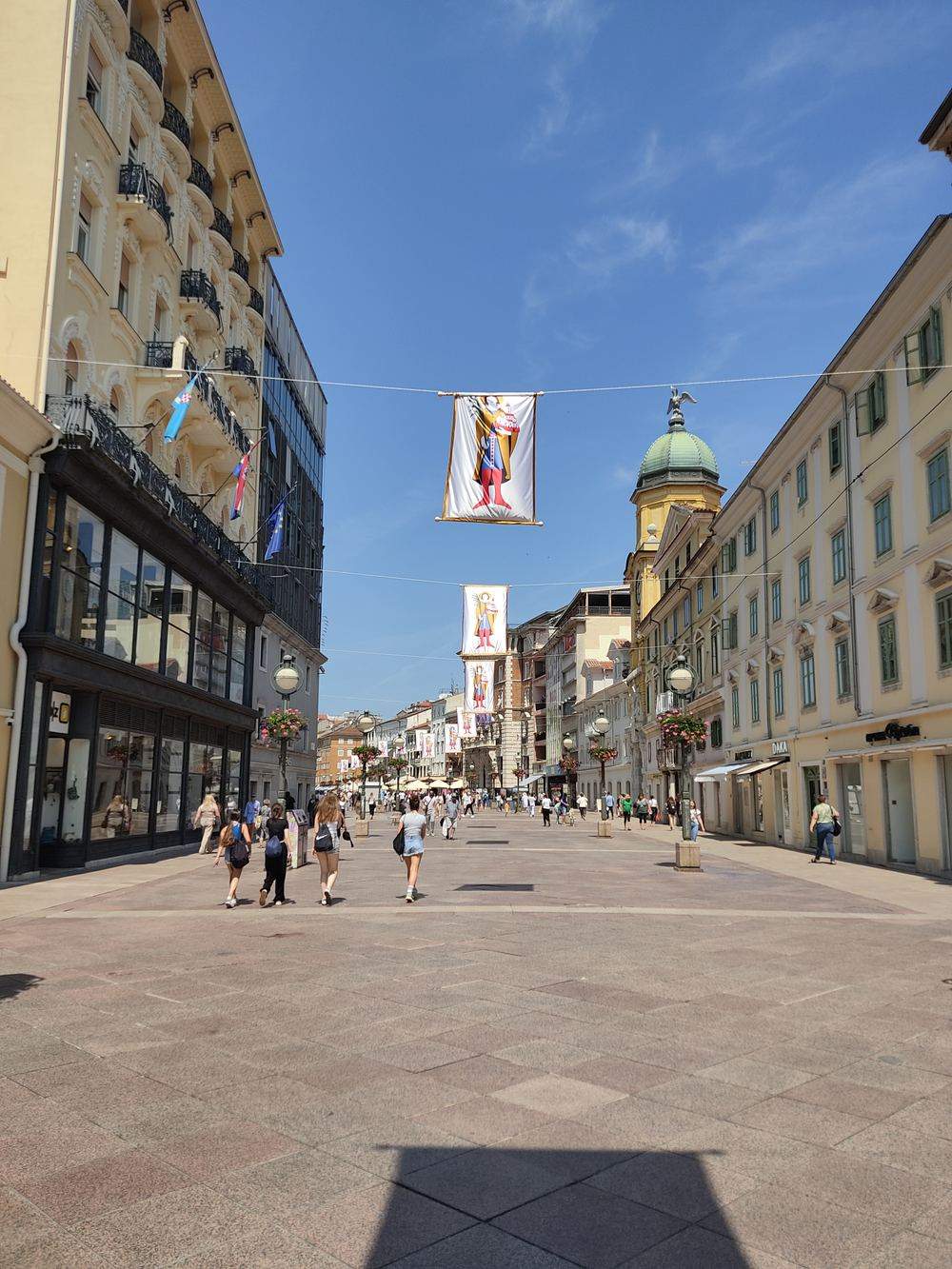
Il Corso è l'asse più semplice. Parti dalla Torre Civica, passa dietro verso piazza Kobler e le vie della città vecchia, poi collega la Cattedrale di San Vito, l'Arco Romano e il campanile pendente accanto alla chiesa dell'Assunta. Il centro è piccolo, ma non attraversarlo una sola volta. Fiume cambia tra le facciate formali del Corso, le strade strette dietro e i padiglioni del mercato vicino all'acqua.
- Mercato cittadino: vai al mattino per il padiglione del pesce, le bancarelle e il lato quotidiano della città portuale.
- Palazzo del Governo: l'interno storico più forte quando vuoi più di una passeggiata.
- Molo Longo: usa la diga per spazio, viste aperte e uno sguardo sull'intera città.
- Palazzo dello Zuccherificio e quartiere Benčić: sceglili se storia industriale e cultura contemporanea contano più di un'altra chiesa.
Dedica a Tersatto una parte della giornata
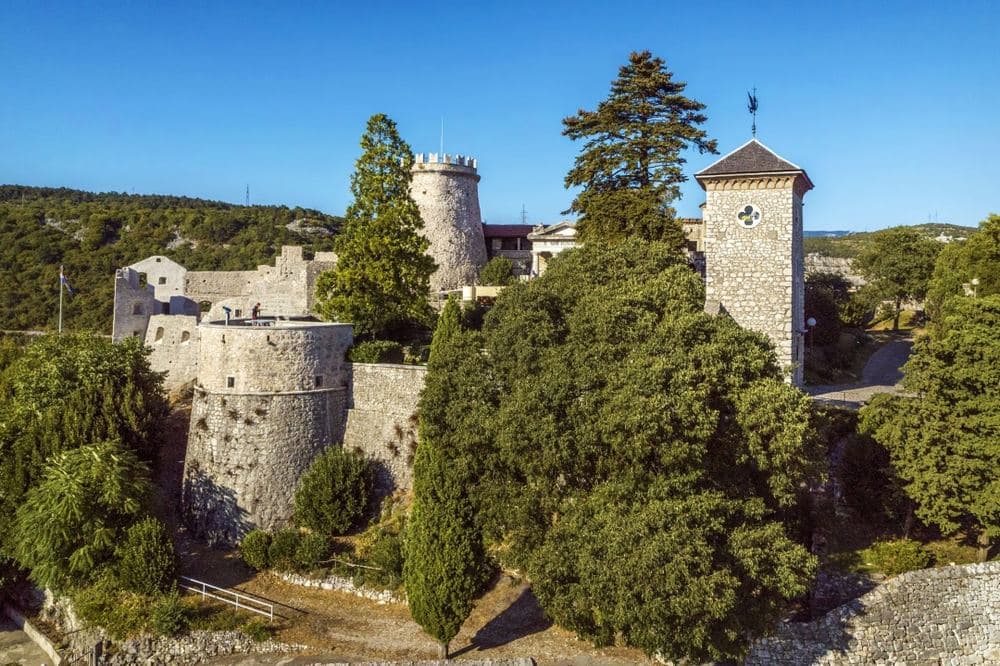
Tersatto domina Fiume e merita più di una sosta panoramica. Il castello, il Santuario della Madonna di Tersatto e il parco formano un secondo centro dal ritmo più calmo. Sali i gradini di Petar Kružić se vuoi che l'ascesa faccia parte dell'esperienza; altrimenti usa il trasporto locale e conserva l'energia per la cima. La soluzione migliore è salire da una parte e tornare dall'altra, così la collina diventa percorso e non ostacolo.
La pioggia non rovina una giornata a Fiume
Fiume ha abbastanza cultura al coperto per assorbire un cambio di tempo. Scegli un museo importante, come il Museo marittimo e storico nel Palazzo del Governo o il Museo civico nel Palazzo dello Zuccherificio, poi aggiungi il piccolo museo di computer Peek&Poke se il gruppo vuole qualcosa di giocoso. Tieni il Corso per le pause tra gli scrosci. Passaggi coperti, caffè e distanze brevi rendono facile cambiare piano.
“Fiume diventa interessante quando smetti di chiedere dove finisce la città vecchia e inizi a chiedere perché comincia il porto.”
In pratica: costruisci la giornata in tre gruppi. Prima Corso e città vecchia, poi Tersatto, infine mercato e Molo Longo vicino all'acqua. Se il tempo si accorcia, conserva i primi due e riduci la passeggiata sulla diga. Restano così le due prospettive essenziali: la città dalle sue strade e la città vista dall'alto.
Getting to Rijeka
The nearest airport is Rijeka Airport on the island of Krk, about 30 km from the centre across the Krk Bridge. Flights are mainly seasonal, and a shuttle bus meets arrivals and runs to the city bus station. Zagreb Airport has many more connections and is about 170 km away by motorway, and Trieste, Ljubljana and Pula are within 2 hours by road. Long-distance buses arrive at Žabica bus station beside the Capuchin church, 5 minutes on foot from Korzo. The railway station is west of the centre, and trains to Zagreb are slower than the bus. Jadrolinija catamarans leave the central quay for Rab, Novalja, Cres and Mali Lošinj, with fewer sailings outside summer. Street parking in the centre is zoned and paid, and the Tower Center car park in Pećine is covered and free.
| From | Distance | How | Time |
|---|---|---|---|
| Rijeka Airport, Krk | 30 km | shuttle bus or taxi across the bridge | about 40 minutes |
| Zagreb | 170 km | A6 motorway or intercity bus | 2 to 3 hours |
| Trieste | 75 km | car or bus via Slovenia | about 90 minutes |
| Ljubljana | 130 km | car or bus | about 2 hours |
| Pula | 100 km | car or bus through the Učka tunnel | about 90 minutes |
Getting around the city
The centre is compact and most places in this article lie within 20 minutes on foot of the City Tower. For the rest use Autotrolej city buses from the stops on the Riva, the waterfront road behind Korzo, and on Adriatic Square. Line 2 links the centre with Trsat, so the 561 steps can be a one-way effort. Buses west reach Kantrida and Ploče in about 15 minutes, and buses east serve Pećine, Glavanovo and Kostrena in a similar time. Buy tickets at a kiosk before boarding and check current fares on the Autotrolej site. The Rijeka Tunnel under the old core joins Dolac with Školjić in 5 minutes and is free, and the path along the Rječina reaches the Hartera paper mill in about 20 minutes.
Galeb, the Dead Canal and Delta
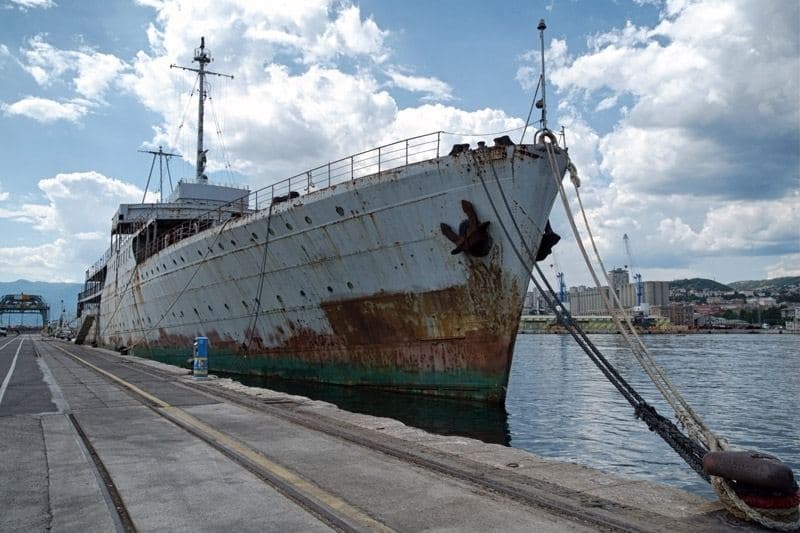
The museum ship Galeb is moored on the shore in the centre. Built in Genoa in 1938 as a banana carrier and sunk in the war, it was refitted in 1952 as the state ship of Josip Broz Tito, who received heads of state aboard. The visit takes an hour and includes the salon, cabins and engine room. A few minutes east, the Dead Canal is a still arm of the river lined with wooden boats. From 1924 to 1943 the state border ran along it, Italian Rijeka on one bank and Yugoslav Sušak on the other, and people from the same town showed papers at the bridge every day. Beyond it lies Delta, reclaimed ground at the river mouth used for the carnival procession, fairs and concerts, with the Exportdrvo timber warehouses beside it, now a concert hall in season.
Beaches within the city
Rijeka is a port, yet you can swim within a bus ride of Korzo. The eastern shore from Sablićevo in Pećine to the coves of Kostrena is a chain of pebble and concrete bathing places under pines, reached by the shore promenade or a city bus. The western beaches at Kantrida and Ploče are older public baths with pools and steps into deep water, sheltered from the bora by the face of the old quarry. None of them has sand, which is why the water stays clear. Showers and a bar are standard, and shade runs out by late morning.
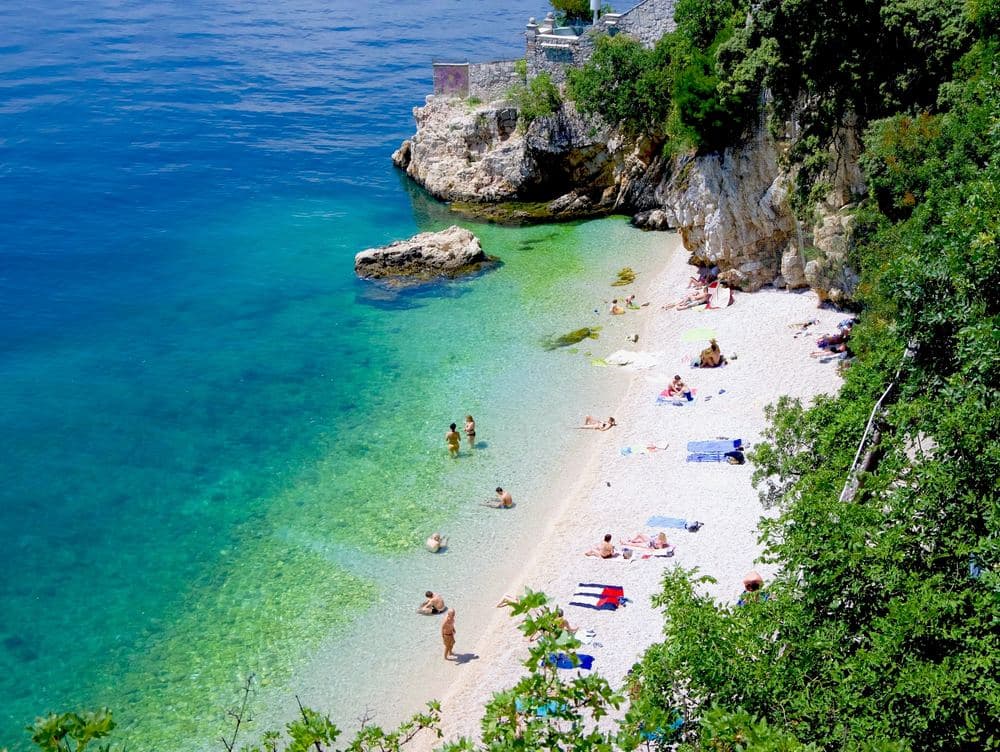
- Sablićevo, Pećine: pebble and rock platforms below old villas, 20 minutes on foot from the centre, nearly empty before noon.
- Glavanovo, eastern edge of town: depth increases slowly, lifeguard, cabins and access for people with disabilities, best for families.
- Grčevo, towards Kostrena: deep water a few metres out, rock jumping, south facing with sun until evening.
- Ploče and Kantrida, west: concrete shore with steps and ladders, pools and sports courts, 15 minutes by bus.
- Žurkovo, Kostrena: sheltered shallow cove with a marina and a restaurant, 15 minutes by bus or car.
Day trips from Rijeka
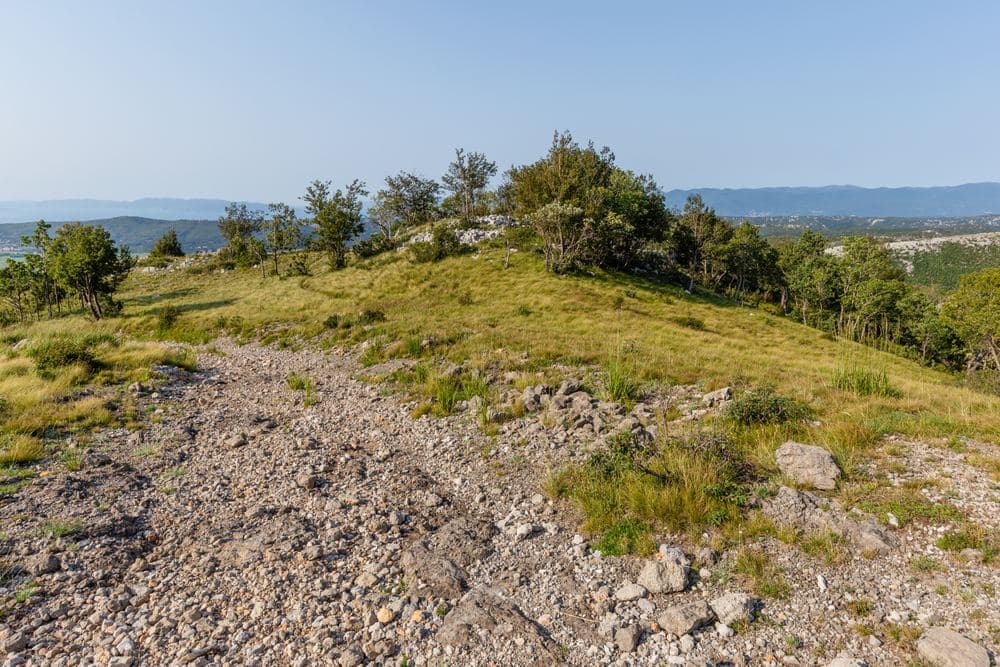
Učka Nature Park rises 22 km to the west above Opatija, and its summit Vojak at 1401 m carries a stone tower with a view over the Kvarner and across Istria. Risnjak National Park lies 35 km north in Gorski kotar, an hour's drive, with beech and fir forest, karst meadows, the lynx that gives it its name and the source of the Kupa in a deep green pool. The Leska trail by the Crni Lug entrance is 4.5 km long and level enough for anyone. Grobnik Castle stands 15 km north-east above the Grobnik field, a Frankopan stronghold reached by road from Čavle. Opatija is 13 km west along the coast with a city bus link, and Krk town is under an hour by car across the bridge.
When to go, month by month
From mid January to Shrove Tuesday the carnival takes over Korzo, with the main procession on the Sunday before Lent and the bell ringers from the villages around Kastav, a tradition on the UNESCO list. Dates move each year and rooms fill early. March and April are cool and often wet, good for museums and for the Natural History Museum garden, at its best in spring. May, June and September are the easiest months, warm on land, with sea swimming from June and few crowds. July and August are hot and the beaches fill after noon. October and November are the wettest months, and Rijeka is one of the rainiest cities in Croatia. In winter the bora blows cold off the mountains, and Molo Longo and Adriatic Square take the full force of it.
Where to stay
For a first visit stay within 10 minutes of Korzo. You can walk to the market, the old town, the bus station and the Galeb, and buses to Trsat and the beaches leave from the waterfront outside. Pećine, east of the centre, has villas, apartments and Sablićevo beach, with the Tower Center for shopping and free parking. Trsat suits anyone who wants quiet evenings and a view, with the bus or the steps into town. Kostrena and Opatija work as bases for a beach holiday that includes Rijeka as a day out. Apartments in the western districts around Zamet suit longer stays, with the ZTC centre for everyday shopping.
The places, one by one
| Place | What it is | Time needed |
|---|---|---|
| Korzo | pedestrian main street laid out in the 19th century | 30 minutes |
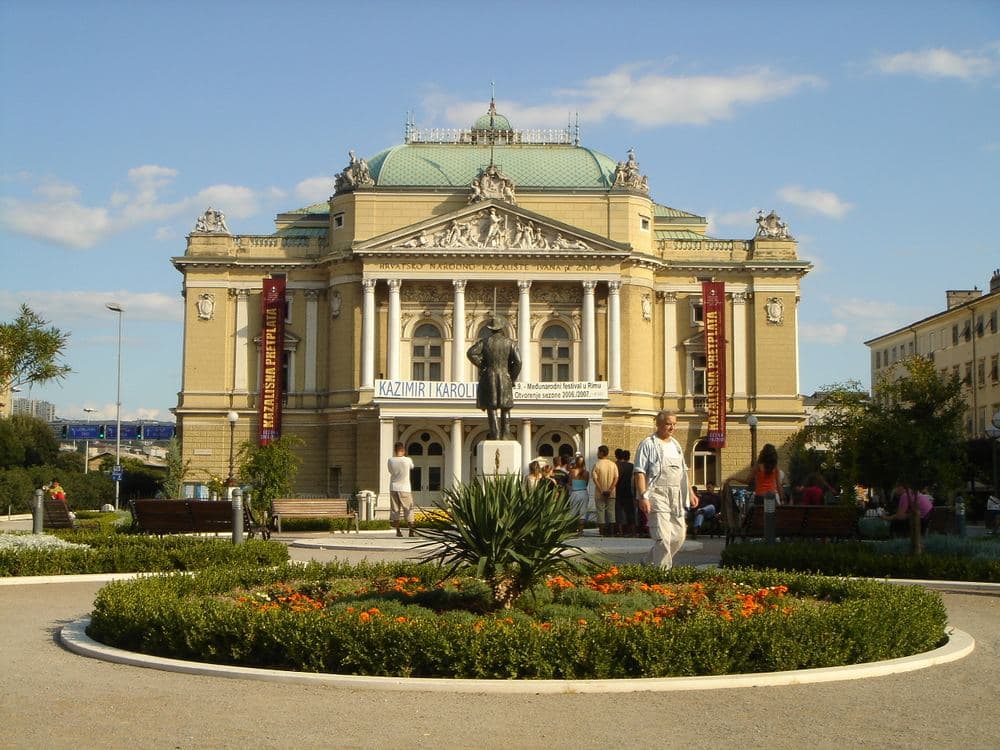
| Croatian National Theatre Ivan pl. Zajc | theatre of 1885 with ceiling paintings by Klimt | 20 minutes or a performance |
| City Tower | baroque clock tower and gate into the old core | 10 minutes |
| Old Gateway Roman Arch | Roman arch of the 3rd or 4th century | 10 minutes |
| Rijeka Leaning Tower | bell tower dated 1377, 40 cm off the vertical | 10 minutes |
| St Vitus Cathedral | round baroque church begun in 1638 | 20 minutes |
| Rijeka Tunnel | 330 m wartime shelter under the old town | 15 minutes |
| Governor's Palace | maritime museum in the Hungarian governor's residence | 1 hour |
| Natural History Museum Rijeka | Adriatic collection with a botanical garden | 1 hour |
| Trsat Castle | Frankopan castle 130 m above the Rječina | 30 minutes |
| Our Lady of Trsat Shrine | Marian shrine with a votive chapel | 30 minutes |
| Museum of Modern and Contemporary Art | art after 1900 in a former engine hall | 1 hour |
| Torpedo Launch Station | test ramp of the first torpedo factory | 10 minutes |
Korzo
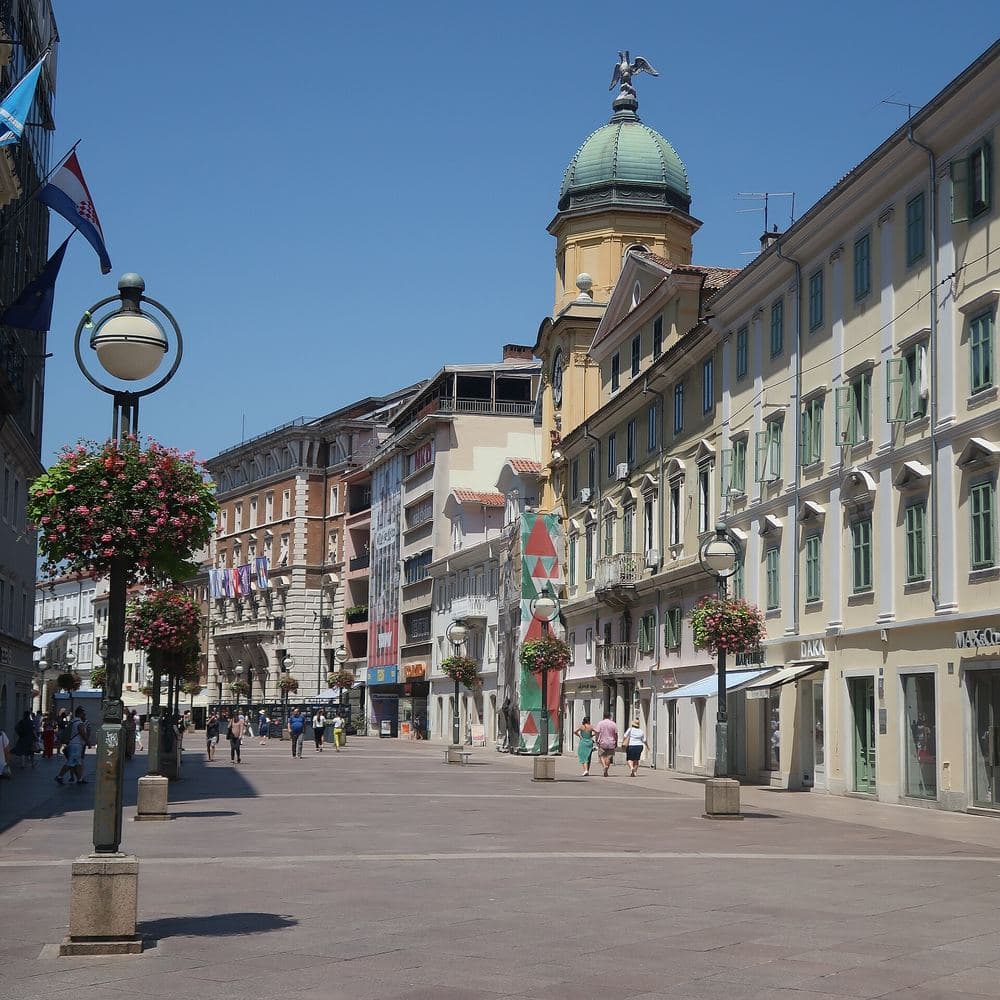
Korzo took its shape in the 19th century, when the medieval walls came down and a broad street opened in their place along the harbour. The banks, cafés and trading houses of the main port of the Hungarian part of the Monarchy went up along it, so the façades follow Viennese and Budapest models. The City Tower stands in the middle, with its passage into the old core. The whole length is pedestrian. Rijeka uses it for everything from morning coffee to the evening walk, and during the carnival it is the main stage. The café terraces work all year, so it is also the place to sit in winter when the bora makes the breakwater unpleasant.
Croatian National Theatre Ivan pl. Zajc
The theatre opened in 1885 and is one of the buildings by the Viennese pair Ferdinand Fellner and Hermann Helmer, who designed several dozen theatres across central Europe. Rijeka was rich enough then to build it in 18 months, with electric lighting from the first night. The ceiling paintings in the auditorium were made by a group of young Viennese painters, and one of them was Gustav Klimt at the start of his career. The building is named after Ivan Zajc, the composer born in Rijeka in 1832 who wrote the opera Nikola Šubić Zrinski. Performances run through the season, and a ticket for one is the easiest way inside. Otherwise the building is shown by arrangement. It stands beside the market pavilions.
City Tower
The City Tower is the one surviving piece of the medieval entrance to Rijeka. Through its passage people came from the shore into the walled core, and it still does that job, leading into the lanes around the cathedral and the Leaning Tower. The present look dates from the 18th century, when the baroque upper storey with the clock and the onion cap was added. On the front you will find the Habsburg double-headed eagle and, below it, relief busts of the emperors Leopold I and Charles VI. They granted Rijeka its free-port privileges, which started the town's rise as a port. The tower is opened for climbing only from time to time, so do not plan the day around it.
Old Gateway Roman Arch
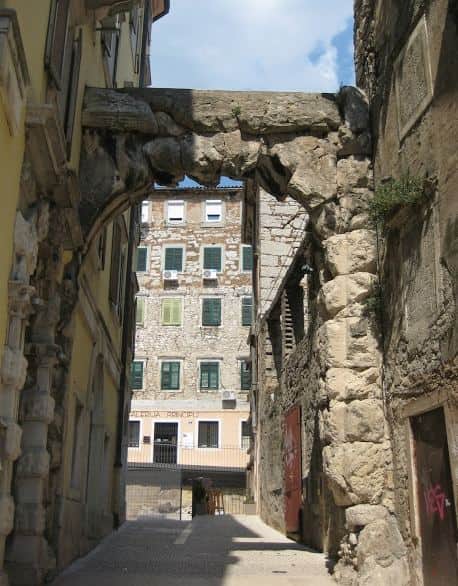
The Old Gateway, also called the Roman Arch, is the oldest structure still standing in Rijeka. It is a plain stone arch of the 3rd or 4th century, built of large blocks without ornament, and it formed the entrance to the praetorium, the command centre of the Roman fort of Tarsatica. The fort guarded the approach to Italy across the Kvarner. The street level has hardly changed since, so you see the arch at its full original height. Excavations beside it show the plan of the praetorium and the baths. The gateway stands in a narrow lane a few steps from the Leaning Tower. Access is free at any hour.
Rijeka Leaning Tower
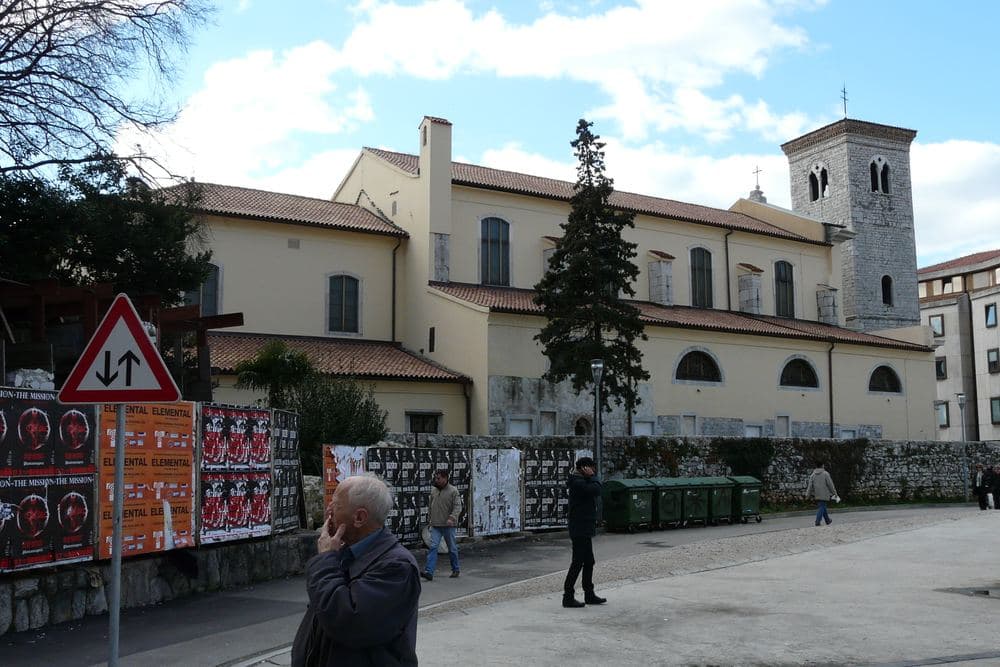
The Leaning Tower is the bell tower of the Church of the Assumption, and the lean is real: about 40 cm off the vertical, towards the south. The year 1377 is carved above the entrance door, the oldest dated inscription on any building in the town. The upper part with its octagonal storey came later, in the 16th and 17th centuries. The tilt comes from the ground, which is made of fill and older ruins, among them remains of Roman Tarsatica. It stands in a passage between narrow houses, so you cannot step back far enough to judge it there. Use the small square in front of the church, where the lean shows against the roofline.
St Vitus Cathedral
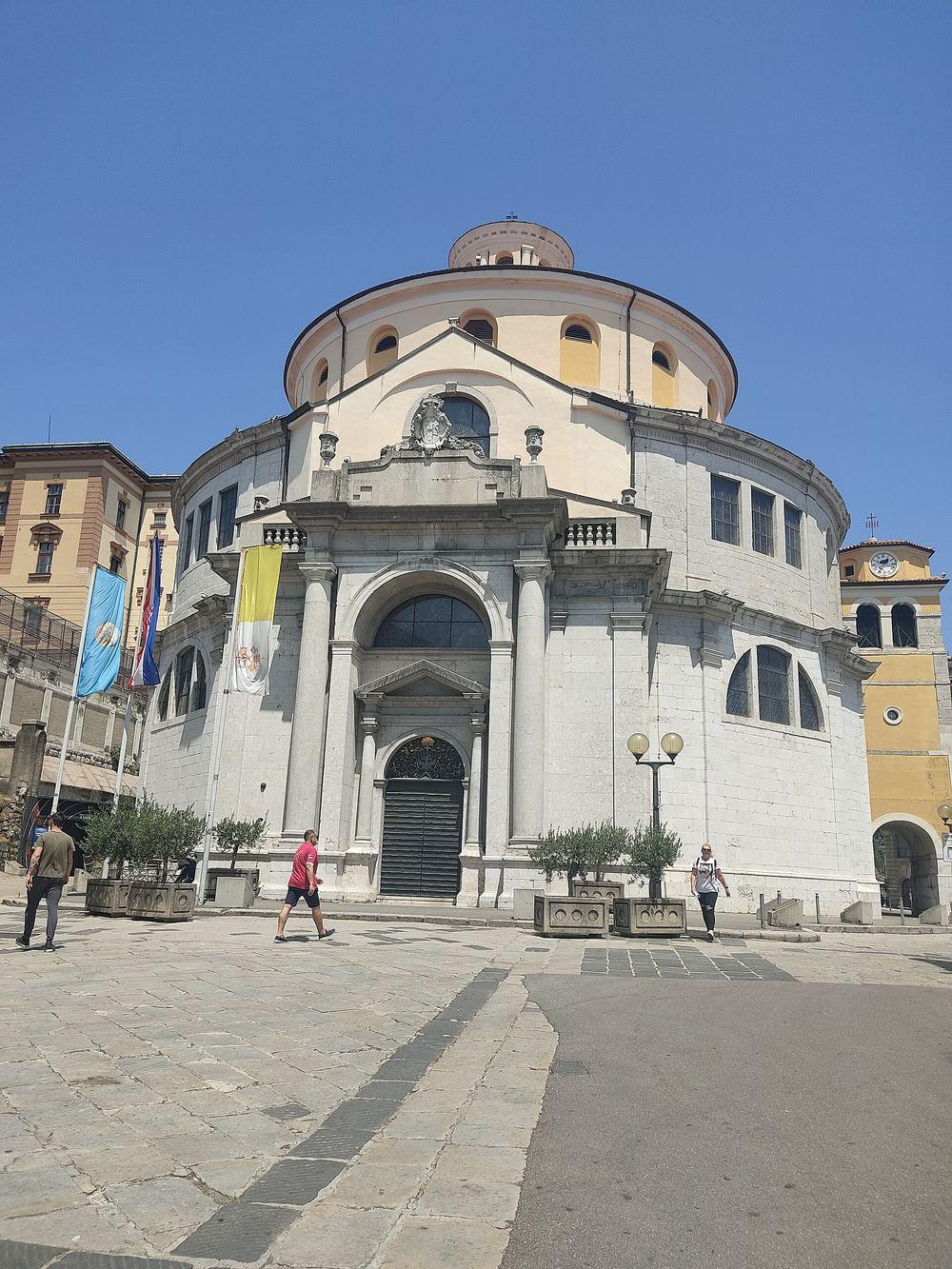
St Vitus is the only round baroque church in Croatia, and its plan follows Santa Maria della Salute in Venice. The Jesuits began building it in 1638 on the site of a small Gothic church, and for lack of money the work dragged on for more than a century. Inside hangs a Gothic crucifix of the 13th century, tied to the story of Petar Lončarić, who in 1296 threw a stone at the cross in anger. The crucifix bled, the earth swallowed him, and the town has retold the scene ever since. The church became a cathedral only in 1969. It stands above Korzo, reached by steps through the old town, and entry is free.
Rijeka Tunnel
The Rijeka Tunnel was dug at the start of the Second World War as a shelter for civilians, since the port was a target of air raids. The corridor is about 330 m long under the old core, and during alarms several thousand people could stand inside it. After the war it stayed shut for decades. In 2019 it was cleaned, lit and opened to passers-by. Inside it is cool and damp, with bare stone walls, and it is also used for exhibitions. On a hot day it is the coolest place in town, so carry a light layer. The Dolac entrance is a few steps below the cathedral.
Governor's Palace
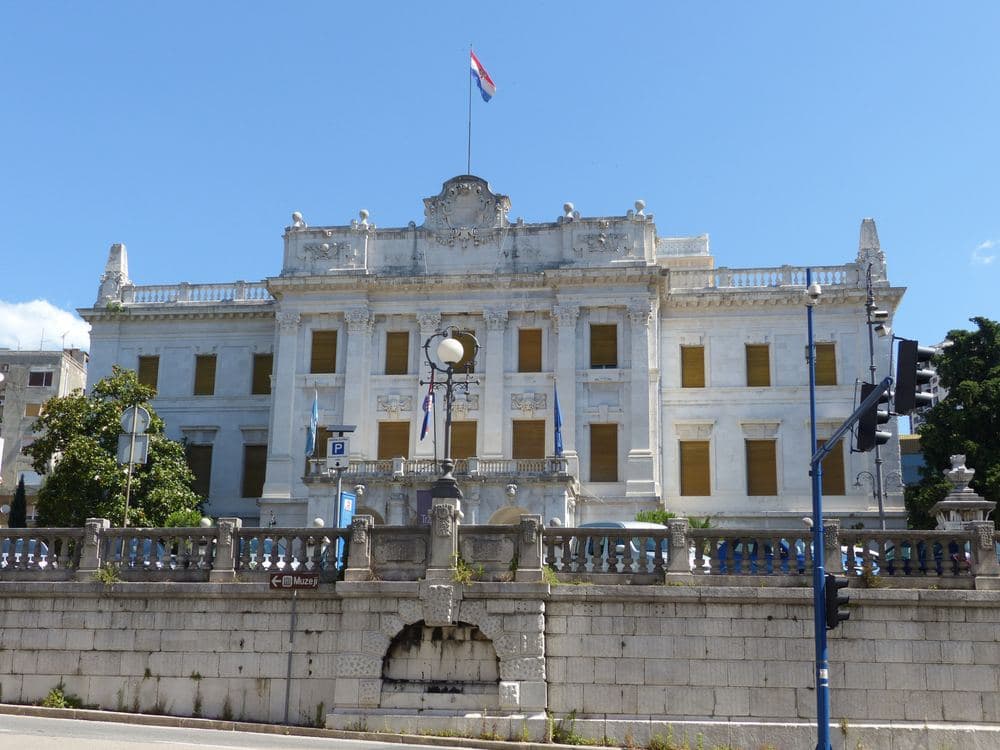
The Governor's Palace was built between 1893 and 1896 to a design by the Hungarian architect Alajos Hauszmann, as the seat of the governor who ran Rijeka on behalf of the Hungarian government. It stands on a rise above the harbour, with a garden and a ceremonial staircase, and the rooms were fitted with furniture, wall coverings and chandeliers ordered for the building. Much of that original arrangement survives, which is why the interior counts for as much as the exhibits. The Maritime and History Museum of the Croatian Littoral fills the rooms with ship models, navigational instruments and a collection on Rijeka's shipping. Allow an hour. Before you leave, step onto the terrace, from which the whole harbour is seen.
Natural History Museum Rijeka
The Natural History Museum was founded in 1876 and is one of the oldest of its kind in Croatia. It occupies a 19th century villa beside the Governor's Palace, set in a botanical garden where more than 2,000 species of Mediterranean and coastal plants grow, arranged by habitat. The display is about the Adriatic. The collection of sharks and rays is among the most important in this part of Europe, and around it are shellfish, corals and the fish of the northern Adriatic. On the ground floor an aquarium holds living specimens. A multimedia centre explains the geology of the Kvarner. Museum and garden together take an hour.
Trsat Castle
Trsat Castle stands on a rock 130 m above the Rječina canyon, on a site fortified since antiquity: first a Liburnian hillfort, then a Roman watchpost over the road towards Pannonia. The Frankopan counts built the medieval castle in the 13th century. After it fell empty, the Austrian general Laval Nugent bought it in 1826, restored it in the romantic manner and raised a family mausoleum in the courtyard, shaped as a Greek temple with Doric columns. Concerts and exhibitions are held inside today. From the ramparts you see the whole Kvarner gulf and the island of Krk. The ticket is cheap and the visit takes 30 minutes, which leaves time for the shrine next door.
Our Lady of Trsat Shrine
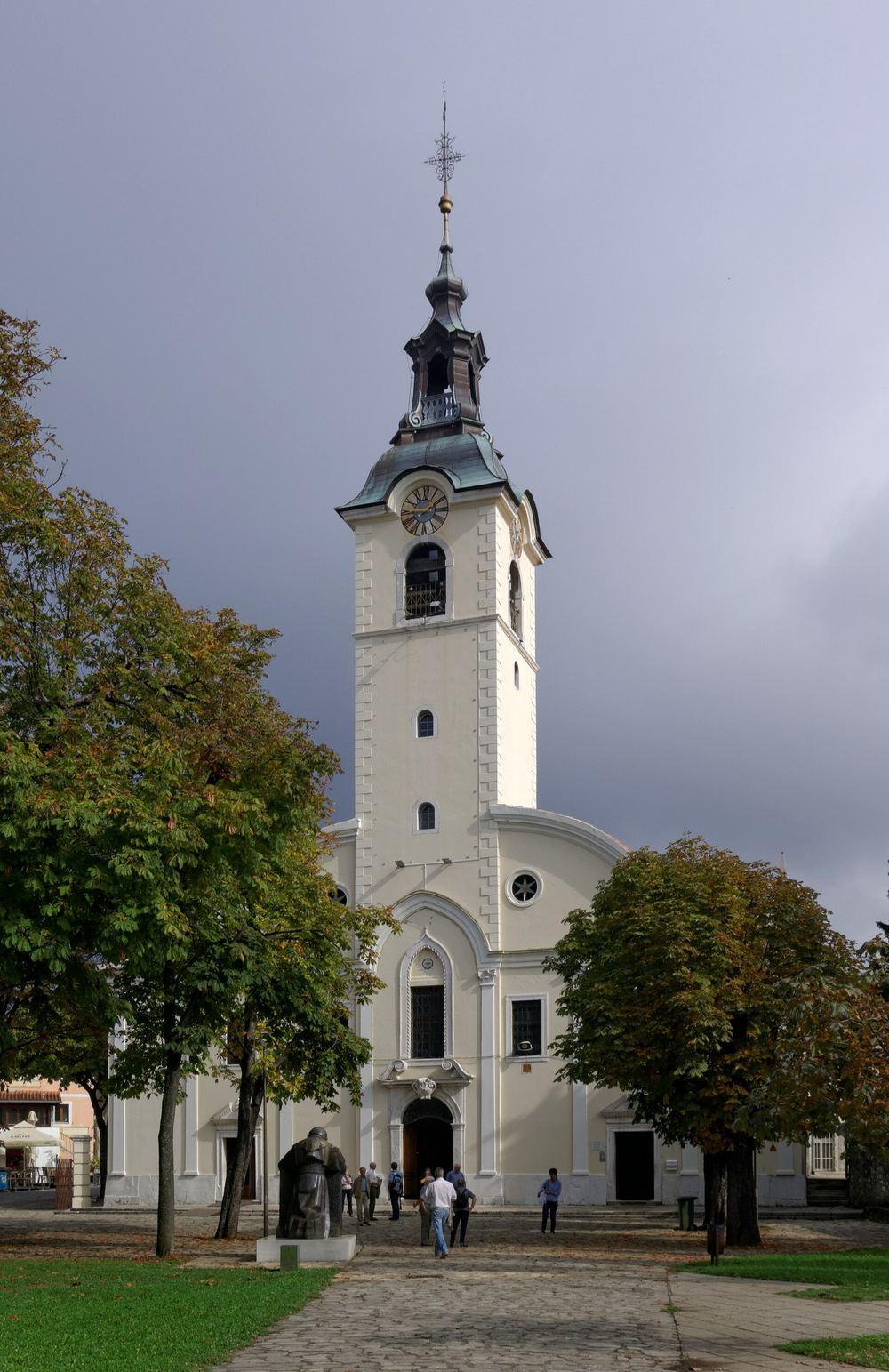
The Shrine of Our Lady of Trsat is the oldest Marian pilgrimage place on the northern Adriatic. Tradition holds that the house of Nazareth stood on this spot from 1291 to 1294 before it was carried on to Loreto. When the people of Trsat were left without it, Pope Urban V sent them an image of the Mother of God in 1367, still venerated on the main altar. The Franciscans have kept the church and the monastery beside it since 1453. Look for the votive chapel, where hundreds of seamen's offerings hang: paintings of ships in storms and models of sailing vessels, left by sailors giving thanks for a life saved. It is a working church, so dress accordingly.
Museum of Modern and Contemporary Art
The Museum of Modern and Contemporary Art was founded in 1948 and now works in a restored factory hall in the Benčić quarter, with high ceilings and steel girders, where ship engines were once made. The collection runs to thousands of works by Croatian and foreign artists from the start of the 20th century onward, with the emphasis on painting, print, photography and new media, and with the strongest holdings from after 1950. Because the hall is so large, exhibitions are often built as installations across the whole floor. Allow an hour. The ticket is also valid for the quarter's other museums, so pair it with the City Museum in the Sugar Palace next door.
Torpedo Launch Station
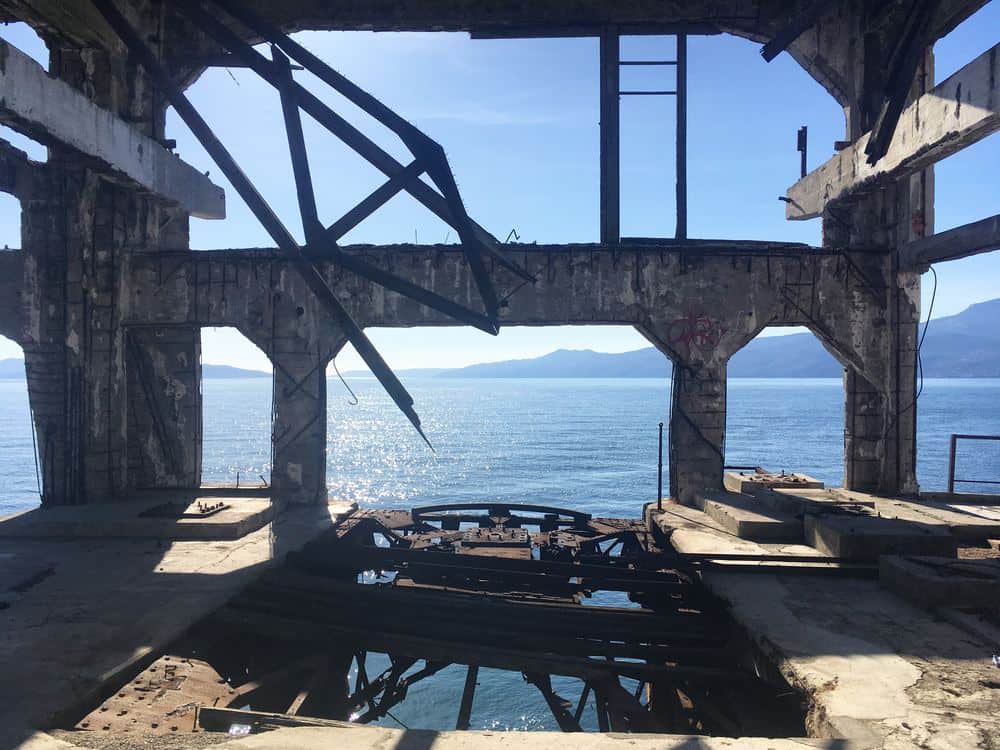
The torpedo launch station is what remains of the factory where the first torpedo in the world was invented and made. Giovanni Luppis, a retired officer from Rijeka, put forward the idea of a self-propelled underwater weapon after 1860, and the English engineer Robert Whitehead, who ran the Rijeka machine works, turned it into a working device. The first torpedo was presented in 1866, and navies everywhere soon bought it. The ramp on the shore was the test stand, from which torpedoes were fired into the channel. The concrete structure is protected as a technical monument, the last of its kind in the world. You see it from the coastal road west of the port, on the way to Kantrida.
Guarda
Fiume in video
Un breve filmato ufficiale per immaginare meglio la destinazione prima del viaggio.
Fiume: città in movimento
Domande frequenti
- How many days do you need in Rijeka?
- A full day covers Korzo, the old town, Trsat and the breakwater. A second day lets you add the Benčić museums, the Galeb and a swim at Sablićevo or Glavanovo. A third day fits Risnjak or Učka, and in carnival season the city deserves a weekend on its own.
- Is Rijeka a good base for the Kvarner?
- Yes, if you want a city rather than a resort. Opatija is 13 km away by city bus, Krk island is across the bridge, and catamarans leave the central quay for Rab, Cres and Mali Lošinj. The bus station, railway station and ferry quay are all in the centre, which makes Rijeka the practical hub for the whole gulf.
- Can you swim in Rijeka itself?
- Yes. The city has pebble and concrete beaches on both sides of the harbour. Sablićevo in Pećine is 20 minutes on foot from the centre, Glavanovo suits families, and Ploče and Kantrida in the west are 15 minutes by bus. None of them has sand, so the water is clear, and shade is limited after late morning.
- Do you need a car in Rijeka?
- No for the city itself, which is walkable and served by Autotrolej buses to Trsat, the beaches and Kostrena. Yes for Grobnik Castle, Risnjak and Učka, which lie outside the city bus network. If you drive, the centre is pedestrian with paid zoned parking, so park at the Tower Center in Pećine and ride the bus in.
- What is the weather like in Rijeka?
- Wetter than the islands. Rijeka is one of the rainiest cities in Croatia, with autumn the wettest season, and the bora can blow hard from the north-east in winter. Summers are hot and humid, with sea swimming from June to September. Bring a rain layer in any month and firm shoes for the Trsat steps and the Rječina path.
- Is Rijeka good with children?
- Yes. The Children's House in the Benčić quarter runs afternoon workshops, the Natural History Museum beside the Governor's Palace has an aquarium and a garden, and the Astronomical Centre on Sveti Križ hill offers planetarium shows and evening sky watching. The Galeb and the tunnel hold attention without long walks, and Glavanovo beach has a lifeguard and gradual depth.
Croatia Atlas tra le fonti preferite
Un clic e Google ti mostra più spesso i nostri articoli nelle notizie principali e nelle risposte AI. Cambia solo i tuoi risultati.