- Date
- 25 – 26 March 2027
- Price
- Free
Curated places, guides and more events for Hvar.
About this event
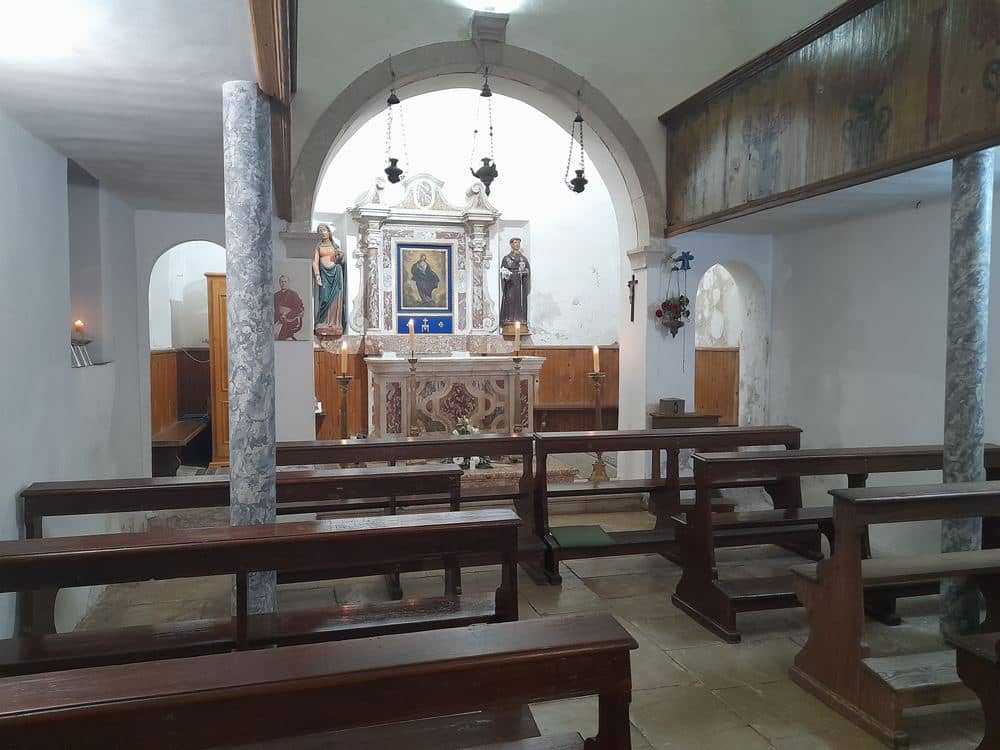
After the Thursday evening Mass, one cross-bearer sets out from each of six parish churches carrying a heavy wooden cross. He walks barefoot, followed by a procession of singers, and by morning has passed through all five neighbouring villages and returned to his own church. The custom has been kept since 1510.
Six routes, one night
The processions all move in the same direction, in a circle from Jelsa through Pitve, Vrisnik, Svirče, Vrbanj and Vrboska and back. They never meet head-on. The cross-bearer is chosen years in advance, and in some parishes the waiting list runs for decades.
For onlookers: stand at the edge of the road and let the procession pass. No flash, no applause. The best moments are the departure outside the church around 22:00 and the return before dawn. The last ferry off Hvar leaves in the evening, so plan to stay the night on the island.
Getting to the island in March
The nearest airport is Split, on the mainland, with a shuttle bus to the city harbour where every sea link to Hvar leaves. The port you want is Stari Grad, on the northern side of the island: the car ferry from Split takes about 2 hours and Jelsa is about 10 km further by road. The catamaran to Hvar town is faster but lands you on the far side of the island, 30 minutes or more from the procession villages. In late March the winter timetable applies and the Easter weekend brings islanders home, so book a car space ahead. A car is useful, as buses between the villages are few after dark.
| Route | Type | Notes |
|---|---|---|
| Split to Stari Grad | Car ferry | About 2 hours, the port nearest Jelsa |
| Split to Hvar town | Passenger catamaran | About 60 minutes, then 30 minutes or more by road |
| Split to Jelsa via Bol | Passenger catamaran | Lands on the route itself, foot passengers only |
| Drvenik to Sućuraj | Car ferry | About 20 minutes, then a long ridge road west to Jelsa |
Where to stay
Stay in Jelsa or Vrboska, both on the circuit, or in Stari Grad a short drive away. Jelsa has the most beds of the six parishes, with small hotels and private rooms around the harbour. Much of the island's accommodation closes between November and Easter, and what stays open fills with returning families, so book several months ahead and tell your host you will be out most of the night. Hvar town is on the wrong side of the island for this night.
Following the procession on foot
You can walk part of the circuit behind any of the six groups. The roads between the villages are narrow, unlit for long stretches and open to the odd car, so keep to the verge and point your torch at the ground. Each procession stops at the churches it passes, where the singers chant the Lamentation of Mary, and these halts are the easiest places to join a group or let it go. Late March nights on Hvar are cold and often wet.
- A torch or head lamp, kept low so it does not light the singers' faces
- Warm layers, as the wait outside a church can be long and still
- A waterproof, since showers are frequent on the island in March
- Cash in euro for the bakeries and cafes that open at dawn on Good Friday
- Water and a snack, because nothing sells between the villages at night
- Patience: the groups do not run to a timetable and arrival times shift
Jelsa and Vrboska by day
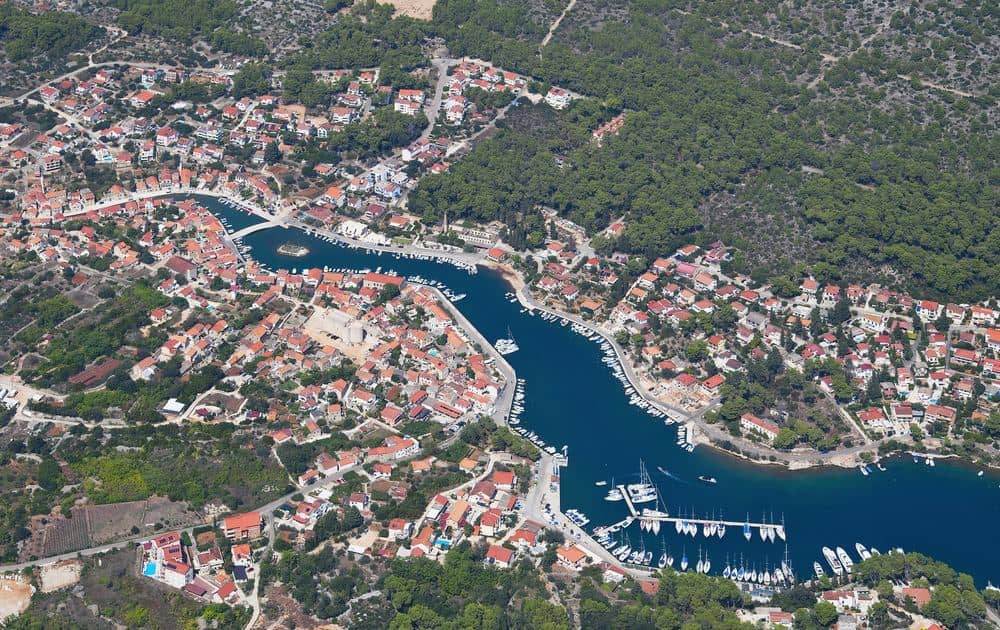
The afternoon of Good Friday and the days either side can go to the two harbour villages on the route. Jelsa's waterfront rings the inner harbour and runs into a park of plane trees planted at the end of the 19th century, with the Slatina spring and the square behind it. The small municipal museum in the old reading room explains the emigration that emptied the hill villages after phylloxera killed the vines, the same countryside the processions cross by night.
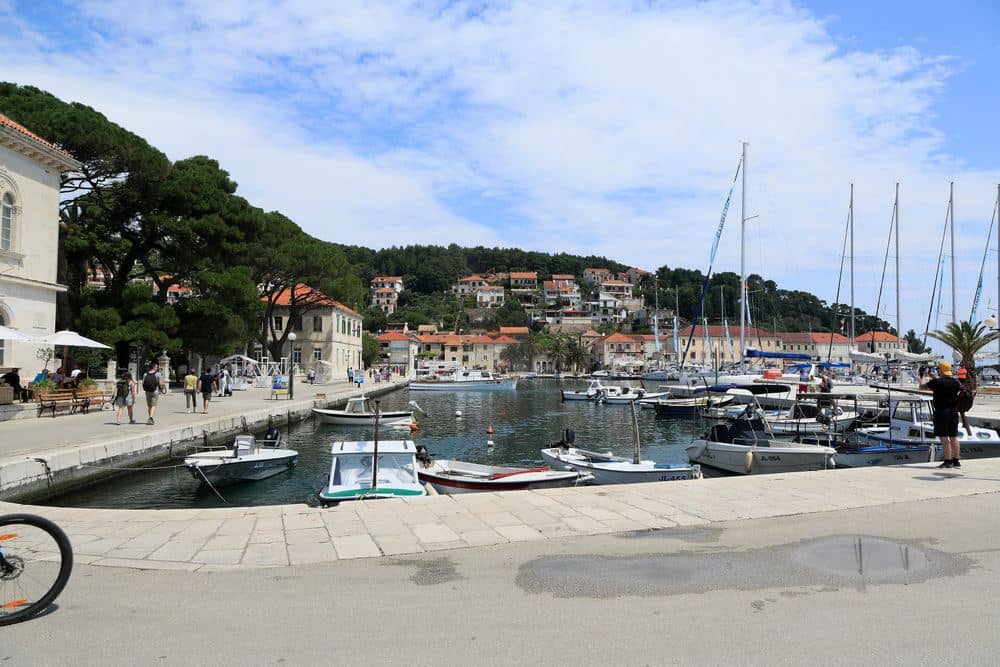
Vrboska sits at the head of a narrow bay with stone bridges over its channel. Its church of St Mary was walled and loopholed by the villagers in the 16th century against Ottoman raids, and there is a small fishing museum, so the village fills an hour on foot. Beyond it begins Stari Grad Plain, the Greek field system on the UNESCO list since 2008, with gravel tracks between dry-stone walls that suit a bicycle. At this time of year the plain is green and without heat.
Eating over Easter weekend
Good Friday is a fast day in Catholic Croatia, so the taverns that open serve fish: salt cod stewed with potatoes, grilled sardines and octopus salad. Many restaurants stay shut until Easter, and those open in Jelsa and Vrboska are busy with families, so reserve for Thursday and eat early, before the evening Mass. Jelsa market works in the morning beside the square, with a bakery and cafes next to it, the simplest breakfast when you come off the road at dawn. On Easter Sunday most places close for the family meal.
Questions about your trip?