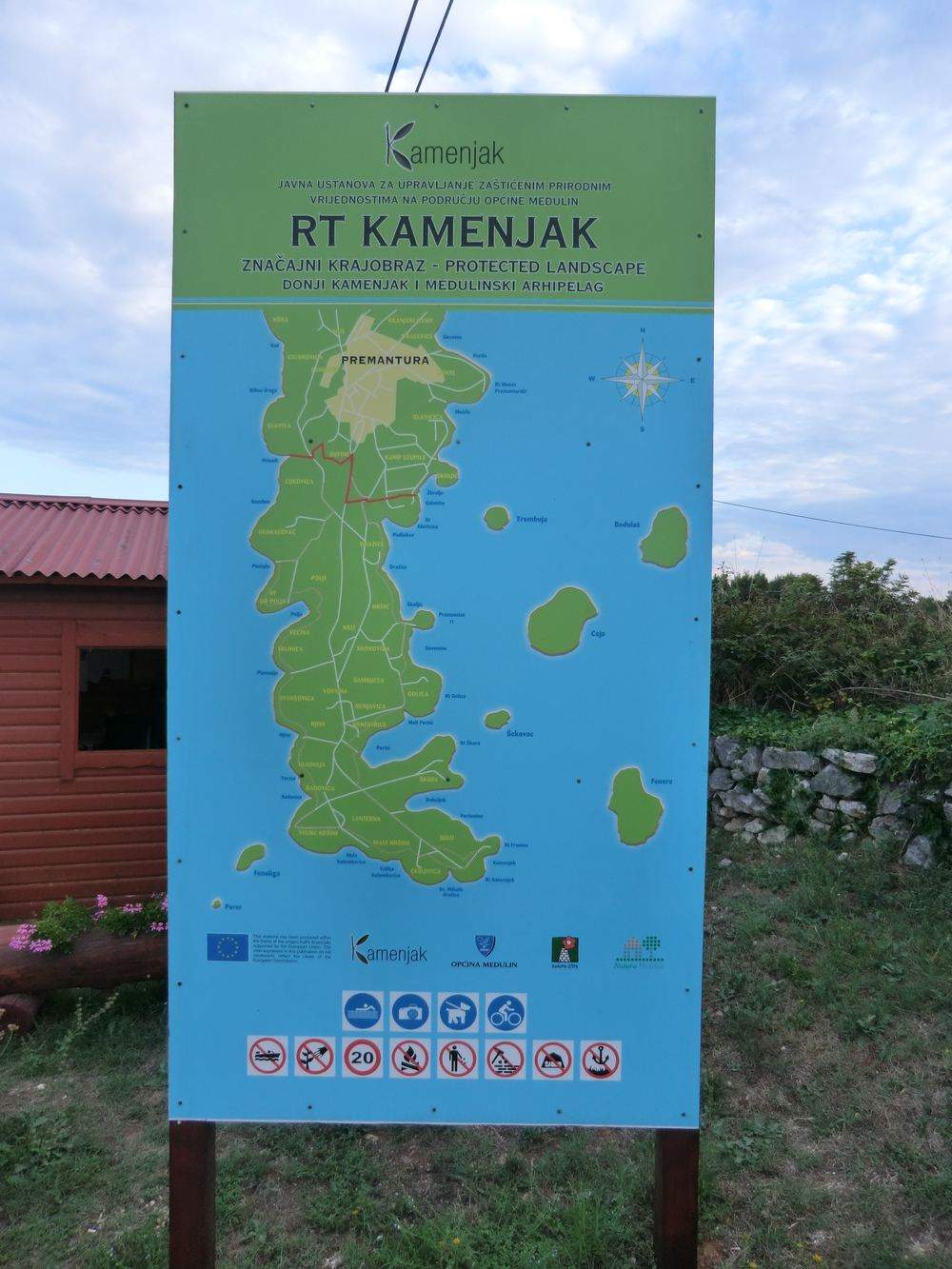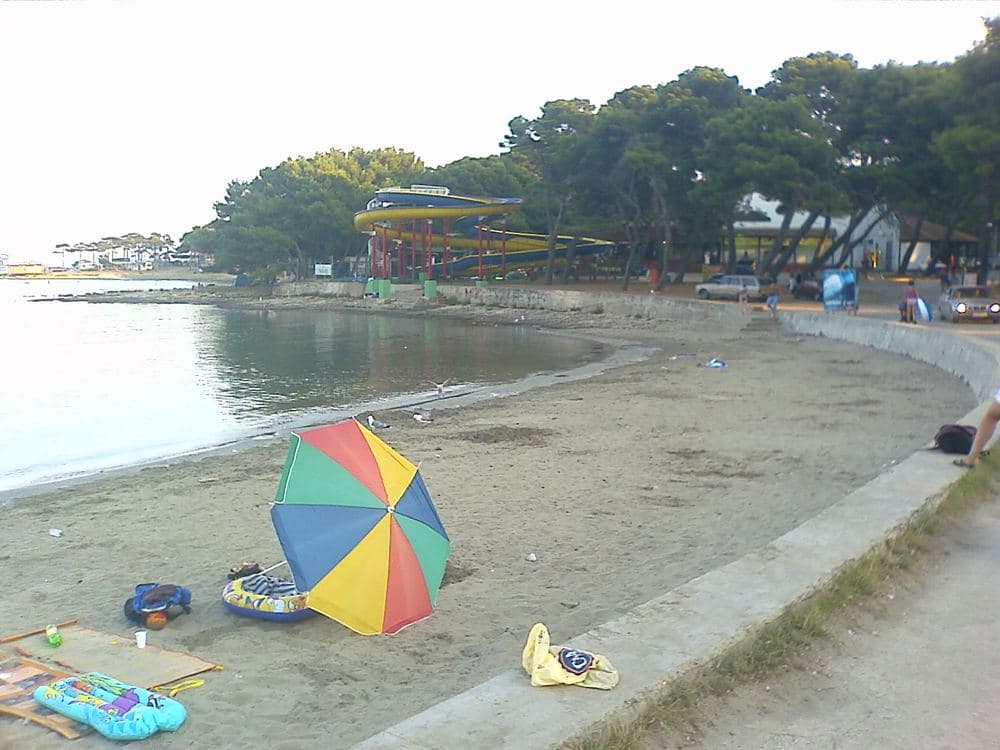
The Istrian coast is stone almost everywhere; Bijeca is the exception, with actual sand and water that barely deepens for a hundred metres. Behind it lies Kamenjak, thirty kilometres of protected coast with no buildings, and a limestone shore that still carries dinosaur footprints.
Checked: 25 August 2026
Medulin sits at the southern tip of Istria, ten minutes from Pula airport, and it has two things the rest of the peninsula does not: a genuinely sandy beach and an undeveloped cape. Add a Roman villa on a peninsula and a stretch of rock with dinosaur footprints on it, and the day fills itself.
- 09:00Bijeca, the sandy exception
Real sand, a bottom without sharp rock, and water that barely gets deeper for a hundred metres. That combination is rare on this coast and it is why families come here, so the early hours are the good ones.
- 11:00Vižula, a Roman villa on a peninsula
A large Roman residence stood here from the first century into late antiquity, with baths, mosaics and its own landing stage. Much of it lies just under the surface, and the walk round the peninsula is short and shaded.
- 14:00Kamenjak, the cape with nothing on it
Protected since 1996, Kamenjak covers the whole southern tip of Istria: about thirty kilometres of jagged coast, over five hundred plant species and almost no buildings. Take water, take a hat, and take the dirt roads slowly.
- 16:00Footprints from a hundred million years ago
The limestone of southern Istria formed in a shallow Cretaceous sea, and in places it kept the tracks of dinosaurs that walked here around a hundred million years ago. Fenoliga is one of those places, and the prints are in the rock at the water's edge.
Make Croatia Atlas a preferred source
One click and Google shows you our stories more often in Top Stories and in AI answers. It changes your own results only.