Ta strona nie jest jeszcze dostępna po polsku. Czytasz wersję angielską.
The Sea Organ gets the evening. The rest of Zadar is a Roman forum, a round ninth-century church and one long street that organises everything.
Sprawdzono: 18 października 2026, 04:10
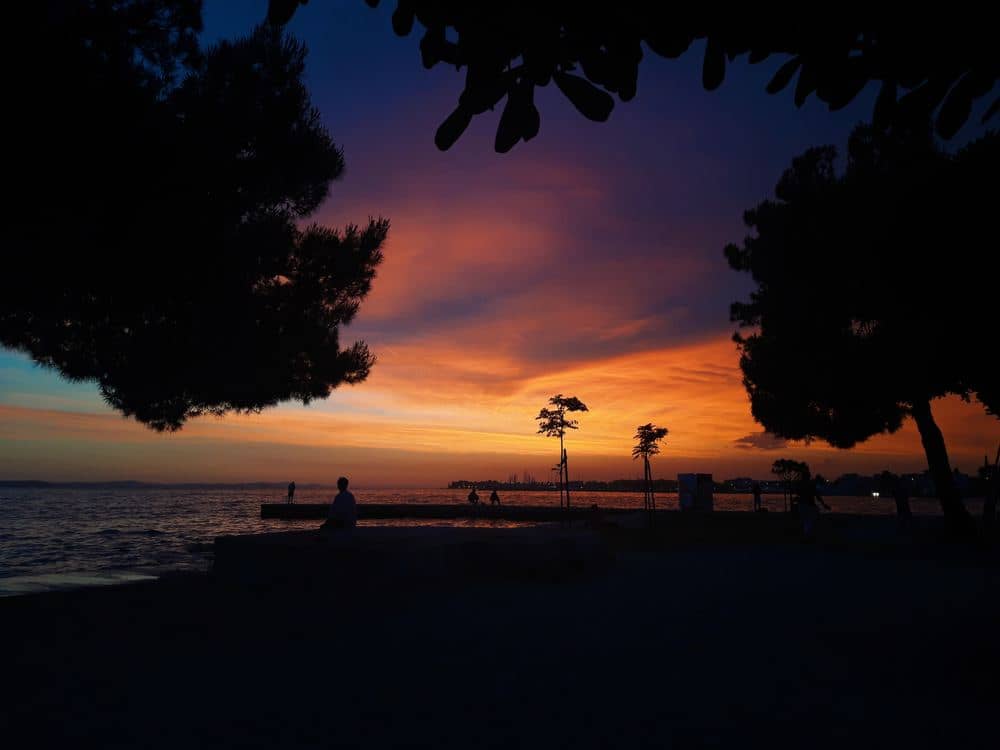
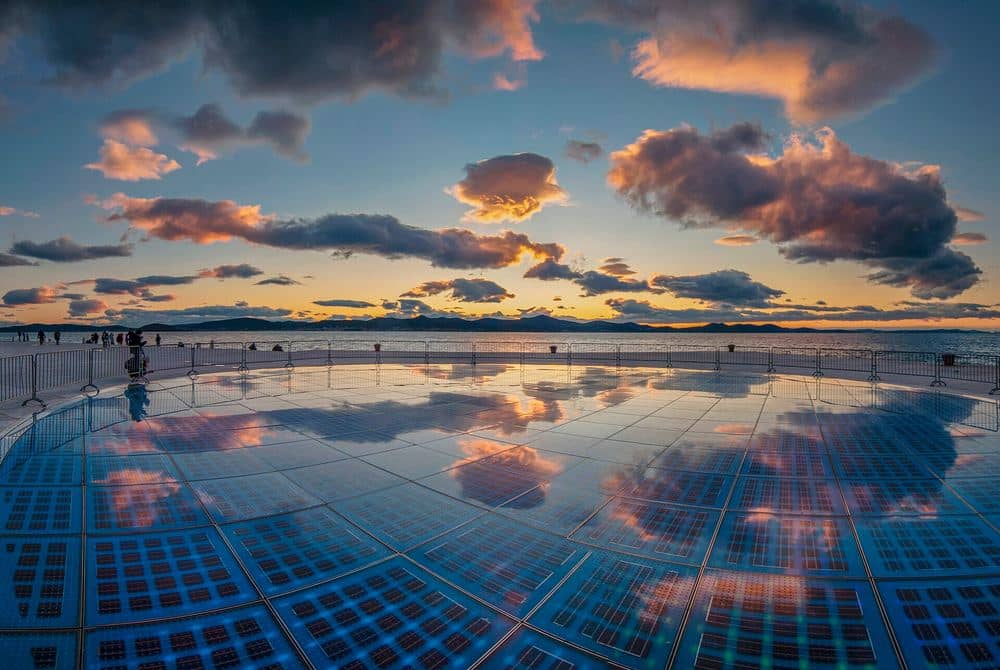
Zadar is usually sold as an evening: the Sea Organ, the Greeting to the Sun, the sunset. That part is real and we have written about it separately. But if you arrive at six in the evening and leave the next morning, you miss the reason the town exists. The peninsula holds the largest Roman forum on the eastern Adriatic, and almost everything worth seeing is built on, into or out of it.
St Donatus is built out of the forum
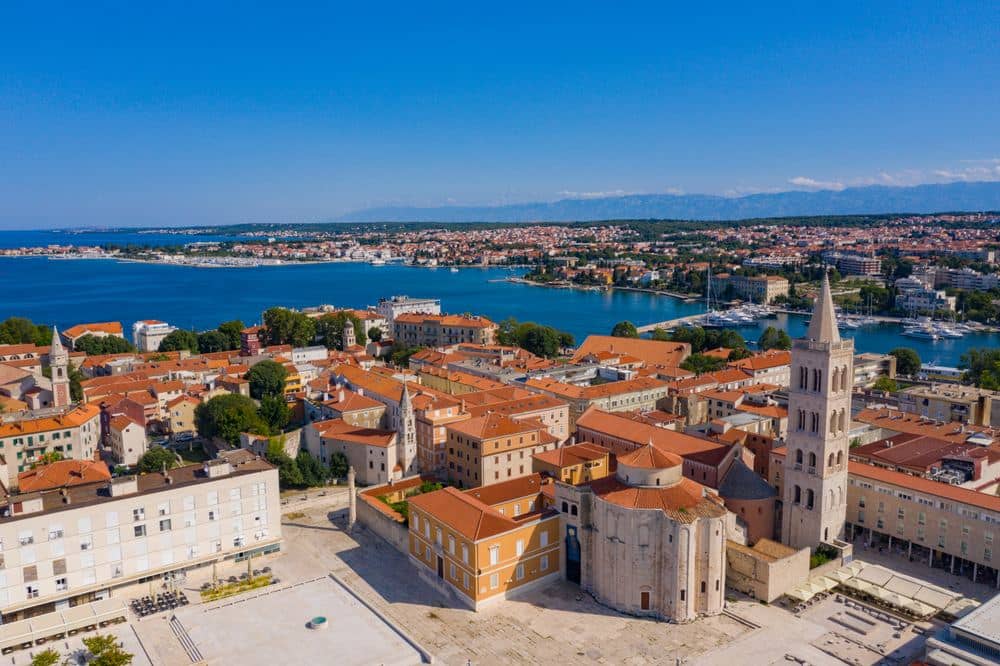
The round church next to the forum is the image of Zadar on every postcard, and the interesting part is underfoot. It stands on the forum pavement, and Roman stones were reused directly in its walls: you can see altar fragments and inscriptions built into the base. It has not been a working church for a long time and is used for concerts because the round shape does remarkable things to sound. Go inside, look down first, then up.
Kalelarga organises the whole peninsula
- Kalelarga: the old main street, running the length of the peninsula. Everything else branches off it.
- People's Square and the City Guard: the civic centre, with the loggia and the clock.
- Five Wells Square and the Land Gate: the Venetian defensive layer, best seen together.
Two museums that are actually worth it
Zadar has more museums than a town this size usually supports, and two stand out for different reasons. The Museum of Ancient Glass is built around glass found in local Roman graves, and it is small enough to see properly in under an hour. Gold and Silver of Zadar, in the Benedictine convent next to St Donatus, holds the reliquaries the town kept through every occupation. If you only have time for one, pick by mood: the glass museum is calm and modern, the treasury is dense and old.
- Cathedral of St Anastasia: the bell tower is climbable and gives the clearest overview of the peninsula.
- Church of St Mary and St Simeon: two more layers, Romanesque and baroque, both a minute off Kalelarga.
- Queen Jelena Park: the green break on the peninsula, useful when the stone gets hot.
“Zadar is a Roman forum with a town built on top of it, and the sunset is what happens afterwards.”
Practically: give the peninsula a morning and keep the evening for the waterfront. Everything named here is inside a compact walking area, so the limit is opening hours rather than distance. The route from the Land Gate through the forum to the sea, with the stops in order, is mapped in the CroVenture app.
Getting to Zadar
Zadar Airport is at Zemunik, about 8 km east of the city. A shuttle bus meets flights and runs to the bus station and the old town, and a taxi takes about 20 minutes. The bus station is on the mainland, 20 minutes on foot from the Land Gate, with coaches to Split, Šibenik, Zagreb and Rijeka through the day. The railway station is next to it, but trains are slow and rare, so the coach is the only useful public link. By car the A1 motorway runs inland with 2 exits for Zadar. The peninsula is closed to most traffic, so leave the car on the mainland side of the harbour by the footbridge, or at Foša beside the Land Gate, and walk in through the gate.
| From | How | Time |
|---|---|---|
| Zadar Airport (Zemunik) | shuttle bus or taxi | about 20 minutes |
| Split | coach, or car on the A1 | under 2 hours |
| Šibenik | coach or car | about 1 hour |
| Zagreb | coach, or car on the A1 | about 3 hours |
| Rijeka | coach or car | about 3 hours |
| Ancona, Italy | catamaran, summer only | about 4 hours |
Getting around and the ports
Inside the walls you walk. The footbridge at the head of the harbour joins the old town to the mainland in 2 minutes, and the barkajoli, rowing boatmen whose families have crossed the harbour for generations, take you from the old town quay to the far side in a few strokes. City buses leave from the bus station and the stops by the footbridge for Kolovare, Borik, Puntamika and Diklo. Boats use 2 ports, and mixing them up costs an hour. The passenger boat to Preko on Ugljan and the Kornati excursion boats leave from the old town quay. Car ferries, including the line to Molat and Ist, leave from Gaženica, about 3 km southeast, reached by city bus or taxi.
Beaches from the old town outward
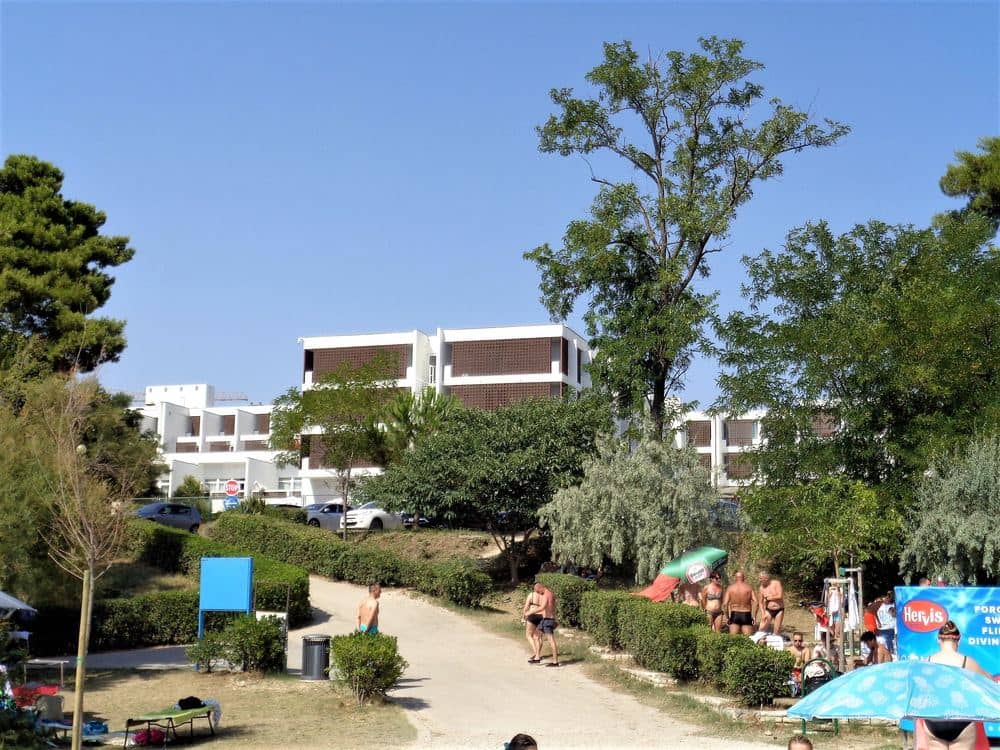
There is no beach on the peninsula, so a swim means a short move along the shore. Kolovare is the town beach, 10 minutes on foot from the Land Gate: shingle, concrete decks and stone slabs under pines, used by locals all year, and the promenade continues southeast past Uskok into smaller coves. In the other direction the coast runs northwest to Borik, the resort quarter 4 km out, where the shallows are sandy and stay warm far from the shore, then round the cape of Puntamika, with the Oštri rat lighthouse of 1871, to Diklo, a former fishing village with a kilometre of calm shingle. All are on city bus routes. For a swim at sunset, Puntamika faces straight into it and is quieter than the hotel beaches.
When to go, month by month
April and May suit the stone: warm enough to walk all day, museums on full hours, the sea still cold. June brings the first swimming, and the riva fills in the evening but tables are still easy. July and August are hot, the marble steps at the Sea Organ are full an hour before sunset and rooms on the peninsula go months ahead. September is the best month: the sea is at its warmest, the crowds thin as the month goes on and the island boats still run, though Jadrolinija trims sailings from the end of August and posts short-notice changes, so check the timetable the day before. October is quiet and mild until the first bura. From November to March many restaurants close and some museums shorten their hours.
Where to stay
Zadar splits into 4 areas that suit different trips. The peninsula puts you 5 minutes from everything and is right for 1 or 2 nights, but you cannot park at the door and bars run late in summer. Relja and Voštarnica, on the mainland side of the harbour, are 10 to 15 minutes over the footbridge, cheaper, and easier with a car. Borik is the hotel and family quarter, 4 km out on the bus, with the sandy shallows at the door. Diklo and Puntamika are quieter and residential and suit a longer stay with a car.
- Peninsula: stone apartments, everything on foot, book early for July and August, expect street noise until late.
- Relja and Voštarnica: parking, City Galleria for shopping, 15 minutes to the forum on foot.
- Arbanasi and Kolovare: beach in the morning, old town in the afternoon, both within a 15-minute walk.
- Borik: resort hotels, sandy shallows for small children, city bus into town.
- Diklo and Puntamika: locals' beaches, sunset by the lighthouse, bus or car needed.
Common mistakes
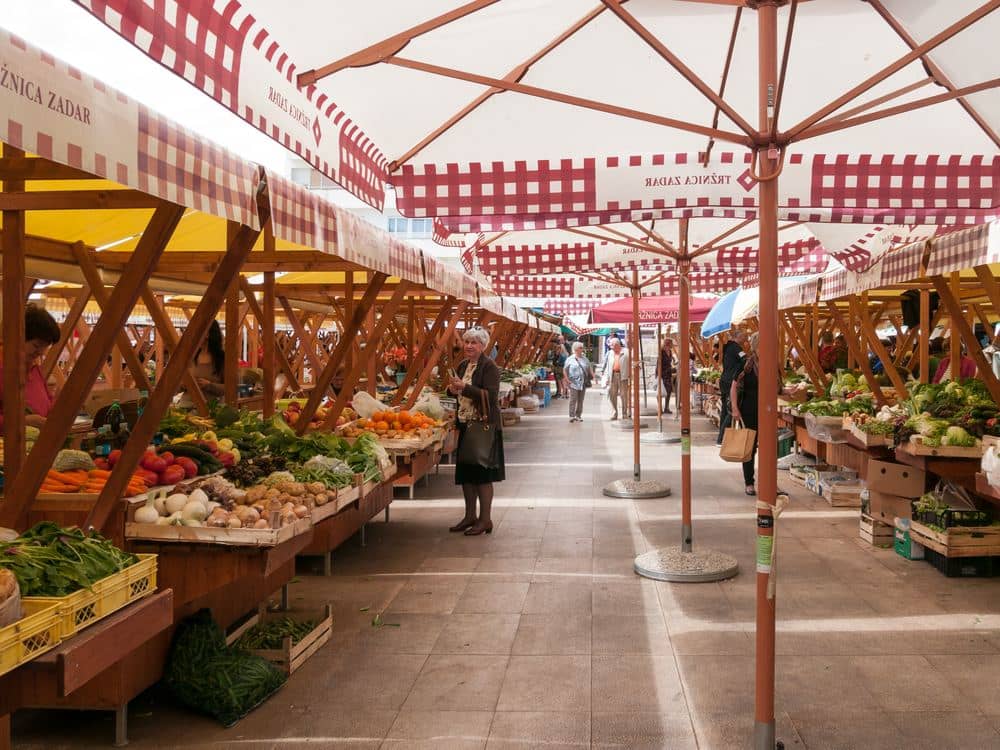
Most wasted time in Zadar comes from 4 errors. One is the wrong port: car ferries leave from Gaženica, the passenger boat to Preko from the old town quay. Another is driving onto the peninsula and circling for a space that does not exist. A further one is reaching the market after midday, because the pijaca along the northern wall works in the morning and is mostly packed away by early afternoon. The last is treating St Donatus as always open: its hours change with the season, it is closed from January to March, and the summer concerts inside are evening events with their own tickets. The Archaeological Museum Zadar lists the current hours on its website. The Museum of Ancient Glass runs live glass-blowing on some days, so ask at the desk on the way in.
The places, one by one
| Place | What it is | Time needed |
|---|---|---|
| Land Gate | Venetian gate of 1543 | 15 minutes |
| Five Wells Square | Cistern square with tower and park | 30 minutes |
| Church of St Simeon | Baroque church with silver sarcophagus | 20 minutes |
| Duke's Palace | Restored palace, museum and concerts | 1 hour |
| Stomorica Church Remains | Foundations of an 11th century chapel | 5 minutes |
| Church and Monastery of St Francis | Oldest Gothic church in Dalmatia, cloister | 30 minutes |
| Cathedral of St Anastasia | Romanesque basilica, climbable belfry | 45 minutes |
| Archaeological Museum Zadar | Finds from the forum on 3 floors | 1 to 2 hours |
| Church of St Chrysogonus | Romanesque basilica, mostly closed | 15 minutes |
| Sea Gate | Harbour gate with Roman arch | 10 minutes |
| Zadar City Walls | UNESCO ramparts, full circuit on foot | 1 hour |
| Paklenica National Park | Velebit canyon walk, 40 minutes away | a full day |
| Zrmanja Canyon Viewpoint | River canyon lookout and paddling | half a day |
Land Gate
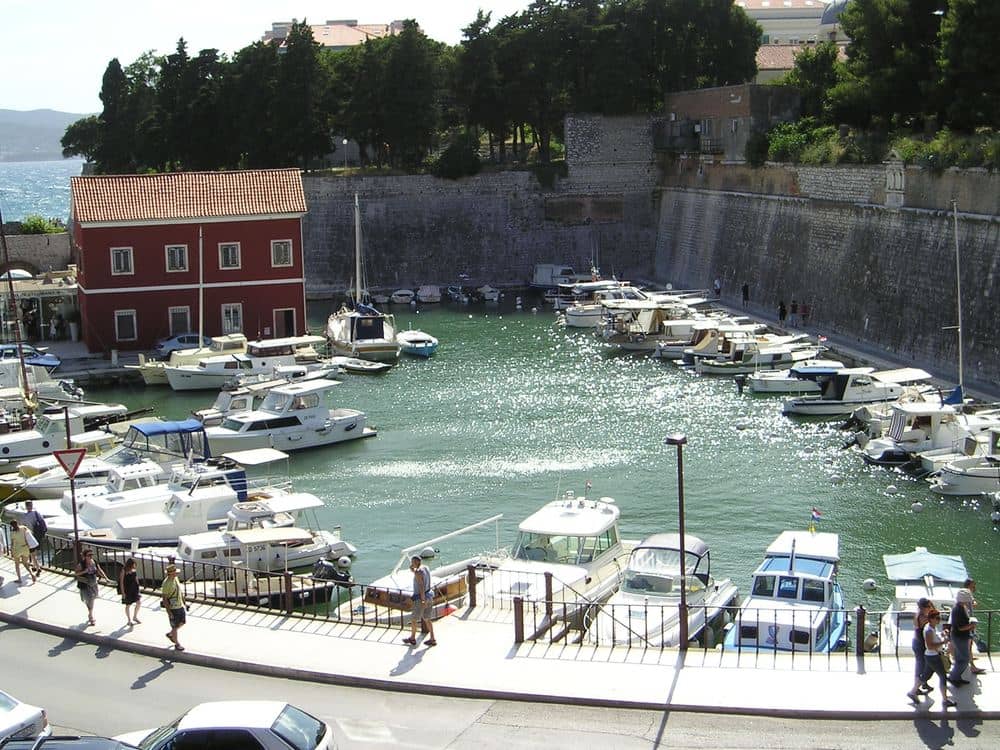
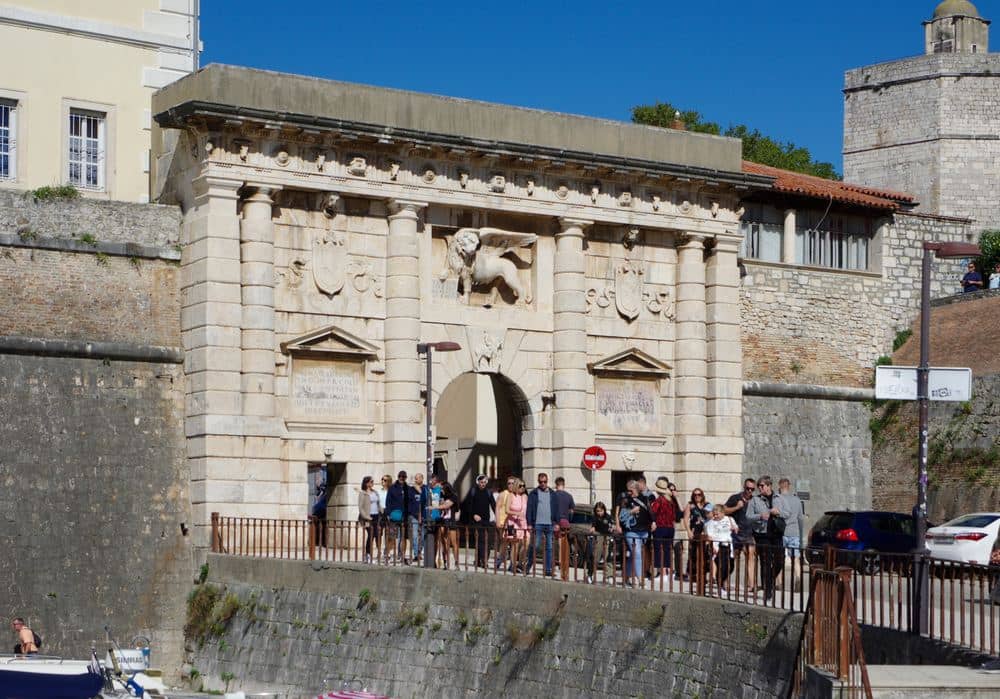
The Land Gate is the formal way in. Michele Sanmicheli built it for Venice in 1543 as a triumphal arch: a great arch for carts and 2 smaller ones for pedestrians. Above the central arch rides St Chrysogonus, the city's patron, and above him spreads the winged lion of St Mark. The lower band is cut deliberately rough, so the gate reads as rock out of which the town grows. It stands on the southern edge of the peninsula beside Foša, where a bridge once crossed the moat. The best view is from outside, from the rim of the harbour, with arch and lion reflected among the boats. Walk through slowly, look up, then carry on into Five Wells Square.
Five Wells Square
The 5 stone wellheads stand in a line, and beneath them lies a cistern dug in 1574, when Zadar was under Turkish siege and running out of water. Venice built the reservoir between the medieval wall and the Grimani bastion, and it supplied the town until the waterworks of 1838. On one side rises the Captain's Tower, a pentagonal watchtower of the 13th century, now a gallery on 6 floors whose top windows frame the whole square. On the other side a staircase climbs to the park on the bastion. The square is a shady refuge at midday and a concert stage on summer evenings, from classical to electronic. Stand by the middle well and look along the line of wellheads to the tower.
Church of St Simeon
St Simeon holds the most valuable object in Zadar: the silver sarcophagus of the city's protector, 250 kg of silver made between 1377 and 1380 by Francis of Milan with 13 Zadar masters, commissioned by Queen Elizabeth, wife of Louis of Anjou. Its reliefs tell how the saint's body reached Zadar and how the queen tried to take a piece of it and repented, with portraits of her and her 3 daughters. The chest floats above the high altar on 2 bronze angels cast from Turkish cannons. The church itself is a 17th century baroque room on older foundations, calm and a little dark. Around 8 October, the saint's day, the chest is opened and the town celebrates. Entry is free, shoulders covered.
Duke’s Palace
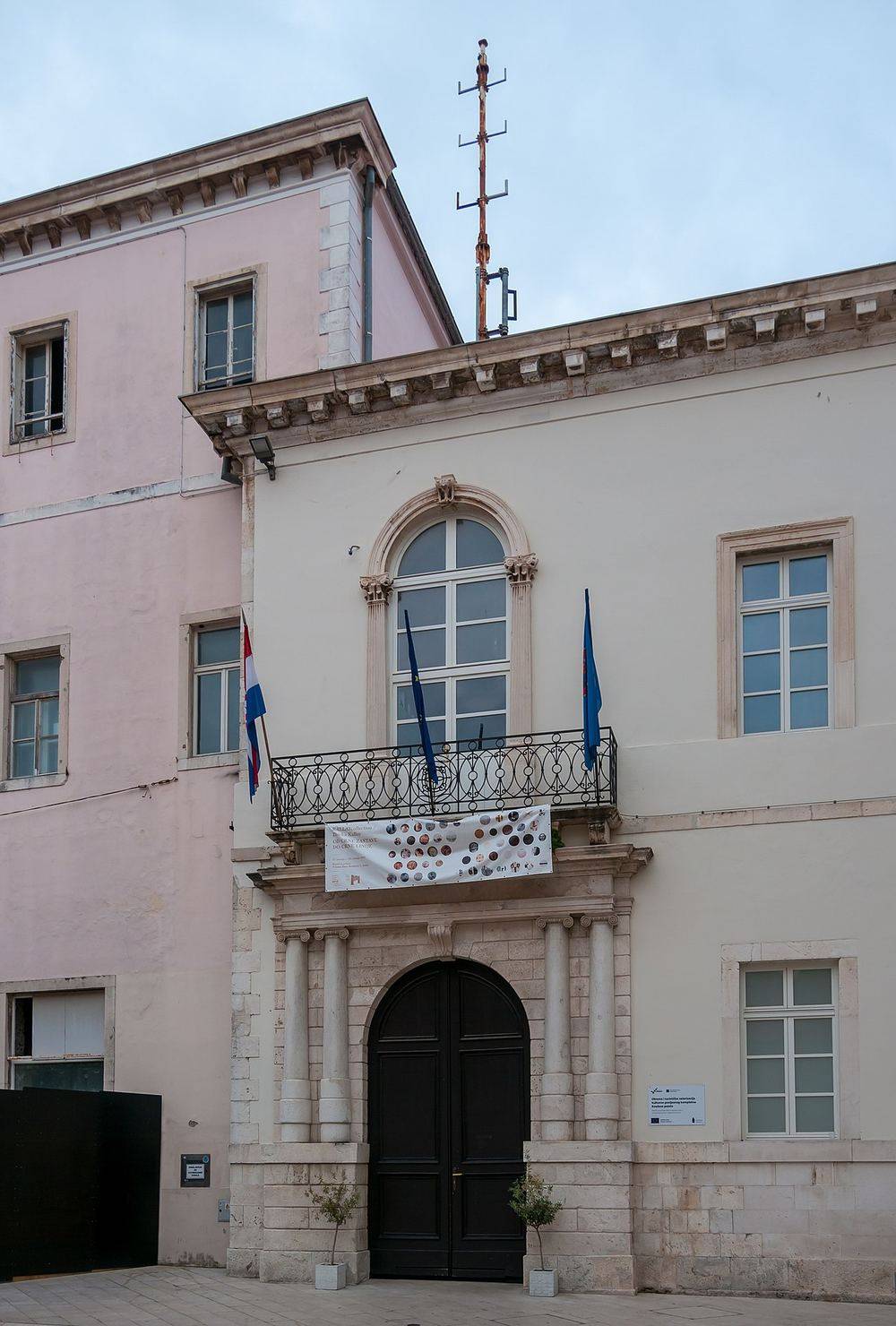
The Duke's Palace on Šime Budinić Square was the seat of the Venetian rector, and its foundations remember the 13th century. Baroque fronts covered the Gothic windows, the Austrian administration added floors, and the war of 1991 left the building damaged and half empty for decades. A full restoration returned it to the city in 2017 as a cultural centre. The layers of each century are left visible, from Romanesque walls in the cellar to salons over the harbour, and the halls hold displays of the National Museum, exhibition rooms and an atrium with a summer stage. The atrium café works even when the exhibitions rest, and the Providur's Palace next door forms one connected complex, so take both in the same afternoon.
Stomorica Church Remains
Stomorica is the smallest monument in Zadar and takes 3 minutes. In the Varoš quarter, below the level of the present street, lie the foundations of an 11th century pre-Romanesque chapel of St Ursula, uncovered after 1960. The plan is a six-leaf: 6 semicircular apses around a central space, a form counted on one hand in Europe and tied to the era of the Croatian rulers. From the railing you see the whole shape at once, like a drawing at full scale, while cafés and residents with shopping bags carry on around it. Read the plaque, look at the 6 arcs in the stone, then continue through Varoš, the liveliest of the old quarters, toward People's Square.
Church and Monastery of St Francis
St Francis is the oldest Gothic church in Dalmatia, raised by the Franciscans in the mid 13th century and consecrated in 1280. The church is a single plain nave, but its sacristy is where the Peace of Zadar was signed in 1358, by which Venice gave up Dalmatia to the Hungarian-Croatian king Louis. Behind the church opens a 14th century cloister with a wellhead and a lapidarium in the arcades, one of the quietest places on the peninsula and cool at midday. The choir holds Renaissance stalls carved by John of Vrana, and the friary keeps paintings, manuscripts and reliquaries. The Franciscans still live here, with masses, bells and a garden. Entry is for a small donation, the cloister is open all day, and half an hour is enough.
Cathedral of St Anastasia
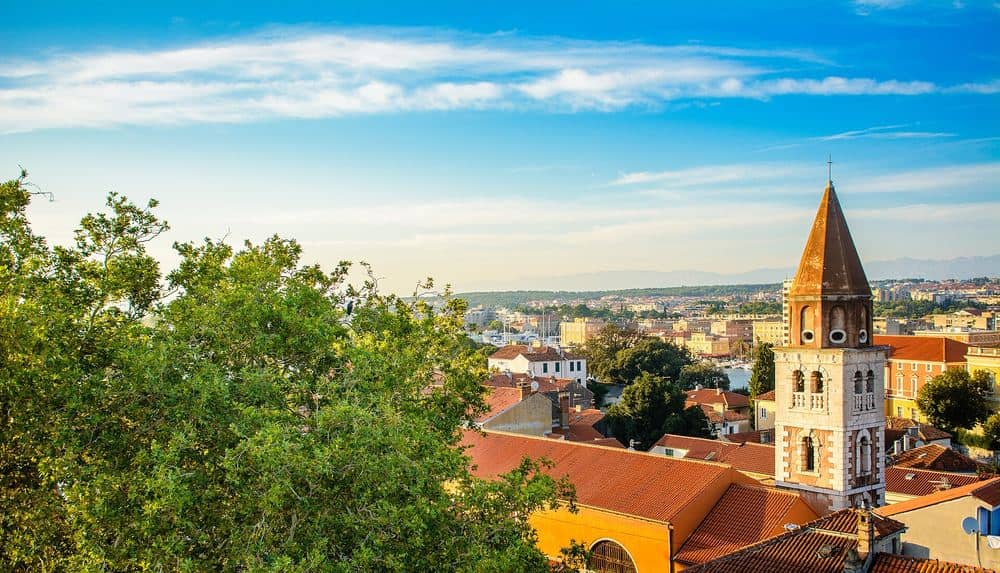
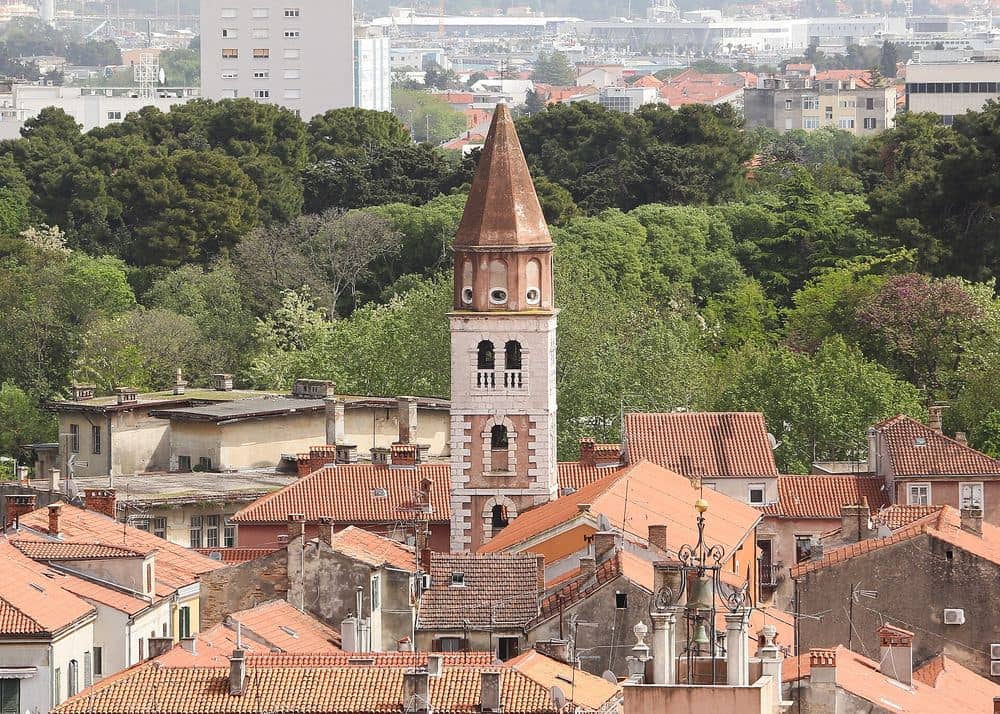
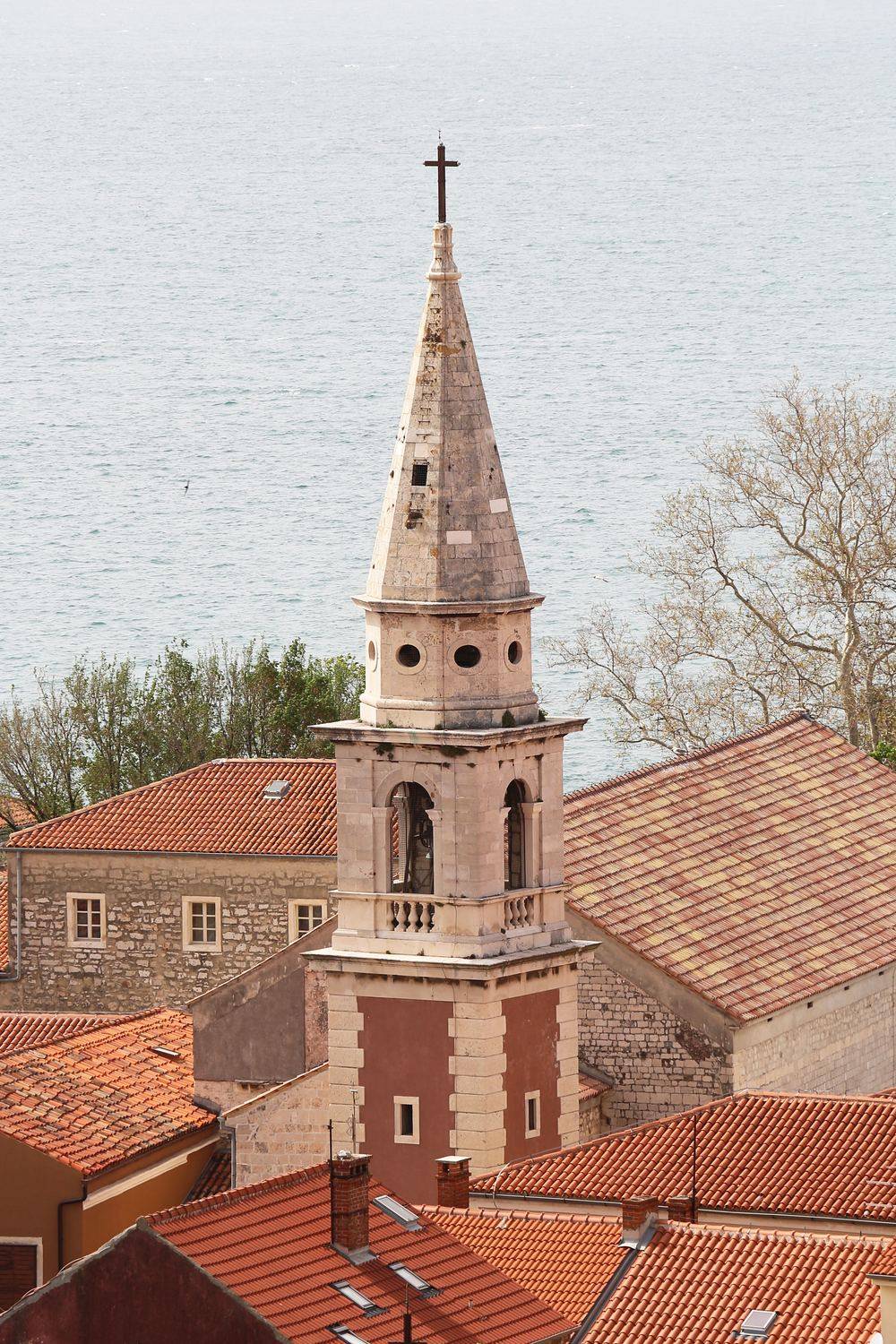
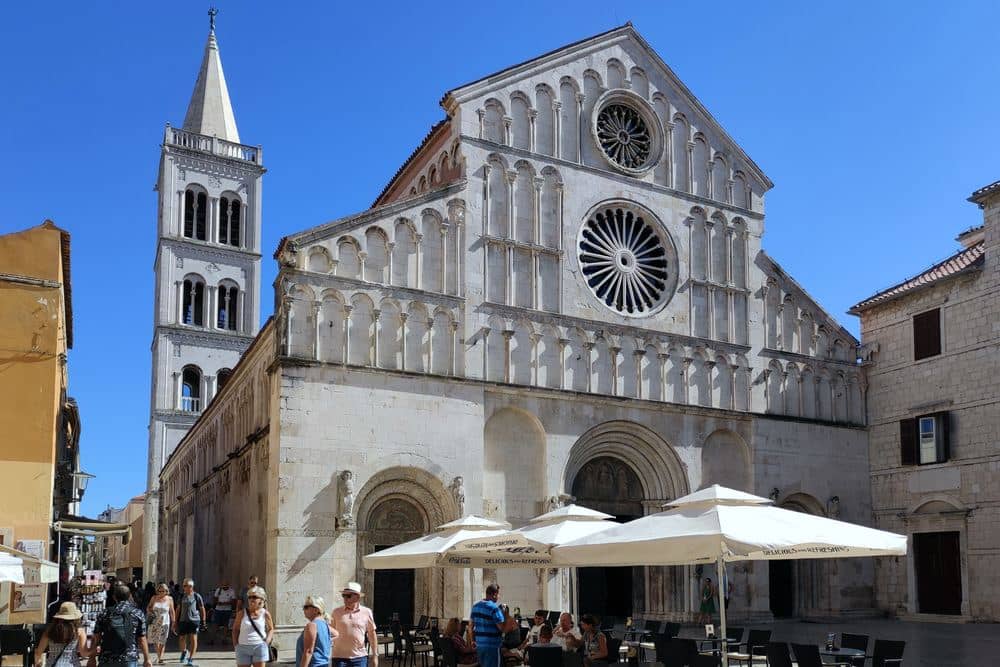
The cathedral is the largest church in Dalmatia, a three-nave Romanesque basilica of the 12th and 13th centuries. The front carries 3 portals, blind arcades and 2 stone rose windows, a larger Romanesque one and a smaller Gothic one. Crusaders sacked Zadar in 1202 and the church was completed in the rebuilding that followed. Inside are 15th century choir stalls and, in the apse, the sarcophagus of St Anastasia, whose relics came from Constantinople in the early 9th century. The belfry was begun in 1452 and finished in 1893 to a design by the English architect Thomas Jackson. Its 180 steps are charged separately from the church and are best climbed in late afternoon light. Sightseeing pauses during mass, and the schedule hangs on the door.
Archaeological Museum Zadar
The Archaeological Museum is the second oldest in Croatia, founded in 1832, a decade after Split's, and it has collected whatever Zadar's soil turns up ever since. More than 100,000 objects fill 3 floors beside the forum: Liburnian jewellery and weapons, the richest holdings of Roman Iader with glass, statues, mosaics and grave stelae, and medieval interlace stonework carrying the names of Croatian princes. Seek out the reconstruction of a Liburnian ship and the model of Roman Iader, which shows how the present streets follow the ancient ones. Allow 90 minutes. A combined ticket makes the Museum of Ancient Glass or the Gold and Silver cheaper, and in summer the air-conditioning counts as a bonus.
Church of St Chrysogonus
St Chrysogonus is the purest Romanesque in Zadar: a three-nave basilica consecrated in 1175, once the church of the most powerful Benedictine abbey in the city, dedicated to the martyr on the city's coat of arms. The front is austere and almost bare. The apses behind are lavish, with a row of blind arcades and a dwarf gallery found nowhere else in Dalmatia, and the best view of them is from the narrow street behind the church. Inside are remains of 13th century frescoes and a marble baroque altar. The church opens only occasionally, for concerts, exhibitions and feast days, so plan to walk around it rather than through it. The abbey beside it perished in the Allied bombing, and the city still plans to rebuild the lost belfry.
Sea Gate
The Sea Gate is the passage through the northern wall beside St Chrysogonus, from the harbour quay into the old town. Sanmicheli's school shaped it in 1573, but the core is far older: built into it is a Roman triumphal arch that the citizen Melia Anniana raised for her late husband, so the same stone has carried travellers for 2,000 years. On the sea side an inscription honours the battle of Lepanto in 1571, in which a Zadar galley fought, with a relief of St Chrysogonus on horseback. The town side is plainer. If you come off the Preko boat or a Kornati excursion, this is your way in. Stop in the passage, note the thickness of the wall and touch the Roman blocks in the arch.
Zadar City Walls
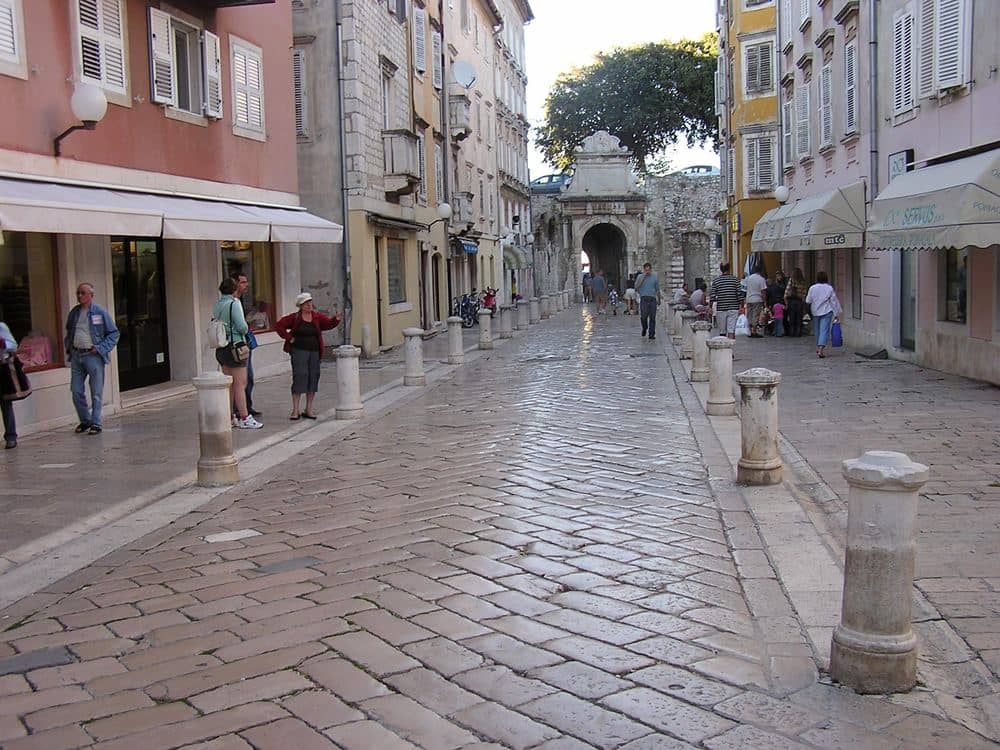
The walls have been on the UNESCO World Heritage list since 2017, as part of the Venetian defence works of the 16th and 17th centuries, together with Šibenik, Kotor and 3 Italian towns. When artillery made medieval walls useless, Venice ringed the town with low sloping ramparts and bastions that absorbed cannonballs, and the Turks never seriously attacked. The full circuit takes an hour and is free. The 2 best stretches are the southeastern one from the Land Gate along Foša, where the ramparts rise straight from the sea, and the northern wall along the harbour, walked on top with the port basin and Ugljan below. Gates of every era line the way, from the Roman arch in the Sea Gate to baroque portals. Evening light is best.
Paklenica National Park
Paklenica is the biggest outing from Zadar, about 40 minutes by car toward Starigrad, where 2 canyons, Velika and Mala Paklenica, cut the Velebit down to the sea. The park has existed since 1949. The classic first visit is the walk from the entrance up Velika Paklenica to the mountain hut and back, 3 to 4 hours along the stream past old mills, beneath cliffs up to 400 m high, with a stop for curd cheese at the hut. Climbers work more than 400 routes here, so you hear them on the walls above the path. Manita peć is the park's only show cave. Bring water and firm shoes and start early in summer, because the lower canyon bakes. Tickets are sold at the gate or online.
Zrmanja Canyon Viewpoint
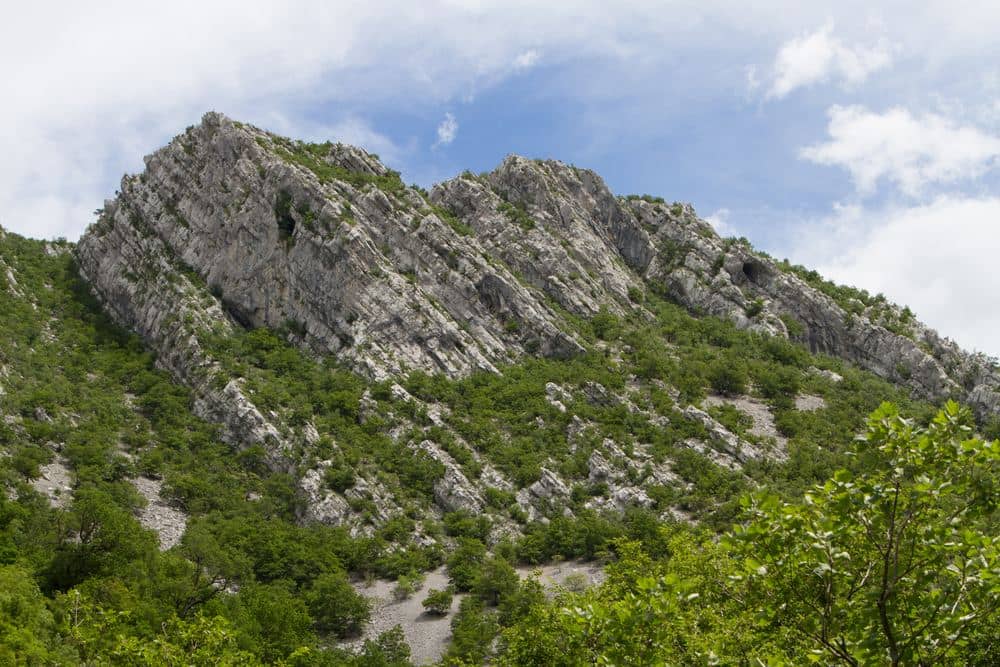
The Zrmanja is called the Croatian Colorado: emerald water in a limestone bed of bends perfect as a drawing, with cliffs of more than 100 m on both sides. The best known viewpoint is above the meander at Muškovci, where the river almost circles a stone tower. Reach it by road from Obrovac or through the village of Muškovci, the last part on gravel following signs, about an hour's drive from Zadar. Morning gives calm green water and evening sharper shadows, and spring adds waterfalls from swollen tributaries. To meet the river from below, agencies in Obrovac run rafting and kayaking from Kaštel Žegarski, 3 to 4 hours of paddling with the Visećica fall halfway, calm enough in summer for families. Stay behind the safe edges in wind.
Najczęstsze pytania
- What is Zadar best known for?
- For two installations on its waterfront and for a Roman core that most visitors underestimate. The Sea Organ turns wave motion into sound through pipes built under the marble steps, and the neighbouring Greeting to the Sun collects daylight and releases it as a light pattern after dark. Both are by architect Nikola Bašić and both are free. Behind them lies the Roman forum, the ninth century circular church of Saint Donatus and the cathedral of Saint Anastasia.
- How long should you stay in Zadar?
- The old town itself needs one full day, ideally ending at the waterfront for sunset because the light and the installations are the point. Two or three days make sense as a base, because Zadar sits within reach of the Kornati islands, Krka waterfalls, Paklenica canyon and the salt town of Nin, each about an hour away. As a stopover between Split and Istria, one night is enough.
- Is the Zadar sunset really worth planning around?
- Yes, but for a specific reason rather than the view alone. The western waterfront faces open sea with the islands of Ugljan and Pašman on the horizon, so the sun sets into water rather than behind land. Combined with the Sea Organ playing underneath and the Greeting to the Sun lighting up as darkness falls, it is a sequence rather than a single moment. Arrive about thirty minutes early, because the marble steps fill up.
- What are the most useful tips for a first visit to Zadar?
- Four things save the most time. Do the old town on foot, because the peninsula is only about 600 metres long and every car detour costs more than the walk. See the Roman forum in the morning, when the light is low and the coach groups have not arrived yet. Keep the Sea Organ for the evening rather than midday, since it is the sunset that makes the square work. And plan one half day outside the peninsula, either the islands from the ferry port or the Kornati boat trips, because Zadar is a base as much as it is a destination.
Źródła
Udostępnij przewodnik
Masz pytanie o podróż?
Obserwuj Croatia Atlas
Wiadomości i praktyczne porady z Chorwacji na Instagramie, Facebooku i TikToku.
Wyselekcjonowane miejsca, wydarzenia i filmy dla miasta Zadar.
Croatia Atlas jako preferowane źródło
Jedno kliknięcie i Google częściej pokaże Ci nasze artykuły w najważniejszych wiadomościach i w odpowiedziach AI. Zmienia tylko Twoje wyniki.