Walk Pula as one connected Roman city, then choose between the hilltop fortress, underground tunnels and the coast.
Pula makes more sense when its Roman monuments are treated as parts of one city rather than isolated photo stops. The Arena stood near the ancient road and harbour, the gates controlled movement through the walls, the Arch of the Sergii marked a formal entrance and the Forum held civic life. Those points still form a compact walking line. Add Kaštel above them and the tunnels below them, and Pula reveals three levels at once: Roman street, fortified hill and underground military city.
Follow the Roman line without wasting steps
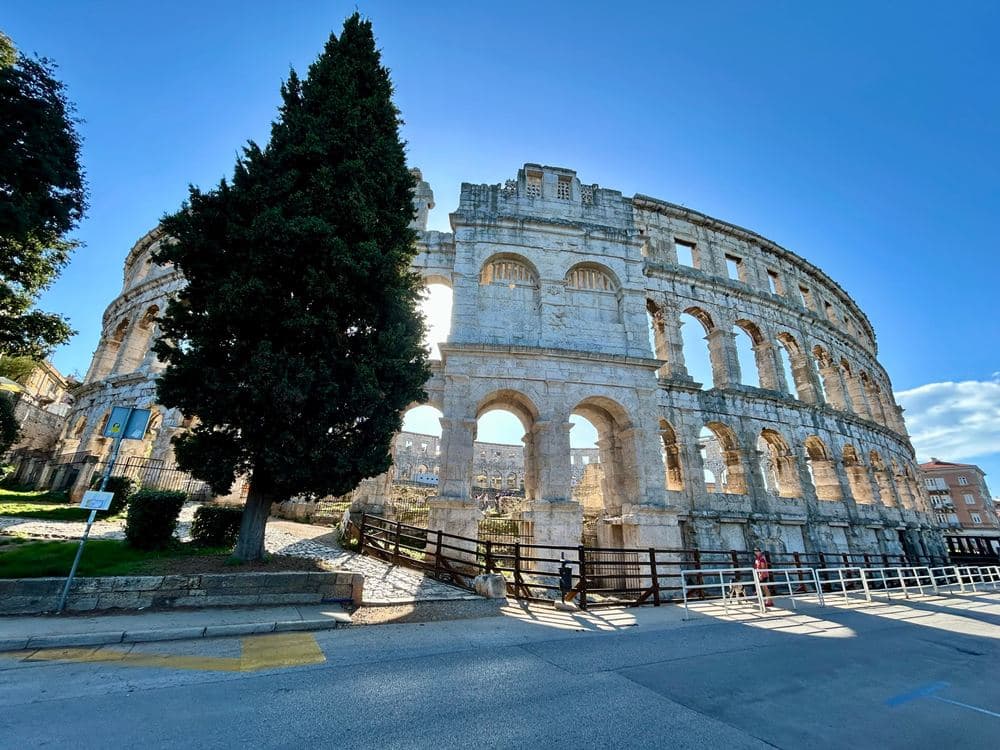
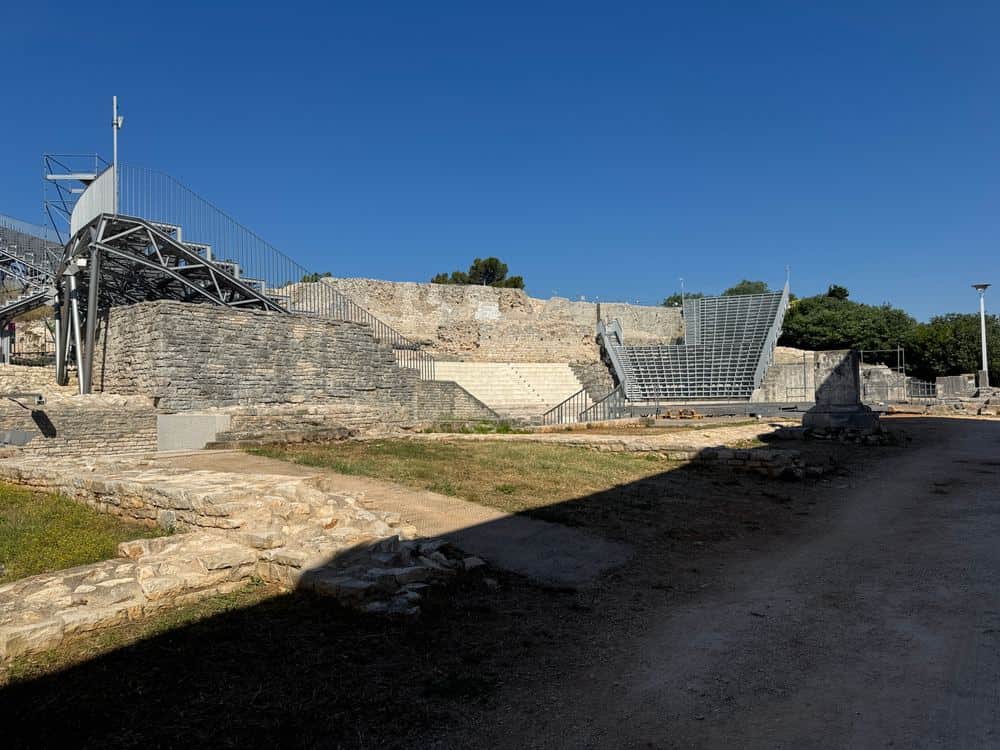
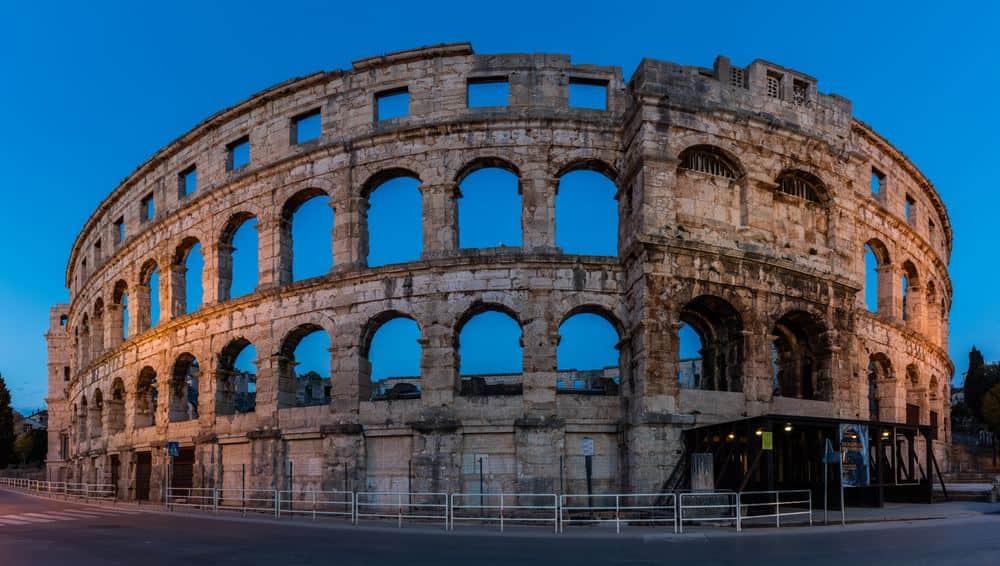
Start at the Arena before the stone bowl absorbs the strongest heat. Walk toward the Twin Gates and Gate of Hercules, then decide whether to climb to Kaštel and the Small Roman Theatre or enter Zerostrasse for an underground contrast. Continue through Giardini to the Arch of the Sergii and finish the ancient sequence at the Forum with the Temple of Augustus and Communal Palace. This order keeps the history connected and leaves the Forum, Pula's living square, for a slower pause rather than a rushed first photograph.
- Give the Arena enough time for the underground exhibition, not only the exterior arches.
- Choose Kaštel for harbour views and Zerostrasse when shade and twentieth-century history matter more.
- Pause at the Forum long enough to see ancient temple, later town hall and modern café life in one frame.
- Return toward the harbour after dark for the Lighting Giants, but check the current lighting schedule locally.
If you only have half a day
Cruise calls and day trips usually leave three to four hours ashore. That is enough for the Roman line, but not for the line plus the coast. Drop the underground and the castle, keep the walk: it is a little over a kilometre from the Arena to the Forum, all of it flat until the last few steps.
| Time | Stop |
|---|---|
| 0:00–0:50 | Arena, including the underground exhibition on oil and wine |
| 0:50–1:10 | Twin Gates and Gate of Hercules, five minutes apart |
| 1:10–1:40 | Down through the Giardini to the Arch of the Sergii |
| 1:40–2:10 | Sergijevaca street to the Forum: Temple of Augustus and town hall |
| 2:10–2:40 | Coffee on the Forum, which is the point of the Forum |
| 2:40–3:30 | Back down to the harbour, with a detour to the cathedral if the clock allows |
What this leaves out is deliberate. Zerostrasse and the Kaštel each cost forty minutes and sit uphill; on a half day they turn the walk into a rush. Verudela and the beaches are a bus ride away and belong to a different kind of day. Brijuni is not a half-day option at all, the boat alone eats the time.
Keep the coast as a deliberate second chapter
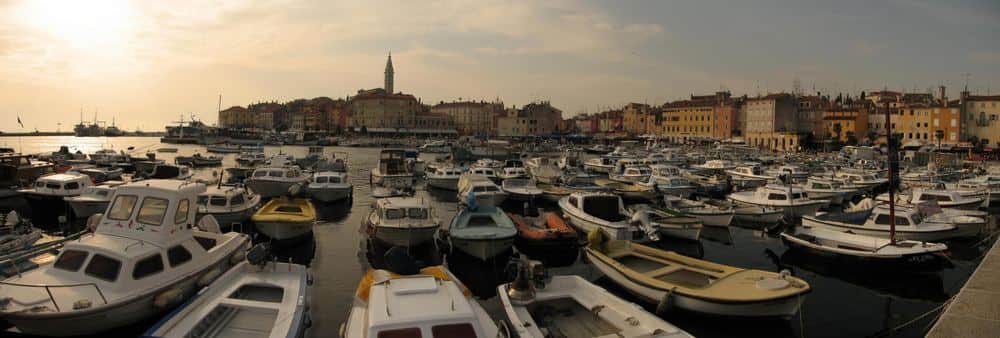
Pula's historic centre is not the beach zone. If you still want the sea, choose one Verudela stop such as Ambrela or Hawaii Beach and travel there after the Roman route. Brijuni deserves its own half or full day because the transfer and island visit create a separate experience. The useful plan is therefore three clusters: Arena and gates, Kaštel and tunnels, Forum and old town. Add one coastal cluster only if time and energy remain. Pula feels richer when Roman city and Adriatic edge support each other instead of competing in an overloaded schedule.
Official sources
Make Croatia Atlas a preferred source
One click and Google shows you our stories more often in Top Stories and in AI answers. It changes your own results only.