4.7 million arrivals and 29.6 million overnight stays, the best July in two years. The interesting part is the distribution: Istria alone outweighs Dalmatia, and nine in ten visitors do not fly in.
Checked: 17 August 2026
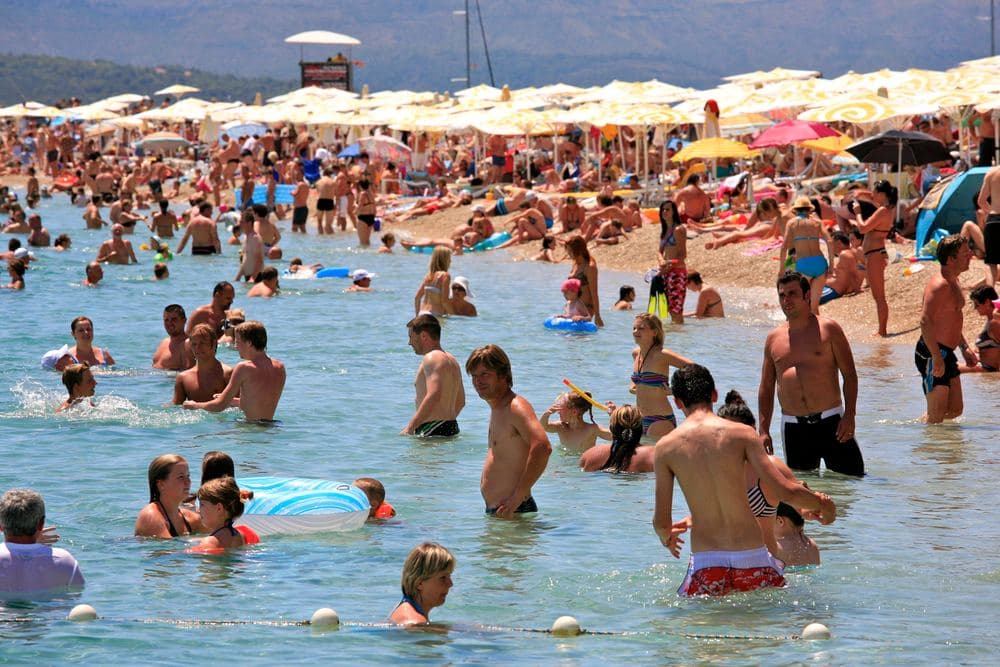
Croatia's Ministry of Tourism and Sport published the July figures on 10 August 2026, and the headline is that this was the country's strongest July in two years. That number matters less to a traveller than what sits underneath it: which regions absorb the load, which markets fill the beds, and how people actually arrive. All of it is public, and all of it is more useful for planning a trip than any ranking of prettiest beaches.
The headline figures
| Period | Arrivals | Overnight stays | Change year on year |
|---|---|---|---|
| July 2026 | 4.7 million | 29.6 million | Arrivals up 2.5 percent, nights up 1 percent |
| January to July 2026 | 12.4 million | 59.1 million | Up 1 percent in both |
| Of that, the Adriatic | Not reported separately | 56.1 million | Up 0.5 percent |
| Of that, inland including Zagreb | Not reported separately | Over 3 million | Up 1 percent |
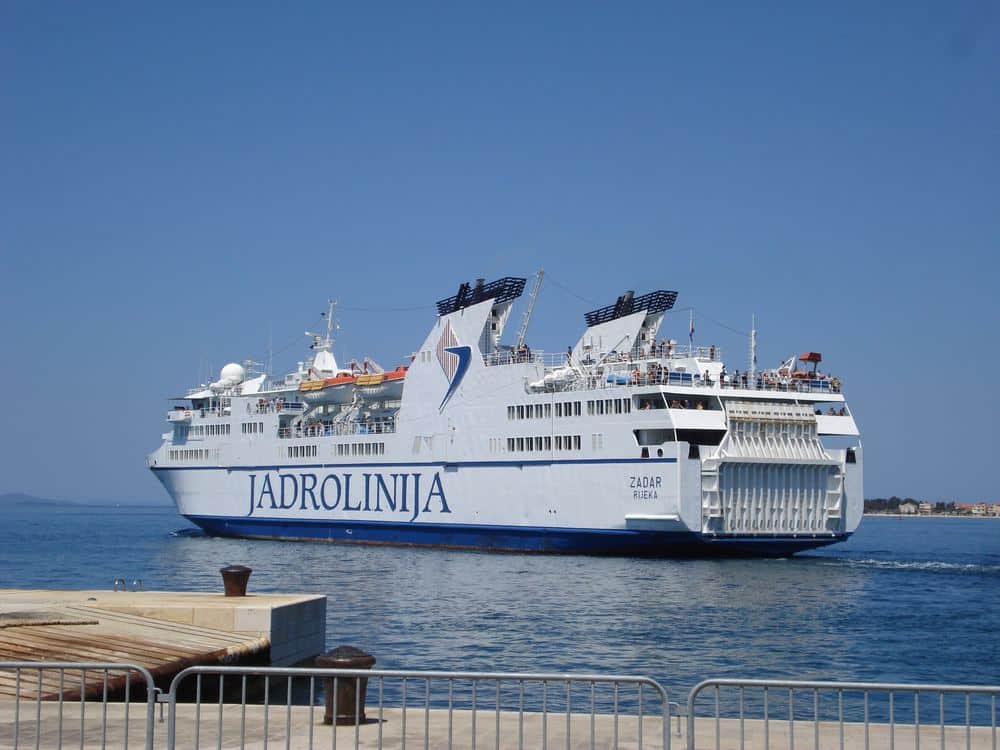
Arrivals rose faster than nights, 2.5 percent against 1 percent. That gap is the story of the last few seasons in one line: more people, staying slightly shorter. It is also why a July weekend feels busier than the overnight total suggests, because turnover, not occupancy, is what fills the motorways and the ferry ramps.
Where the nights actually land
| Region | Overnight stays, January to July |
|---|---|
| Istria | 16.7 million |
| Split-Dalmatia County | 11.1 million |
| Kvarner | 9.7 million |
This is the number most trip plans get backwards. Istria, the small peninsula in the northwest, takes more overnight stays than the whole of Split-Dalmatia County, which contains Split, Hvar, Brač, Makarska and Omiš. Croatia's crowd problem is not evenly a Dalmatian problem: it is concentrated in Istria by volume and in a handful of Dalmatian old towns by density. If you want the coast without the queue, the arithmetic points at Kvarner, at the Zadar and Šibenik stretch between the two heavyweight regions, and at the islands that have no bridge.
Who fills the beds
| Market | Overnight stays, January to July |
|---|---|
| Germany | 10.3 million |
| Croatia, domestic guests | 7.6 million |
| Slovenia | 6.7 million |
| Austria | 4.3 million |
| Poland | 3.9 million |
| Czechia | 3.0 million |
| United Kingdom | 2.2 million |
| Hungary | 2.1 million |
Seven of the top eight markets are within a day's drive. That is the single most explanatory fact about Croatian summer traffic: the country's guests mostly arrive on wheels, on the same two or three Saturdays, through the same handful of border crossings and toll plazas. It also explains why the season is so weather-sensitive at short notice, because a family that can decide on Wednesday to drive down on Friday can just as easily decide not to.
Only one visitor in ten flies
Around 5.5 million passengers passed through Croatian airports in the first six months of 2026, up about 3 percent, though June alone was down about 3 percent year on year. Air travel accounts for an estimated 10 to 15 percent of arrivals. The June breakdown by market shows how uneven that growth is.
| Market, June 2026 | Passengers | Change year on year |
|---|---|---|
| Germany | 342,410 | -2.5% |
| United Kingdom | 333,854 | +5.4% |
| Poland | 162,932 | +22.9% |
| Spain | 91,697 | +34.4% |
What it costs, read from the receipts
The tourism minister reported that the value of fiscalised receipts in July rose 18 percent while the number of receipts issued rose 8 percent. Those two figures together imply an average receipt roughly 9 percent higher than in July 2025. That is not an official inflation figure and it mixes locals with visitors, but it is the closest thing to a public price signal for a Croatian summer, and it is consistent with what the tourist board itself describes: guests booking late and shopping hard on value for money.
What this means for the rest of 2026
- The post-season push is aimed at Poland and the UK, with promotion starting in mid August. Expect better availability in September in the places those markets do not dominate.
- Last-minute booking is now normal behaviour, which cuts both ways: prices soften late in weak weeks and vanish entirely in strong ones.
- Ferragosto, the Italian holiday week around 15 August, is the peak the ministry itself flags. The week after it is the first real drop of the season.
Frequently asked questions
- How many tourists did Croatia have in July 2026?
- 4.7 million arrivals and 29.6 million overnight stays, according to eVisitor data published by the Ministry of Tourism and Sport. That is 2.5 percent more arrivals and 1 percent more nights than July 2025, and the strongest July in two years.
- Which part of Croatia is busiest?
- Istria, by a clear margin: 16.7 million overnight stays in the first seven months, against 11.1 million for Split-Dalmatia County and 9.7 million for Kvarner. The busiest single destinations in July were Rovinj, Vir, Poreč, Medulin and Dubrovnik.
- Where do most visitors to Croatia come from?
- Germany, with 10.3 million overnight stays in the first seven months, ahead of domestic guests with 7.6 million and Slovenia with 6.7 million. Austria, Poland, Czechia, the UK and Hungary follow.
- Do most people fly to Croatia?
- No. Air travel accounts for an estimated 10 to 15 percent of arrivals; the large majority come by road. Around 5.5 million passengers used Croatian airports in the first half of 2026, about 3 percent more than a year earlier.
- Is Croatia getting more expensive?
- The official signal points that way. In July the value of fiscalised receipts rose 18 percent while the number of receipts rose 8 percent, which works out to an average receipt roughly 9 percent higher than a year earlier. It is not a formal price index, but it is the clearest public indicator available.
Official sources
Make Croatia Atlas a preferred source
One click and Google shows you our stories more often in Top Stories and in AI answers. It changes your own results only.